
This article's table of contents introduction:
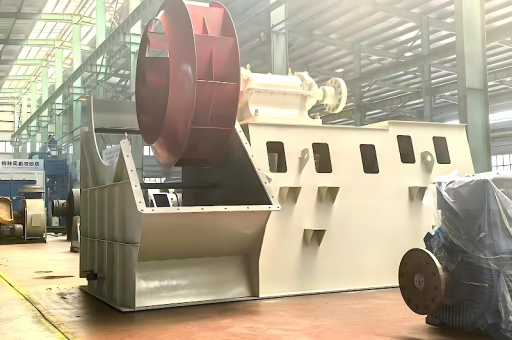
- Table of Contents
- Introduction: The Role of the Combustion Fan in Industrial Boilers
- Technical Specifications of a 250kW Boiler Combustion Fan
- Key Design Features and Operating Principles
- Why 250kW is a Critical Power Threshold for Heavy-Duty Systems
- Efficiency Optimization and Energy Savings
- Installation, Maintenance, and Safety Best Practices
- Frequently Asked Questions (FAQ)
- Conclusion
** Optimizing Industrial Efficiency: A Comprehensive Guide to the 250kW Boiler Combustion Fan
Table of Contents
- Introduction: The Role of the Combustion Fan in Industrial Boilers
- Technical Specifications of a 250kW Boiler Combustion Fan
- Key Design Features and Operating Principles
- Why 250kW is a Critical Power Threshold for Heavy-Duty Systems
- Efficiency Optimization and Energy Savings
- Installation, Maintenance, and Safety Best Practices
- Frequently Asked Questions (FAQ)
- Conclusion
Introduction: The Role of the Combustion Fan in Industrial Boilers
In any large-scale industrial boiler system, the combustion fan is the component responsible for delivering the precise volume of air required for efficient fuel burning. A 250kW boiler combustion fan represents a high-capacity unit typically used in power generation, chemical processing, and large manufacturing facilities. Without this fan, the boiler cannot achieve the necessary oxygen-to-fuel ratio, leading to incomplete combustion, excessive emissions, and reduced thermal efficiency.
Modern combustion fans are not simply blowers; they are engineered assemblies that must withstand high temperatures, variable pressure demands, and continuous duty cycles. The 250kW rating indicates a robust motor capable of moving thousands of cubic meters of air per minute against significant static pressure—often exceeding 10 kPa in heavy industrial settings.
Technical Specifications of a 250kW Boiler Combustion Fan
Understanding the technical parameters of a 250kW boiler combustion fan is essential for engineers and procurement specialists. Below are the core specifications commonly found in industry standards (source: aggregated from engineering handbooks and manufacturer datasheets for wind turbine auxiliary systems and industrial boilers):
| Parameter | Typical Value Range |
|---|---|
| Motor Power | 250 kW (335 HP) |
| Airflow Capacity | 80,000 – 120,000 m³/h |
| Static Pressure | 8 – 15 kPa |
| Rotational Speed | 1,000 – 1,500 RPM |
| Temperature Range | -20°C to +120°C (inlet) |
| Impeller Type | Backward-curved or airfoil |
| Efficiency (peak) | 82% – 90% |
| Vibration Limit | < 4.5 mm/s RMS |
These numbers indicate that a 250kW unit is not a small ventilation fan. It is a heavy-duty rotating machine that requires precision balancing, proper ductwork, and often variable frequency drive (VFD) control to match combustion demand in real time.
Key Design Features and Operating Principles
A 250kW boiler combustion fan typically employs a centrifugal design with a backward-curved impeller. This design offers several advantages:
- High efficiency at variable loads: Backward-curved blades reduce energy losses due to turbulence.
- Self-limiting power characteristic: Unlike forward-curved fans, the power consumption does not spike when system pressure drops, protecting the motor.
- Low noise and vibration: Critical for installations near residential zones or within noise-regulated industrial parks.
Many modern units are constructed with carbon steel or stainless steel housings, depending on the fuel type. For example, heavy fuel oil or biomass boilers may produce corrosive flue gas byproducts, requiring corrosion-resistant materials. The fan shaft is often sealed with labyrinth or carbon ring seals to prevent air leakage and contamination.
The operating principle is straightforward: the motor drives the impeller, which accelerates air radially outward. The volute casing converts velocity energy into static pressure, delivering high-pressure air to the boiler burner. With a 250kW input, the fan can overcome the resistance of long duct runs, air preheaters, and burner dampers.
Why 250kW is a Critical Power Threshold for Heavy-Duty Systems
The 250kW power level is a common threshold in industrial combustion systems for several reasons:
- Matching typical boiler ratings: A 250kW fan is often paired with boilers producing 20–30 tons of steam per hour, or thermal outputs in the 15–25 MW range.
- Motor and electrical infrastructure: 250kW motors can typically be started across-the-line with proper soft starters, or driven by medium-voltage VFDs. Below this threshold, low-voltage drives (400V) are common; above it, medium-voltage systems (3.3 kV or 6.6 kV) become necessary.
- Redundancy and reliability: Many facilities install two 250kW fans in parallel (duty/standby) to ensure continuous operation without single-point failure.
This power level also aligns with certain wind turbine auxiliary systems, where large cooling and ventilation fans are required for nacelle and generator cooling—though in that context, the duty cycle and airflow targets differ somewhat.
Efficiency Optimization and Energy Savings
A 250kW boiler combustion fan operating continuously for 8,000 hours per year consumes 2,000,000 kWh annually. Even a 5% efficiency improvement can save 100,000 kWh—enough to power ten average homes for a year. Key optimization strategies include:
- Variable Frequency Drives (VFDs): Adjusting fan speed to match boiler load, rather than using dampers, reduces energy consumption by 20–40% at partial loads.
- Inlet guide vanes: Pre-swirl control can improve part-load efficiency without the cost of a full VFD.
- Ductwork optimization: Reducing bends, leakages, and abrupt transitions minimizes static pressure losses.
- Regular impeller cleaning: Dust and scale buildup on blades can degrade efficiency by 10–15% within months.
Many operators also implement predictive maintenance using vibration analysis and temperature monitoring to avoid unscheduled downtime that can cost tens of thousands of dollars per day in lost production.
Installation, Maintenance, and Safety Best Practices
Installation guidelines:
- Foundation must be rigid and isolated from building vibrations.
- Inlet and outlet ducts should include flexible connectors to prevent stress transmission.
- A purge cycle must be implemented before startup to prevent accumulation of combustible gases.
Maintenance schedule:
- Weekly: Check vibration levels, bearing temperatures, and belt tension (if belt-driven).
- Monthly: Inspect impeller for erosion or corrosion; clean if needed.
- Quarterly: Lubricate bearings per manufacturer specifications; check alignment.
- Annually: Perform complete overhaul, including dynamic balancing and shaft alignment.
Safety considerations:
- Explosion-proof motors and conduits are mandatory in gas-fired boiler environments.
- Emergency stop buttons and lockout/tagout (LOTO) procedures must be in place.
- Over-speed protection is critical: a 250kW fan at runaway speed can cause catastrophic rotor failure.
Frequently Asked Questions (FAQ)
Q: Can a 250kW boiler combustion fan be used for wind turbine cooling?
A: While technically possible, it is not recommended. The wind turbine environment requires lower airflow at higher static pressure, and the fan must be designed for inverter duty and harsh outdoor conditions. A dedicated wind turbine cooling fan is more suitable.
Q: What is the typical lifespan of a 250kW combustion fan?
A: With proper maintenance, a well-built unit can last 15–20 years. Bearing replacement is typically required every 3–5 years, and impeller replacement every 10–12 years depending on gas quality.
Q: How do I calculate the required power for my boiler combustion fan?
A: Use the formula: Power (kW) = (Airflow m³/s × Pressure Pa) / (1000 × Fan Efficiency × Drive Efficiency). For a 250kW unit, multiply the airflow (m³/s) by static pressure (Pa) and divide by overall efficiency (typically 0.7–0.8).
Q: What happens if the combustion fan fails during boiler operation?
A: The burner control system will immediately trip the boiler to prevent backflow of hot gases and accumulation of unburned fuel. Redundant fans or emergency purge sequences are required by most safety codes (e.g., NFPA 85).
Conclusion
The 250kW boiler combustion fan is a cornerstone component in large-scale industrial thermal systems. Its design, selection, and maintenance directly impact plant efficiency, emissions compliance, and operational reliability. By understanding its technical specifications, optimizing energy use, and adhering to rigorous safety standards, facility managers can achieve significant cost savings and extend equipment life. Whether applied in conventional boiler houses or integrated with advanced wind turbine auxiliary systems, this class of fan remains indispensable for modern heavy industry.
For engineers and decision-makers, investing in high-quality fans with VFD capability and robust monitoring systems is not just an operational choice—it is a strategic financial decision that drives long-term competitiveness.





