
This article's table of contents introduction:
- What is it?
- Why 3kW? (Power vs. Scale)
- Key Technical Specifications (Typical)
- Common Problems & Troubleshooting
- Important Safety & Operational Notes
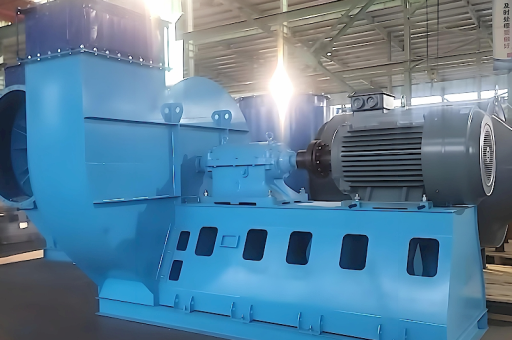
Regarding a 3kW boiler combustion fan, the context is almost certainly a commercial or industrial oil/gas/biomass burner, not a residential unit.
Here is the breakdown of what this component is, why it is 3kW, and its key specifications.
What is it?
A 3kW combustion fan is the forced draft fan mounted on a burner. Its purpose is to:
- Supply the precise amount of combustion air (oxygen) to the flame.
- Push the flue gases through the heat exchanger and up the chimney (overcoming back pressure).
- Mix the air with the fuel (gas or oil) for efficient combustion.
Why 3kW? (Power vs. Scale)
A 3kW motor (approx. 4 HP) is powerful. Here is the typical sizing logic:
- Boiler Size: This fan is used for medium-to-large boilers. It is typical for boilers rated between 200 kW to 500 kW (approx. 700,000 to 1.7 million BTU/h) or even larger on high-pressure steam boilers.
- Pressure vs. Flow: A 3kW fan is usually a high-pressure fan (not just high volume).
- Static Pressure: 1000 – 2500 Pa (4 - 10 inches w.c.)
- Air Flow: 500 – 2000 m³/h (depending on pressure)
- Fuel Type: Oil burners often require higher pressure (to atomize the oil) than gas burners; a 3kW fan might be sized to handle the heavier duty.
Key Technical Specifications (Typical)
| Feature | Specification |
|---|---|
| Motor Power | 3 kW (3-phase, 230/400V or 415V) |
| Speed | 2800 RPM (standard for high pressure) or 1400 RPM (for larger volume, lower pressure) |
| Impeller | Backward curved blades (most efficient for this pressure), often cast aluminum or steel. |
| Connection | Flanged inlet (e.g., DN80, DN100) and a spiral or volute outlet. |
| Control | Often VFD-ready (Variable Frequency Drive) to modulate air flow for high/low flame. |
| Temperature | Ambient air (approx. -20°C to +40°C) - not designed for hot flue gas. |
Common Problems & Troubleshooting
If you are diagnosing a 3kW fan that is failing:
- Bearing Failure: 3kW motors usually have heavy-duty ball bearings. Failure sounds like grinding or screeching. Fix: Replace bearings or motor.
- Unbalanced Impeller: Soot or debris build-up on the blades causes vibration, damaging bearings and motor. Fix: Open the inlet cone and clean the impeller.
- Capacitor Failure (Single Phase rare): Very uncommon in commercial (3-phase) applications.
- Breaker Tripping: Often caused by a seized bearing, a dirty impeller (motor overworking), or a failing winding.
- Motor Burnout: Caused by running against a blocked air filter/flue, or running on the wrong voltage.
Important Safety & Operational Notes
- Air Switch (Pressure Switch): The fan has a differential pressure switch that proves the fan is running before the gas valve opens. If the switch fails, the boiler will lock out.
- Rotation Direction: DO NOT run the fan in reverse. It will significantly reduce air flow and pressure.
- Inlet Damper: Most 3kW fans have a manual (or modulating) damper on the inlet to adjust the total air volume for the burner setup.
To identify your exact model: Look for a nameplate on the fan housing (e.g., Riello, Weishaupt, Ecoflam, Oilon, Dunphy). The fan model is usually stamped there (e.g., F3.0 or 3KW/2800).





