
The Essential Guide to 15kW Boiler Combustion Fan: Performance, Selection, and Maintenance
Table of Contents
- Introduction: What Is a 15kW Boiler Combustion Fan?
- How Does a 15kW Combustion Fan Work?
- Key Technical Specifications and Performance Metrics
- Applications: Where Is a 15kW Boiler Combustion Fan Used?
- Comparing Centrifugal vs. Axial Combustion Fans
- Installation Best Practices for Optimal Efficiency
- Common Issues and Troubleshooting Tips
- Frequently Asked Questions (FAQ)
- Conclusion and Future Trends
Introduction: What Is a 15kW Boiler Combustion Fan?
A 15kW boiler combustion fan is a critical component in industrial and commercial heating systems, designed to supply a controlled flow of air to support the combustion process in boilers. The "15kW" designation refers to the motor power rating, indicating the fan's capacity to move a specific volume of air against system resistance. These fans are essential for maintaining proper air-to-fuel ratios, ensuring efficient burning, reducing emissions, and preventing dangerous conditions such as backdraft or incomplete combustion.
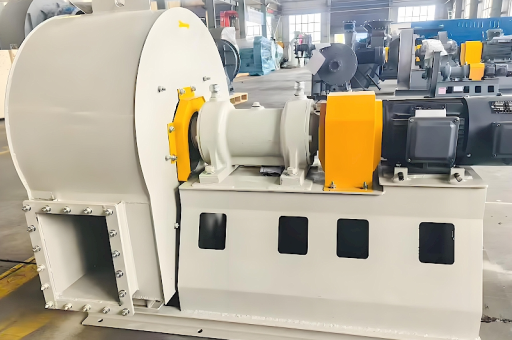
In modern energy systems, combustion fans are often integrated with variable frequency drives (VFDs) to adjust airflow dynamically based on boiler load. A 15kW unit typically serves medium-to-large boilers found in hospitals, manufacturing plants, district heating facilities, and even some high-capacity residential systems. Without a properly sized combustion fan, a boiler cannot achieve its rated thermal efficiency, leading to increased fuel consumption and higher operational costs.
How Does a 15kW Combustion Fan Work?
The operation of a 15kW boiler combustion fan relies on a motor-driven impeller that creates a pressure differential, drawing air from the environment and forcing it into the boiler's combustion chamber. The fan must overcome the static pressure caused by ductwork, dampers, heat exchangers, and the burner itself.
Airflow and Combustion Chemistry
For complete combustion of natural gas, oil, or biomass, oxygen must be supplied in sufficient quantity. A 15kW fan typically delivers between 8,000 to 15,000 cubic meters per hour (m³/h) of air, depending on the specific design and system resistance. The exact airflow is calibrated to maintain a slight excess of oxygen (typically 3-5% by volume) to ensure all fuel burns completely.
Speed Control and Modulation
Many modern fans are paired with inverter drives. When the boiler load decreases, the fan speed reduces, saving energy and reducing noise. This modulation is crucial for achieving seasonal efficiency gains. Without speed control, a fixed-speed 15kW fan would waste energy during low-load periods.
Safety Interlocks
Combustion fans are interlocked with gas valves and flame sensors. If the fan fails or airflow drops below a safe threshold, the boiler control system immediately shuts off the fuel supply to prevent explosions or carbon monoxide buildup.
Key Technical Specifications and Performance Metrics
When evaluating a 15kW boiler combustion fan, engineers and buyers should consider the following parameters:
Motor Power and Efficiency
A 15kW motor (approximately 20 HP) operates at 380V to 480V three-phase power in most industrial settings. High-efficiency IE3 or IE4 motors are recommended to reduce electricity consumption. The fan's overall efficiency, including impeller and duct losses, should exceed 75% at the design point.
Pressure and Airflow
| Parameter | Typical Range |
|---|---|
| Static Pressure | 1500–3500 Pa |
| Airflow Capacity | 8,000–15,000 m³/h |
| Maximum RPM | 2,900–3,500 RPM |
| Noise Level | 75–85 dB(A) at 1 m |
Material and Construction
Impellers are usually made from carbon steel with epoxy coating for corrosion resistance. For boilers burning heavy oil or biomass, stainless steel or aluminum impellers are preferred to handle particulate matter and high temperatures. The housing must be robust enough to withstand vibrations caused by fan imbalance or duct resonance.
Temperature Rating
Standard combustion fans are rated for inlet air temperatures up to 80°C. High-temperature versions with insulated bearings and special seals can handle up to 150°C, often required when the fan is installed after a heat recovery unit.
Applications: Where Is a 15kW Boiler Combustion Fan Used?
A 15kW boiler combustion fan finds its place in several key applications:
Industrial Steam Boilers
Factories producing steam for process heating, sterilization, or power generation often use boilers rated at 2–10 tons per hour. A 15kW fan is appropriate for boilers with firing rates between 200–500 kg/h of fuel oil or equivalent natural gas.
District Heating Systems
Municipal heating networks serving multiple buildings benefit from centralized boilers equipped with 15kW fans. These systems provide hot water or steam to residential and commercial properties.
Commercial HVAC Systems
Large hotels, hospitals, and office complexes with on-site boiler rooms frequently specify 15kW combustion fans. The fan must operate reliably 24/7 during winter months.
Biomass and Waste-to-Energy Plants
In renewable energy applications, combustion fans handle dirty fuel streams. A 15kW fan in a biomass plant must be rugged enough to handle ash and fly-particles without clogging.
Backup and Redundant Installations
Some facilities use two 15kW fans in a duty/standby configuration to ensure continued operation during maintenance or fan failure.
Comparing Centrifugal vs. Axial Combustion Fans
Two primary designs dominate the market for 15kW boiler combustion fans:
Centrifugal (Radial) Fans
Centrifugal fans use a rotating impeller to accelerate air radially outward. They produce higher static pressures (up to 4,000 Pa) and are more efficient at overcoming duct resistance. Most industrial boilers use backward-curved centrifugal fans because they are less prone to overloading and handle system resistance variations well.
Axial Fans
Axial fans move air parallel to the fan shaft. While they can move large volumes of air at low pressure, they are rarely used as primary combustion fans for pressurized boilers. However, they may serve as forced draft fans in some low-pressure burner designs.
Which is better for a 15kW boiler?
Centrifugal fans are almost always recommended due to higher pressure capability and better stability across varying flow conditions.
Installation Best Practices for Optimal Efficiency
Proper installation of a 15kW boiler combustion fan directly impacts performance and lifespan:
Ductwork Design
- Keep duct runs as short as possible with minimal bends to reduce pressure drop.
- Use smooth interior surfaces and avoid abrupt expansions or contractions.
- Install flexible connectors to isolate fan vibration from the boiler structure.
Electrical Connections
- Use appropriately sized cables rated for the motor's full load current (typically 27–32 A at 400V).
- Include a VFD if modulation is desired, and ensure proper grounding to avoid electrical interference.
- Install thermal overload relays and phase monitoring relays.
Foundation and Mounting
The fan should be mounted on a concrete base or heavy-duty steel frame with vibration dampers. A poorly anchored fan will transmit mechanical noise and may develop bearing failure prematurely.
Air Intake Location
Position the air intake away from exhaust vents, chemical storage areas, or dusty environments. Contaminated inlet air can foul the impeller and degrade combustion quality.
Common Issues and Troubleshooting Tips
Even a well-designed 15kW boiler combustion fan can experience problems. Here are typical failure modes and solutions:
| Problem | Likely Cause | Solution |
|---|---|---|
| Low airflow | Clogged inlet filter or duct blockage | Clean or replace filter; inspect ductwork |
| Excessive vibration | Impeller imbalance or bearing wear | Balance impeller; replace bearings |
| Motor overheating | Overcurrent due to high static pressure | Check damper positions; verify VFD settings |
| Noise increase | Loose mounting bolts or cavitation | Tighten bolts; reduce fan speed |
| Fan fails to start | Tripped overload relay or blown fuse | Reset relay; replace fuse; check motor insulation |
Preventive Maintenance Schedule
- Weekly: Check for unusual noise, vibration, or temperature rise.
- Monthly: Inspect belt tension (if belt-driven) and clean air filters.
- Quarterly: Measure motor current and compare to nameplate values.
- Annually: Perform bearing greasing, impeller cleaning, and electrical insulation testing.
Frequently Asked Questions (FAQ)
Q1: Can I use a 15kW combustion fan for a domestic boiler?
A: Typically no. Domestic boilers require fans rated at 0.1–1.0 kW. A 15kW fan is far too powerful for a standard residential system and would cause excessive airflow, noise, and energy waste.
Q2: What is the typical lifespan of a 15kW boiler combustion fan?
A: With proper maintenance, a centrifugal 15kW fan can last 10–15 years in continuous operation. Bearing replacement is usually needed every 3–5 years.
Q3: How do I calculate the exact airflow needed for my boiler?
A: Use the formula: Airflow (m³/h) = Fuel consumption (kg/h) × Stoichiometric air requirement (typically 9–12 m³/kg) × Excess air factor (1.1–1.3). For a boiler burning 50 kg/h of natural gas, the fan should deliver 50 × 10.5 × 1.2 ≈ 630 m³/h. However, larger margins are added for duct losses and future load increases.
Q4: Can a 15kW fan be retrofitted with a VFD?
A: Yes, most modern motors are inverter-rated. Retrofitting a VFD can reduce energy consumption by 30–50% when the boiler operates at partial load for extended periods.
Q5: What noise level is acceptable for a 15kW combustion fan?
A: In industrial settings, noise up to 85 dB(A) is typical. For installations near occupied spaces, sound attenuators or an enclosure may be required to reduce levels to 75 dB(A) or lower.
Q6: Is a 15kW fan suitable for a wind turbine cooling system?
A: While not its original purpose, a 15kW fan could be used for forced air cooling in large wind turbine nacelles. However, dedicated wind turbine cooling fans are usually designed for lower pressure and higher airflow. It is not recommended without engineering analysis.
Q7: What is the difference between forced draft and induced draft fans?
A: Forced draft fans push air into the boiler (positive pressure), while induced draft fans pull exhaust gases out (negative pressure). A 15kW boiler combustion fan is almost always a forced draft fan positioned before the burner.
Conclusion and Future Trends
The 15kW boiler combustion fan remains a workhorse in thermal energy systems worldwide. As energy efficiency regulations tighten, manufacturers are developing fans with higher motor efficiency (IE4), integrated IoT sensors for predictive maintenance, and aerodynamic impeller designs that reduce noise without sacrificing pressure.
One emerging trend is the combination of combustion fans with wind turbine technology concepts. While not identical, the variable-speed drive and aerodynamic optimization techniques used in wind turbine generators are being adapted to improve fan performance. Some innovative designs use external power from small wind turbines to offset the fan's electricity consumption, creating a hybrid system that reduces grid dependency.
Another development is the use of advanced materials like carbon-fiber-reinforced polymers for impellers, which reduce inertia and allow faster speed response. Digital twin simulations now enable engineers to model fan performance under diverse operating conditions before installation.
In summary, selecting the correct 15kW boiler combustion fan requires careful consideration of airflow, pressure, material compatibility, and control strategy. With proper installation and maintenance, this component delivers reliable, efficient combustion for decades. For any large-scale heating application, investing in a quality 15kW fan is not an expense—it is a foundation for energy savings and operational safety.





