
This article's table of contents introduction:
- What it is
- Typical Applications
- Electrical Requirements (Crucial)
- Key Technical Specifications (Typical)
- Common Installation & Safety Issues
- Common Motor Frame Sizes
- Summary Checklist for Installers:
Regarding a 5 kW boiler combustion fan (often called an ID Fan, FD Fan, or Burner Air Fan), here is the key information regarding specifications, electrical requirements, and typical applications.
What it is
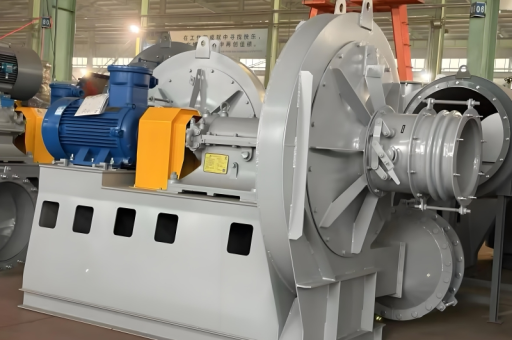
A 5.5 kW (approx 7.4 HP) fan motor is a medium-to-large industrial unit. It is typically a centrifugal fan (often a radial or backward curved blade design) used to force air into a boiler or extract flue gases.
Typical Applications
- Industrial Steam Boilers (e.g., 2 Ton to 6 Ton/hr capacity).
- Large Commercial Heating Systems (e.g., district heating plants).
- Biomass / Wood Pellet Boilers (larger models requiring strong forced draft).
- Incinerators or Thermal Fluid Heaters.
Electrical Requirements (Crucial)
You must match the voltage and phase to your site.
- Standard 3-Phase (Most Common):
- Voltage: 380V - 415V (Delta/Star).
- Current: Approximately 10 - 11 Amps per phase (at 415V, full load).
- Connection: Requires a 3-phase breaker (MCB/MCCB) rated ~16A (with type C curve) and cable size of 5 mm² to 4 mm² (14-12 AWG) copper.
- Single Phase (Less common for this size):
- Voltage: 230V.
- Current: Approximately 24 - 28 Amps (very high).
- Connection: Requires a large 32A MCB and 6 mm² (10 AWG) cable. Note: Starting current can be 5-7x this, often causing flickering lights.
- Start Method:
- DOL (Direct On Line): Only if the supply is very strong and the fan wheel is lightweight.
- Star-Delta (Y-Δ): Strongly recommended for a 5.5kW fan to reduce starting current surge.
- VFD (Variable Frequency Drive): Ideal for boiler fans. Allows soft start, speed control for precise air/fuel ratio, and energy savings.
Key Technical Specifications (Typical)
- Motor Speed: Usually 1400 RPM (4-pole) or 2800 RPM (2-pole). 1400 RPM is more common for quieter, more reliable operation.
- Air Flow: Depends on the fan impeller design, but roughly 3,000 to 6,000 m³/hr (1,800 to 3,500 CFM) at medium pressure.
- Pressure: Typically 1,000 to 2,500 Pa (4 to 10 inches w.g.) for forced draft; higher for induced draft (ID fans).
Common Installation & Safety Issues
- Overheating: A 5.5kW motor generates significant heat. Ensure the cooling fan (on the back of the motor) is clean and the motor is not in a confined space.
- Vibration: The fan wheel must be dynamically balanced. Unbalanced wheels at this power can break bearings or the fan casing quickly.
- Duct Connection: Use flexible rubber connectors between the fan outlet and the boiler duct. A rigid connection transmits vibration and noise.
- Damper: Always install a manual damper (butterfly valve) on the fan inlet or outlet. This allows manual adjustment of airflow and allows the fan to be isolated for maintenance.
- Differential Pressure Switch: Most boiler codes require a proving switch (air pressure switch) to interlock the burner – the boiler will not fire unless the fan is running and proving sufficient air pressure.
Common Motor Frame Sizes
- IEC Frame: Likely 132M or 160L depending on speed.
- NEMA Frame: 182T or 213T (less common outside North America for metric kW sizes).
- Shaft Diameter: Usually 38mm or 42mm.
Summary Checklist for Installers:
- [ ] Power Supply: Is it 3-phase 415V? If single phase, do you have a 32A supply?
- [ ] Protection: Fitted with a Star-Delta starter OR a VFD.
- [ ] Control: Is there a Duct Pressure Sensor or proving switch wired to the boiler controller?
- [ ] Safety: Is the motor earthed (grounded) and the fan guard in place?
If you need to select a replacement: Provide the Voltage, Frequency (50/60 Hz), RPM, and the Shaft Diameter & Keyway size. If possible, provide the current air flow (m³/h) and static pressure (Pa) requirement.
If you have a specific issue (e.g., "fan is tripping the breaker" or "vibrating"), please provide the context and I can give more targeted advice.





