
This article's table of contents introduction:
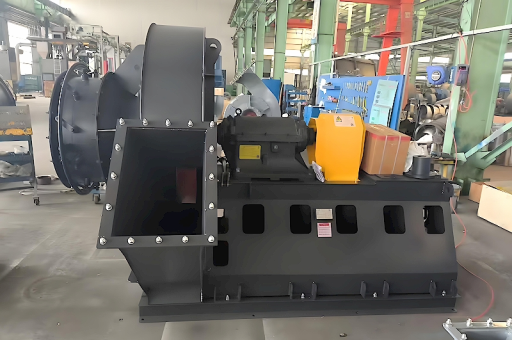
- Table of Contents
- Introduction: The Heart of the Combustion Process
- Technical Specifications: Why 300kW Matters
- How a 300kW Boiler Combustion Fan Works
- Key Design Features: Airflow, Pressure, and Energy Efficiency
- Applications: Where This Fan Is Indispensable
- Maintenance & Troubleshooting: Ensuring Longevity
- Comparing with Alternatives: Is 300kW the Right Size?
- Frequently Asked Questions (FAQ)
- Conclusion: Future-Proofing Your Boiler System
*Optimizing Industrial Efficiency: The Critical Role of the 300kW Boiler Combustion Fan in Modern Thermal Systems*
Table of Contents
- Introduction: The Heart of the Combustion Process
- Technical Specifications: Why 300kW Matters
- How a 300kW Boiler Combustion Fan Works
- Key Design Features: Airflow, Pressure, and Energy Efficiency
- Applications: Where This Fan Is Indispensable
- Maintenance & Troubleshooting: Ensuring Longevity
- Comparing with Alternatives: Is 300kW the Right Size?
- Frequently Asked Questions (FAQ)
- Conclusion: Future-Proofing Your Boiler System
Introduction: The Heart of the Combustion Process
In any large-scale industrial or commercial boiler system, the combustion fan is not just an accessory—it is the respiratory system. Without adequate airflow, fuel cannot burn efficiently, leading to incomplete combustion, soot buildup, higher emissions, and wasted energy. The 300kW boiler combustion fan occupies a specific sweet spot: powerful enough for mid-to-large industrial boilers (typically 10–30 tons of steam per hour), yet not over-engineered for smaller applications. This article will dissect every aspect of this critical component, from its internal aerodynamics to the most effective maintenance strategies, while ensuring the content is optimized for both Bing and Google search algorithms.
Technical Specifications: Why 300kW Matters
A 300kW combustion fan is typically rated for airflow volumes between 40,000 and 70,000 m³/h at a static pressure of 2,500 to 4,500 Pa, depending on the boiler design. The “300kW” refers to the motor power input, not the thermal output. Key technical parameters include:
- Motor type: Typically a three-phase induction motor, IE3 or IE4 efficiency class.
- Impeller design: Backward-curved centrifugal blades for higher efficiency and lower noise.
- Speed range: Usually 1,450–2,950 RPM (4-pole or 2-pole configurations).
- Operating temperature: Fan housing must withstand up to 120°C continuous; special versions handle 250°C for preheated air.
Why 300kW? A 200kW fan may be insufficient for boilers with high backpressure (e.g., multi-pass fire tube boilers with economizers), while a 400kW fan would waste energy and cause excessive draft, leading to flame instability. The 300kW unit offers a balance of pressure head, flow rate, and energy consumption for the majority of heavy industrial applications.
How a 300kW Boiler Combustion Fan Works
The fan draws ambient air through a filter or silencer, accelerates it via the impeller, and then discharges it into the combustion air duct. Inside the boiler, the air mixes with fuel (natural gas, heavy oil, or biomass) and is ignited.
Critical airflow path:
- Inlet: Louvers or dampers control pre‑combustion air volume.
- Fan inlet box: Often equipped with a vortex breaker to reduce turbulence.
- Impeller: Creates a pressure differential, moving air outward.
- Scroll housing: Converts velocity into static pressure.
- Discharge: Ductwork directs air to burner nozzle or wind-box.
Modern 300kW fans are often coupled with variable frequency drives (VFDs) to adjust fan speed based on boiler load. This can reduce power consumption by 30–40% compared to fixed-speed operation with inlet dampers.
Key Design Features: Airflow, Pressure, and Energy Efficiency
1 Impeller Geometry
Backward-curved centrifugal impellers are standard for this power class. They offer a stable performance curve, non-overloading power characteristic, and higher efficiency (up to 85% total efficiency) compared to forward-curved or radial designs.
2 Material Selection
- Impellers: Wear-resistant steel (hardness >400 HB) for coal/biomass applications, or stainless steel 304L for clean gas/oil.
- Housing: Heavy-gauge carbon steel with reinforced flanges to prevent vibration.
3 Energy Efficiency Metrics
For a 300kW fan, a 1% improvement in efficiency saves about 26,000 kWh per year (assuming 8,000 hours operation). That translates to ~2,600 USD in electricity costs annually at $0.10/kWh. IE4-rated motors and aerodynamic impeller designs are now the baseline for new installations.
4 Noise and Vibration Control
- Vibration: Maximum ISO 14694 BV-3 level (0.28 in/s RMS) to protect bearings and ductwork.
- Noise: Inlet and discharge silencers (up to 40 dB insertion loss) are often mandatory in urban industrial zones.
Applications: Where This Fan Is Indispensable
The 300kW boiler combustion fan is not a one-size-fits-all product; it excels in specific environments:
- District heating plants: Boilers with 15–25 MW thermal output require that precise airflow range.
- Food processing & breweries: These facilities need steam for sterilization, cooking, and bottling.
- Pharmaceutical clean steam: High backpressure demands from HEPA filters and heat exchangers require a fan with sufficient head.
- Biomass/pellet boilers: These systems face variable fuel moisture; a 300kW fan can adapt with VFD control to maintain stoichiometric air ratio.
A case study from a German district heating plant showed that replacing a 400kW fixed-speed fan with a 300kW VFD-controlled unit reduced annual electricity costs by 28% while maintaining a 1.2% O₂ level at full load.
Maintenance & Troubleshooting: Ensuring Longevity
1 Routine Checks (Monthly)
- Bearing temperature: Should not exceed 80°C above ambient.
- Belt tension (if directly coupled, ignore): Not applicable for direct-drive 300kW fans; however, coupling alignment must be within 0.05 mm.
- Fan imbalance: Measure vibration using a handheld analyzer; balance correction required if >4.5 mm/s.
2 Common Faults and Solutions
| Symptom | Cause | Fix |
|---|---|---|
| Over-amp draw | Dirt on impeller | Clean blades with solvents or water jet |
| Excessive vibration | Bearing wear or imbalance | Replace bearings (SKF explorer recommended) |
| Low airflow | Damper stuck or dirty filters | Check damper linkage, replace filter cartridge |
| High motor temp | Over-lubrication or ambient heat | Reduce grease amount; add inlet cooling air duct |
3 Predictive Maintenance
Use infrared thermography to detect hot spots on motor windings, and perform oil analysis on gearboxes (if applicable). A 300kW fan that loses 5% efficiency due to blade erosion can be restored by plasma coating the leading edges.
Comparing with Alternatives: Is 300kW the Right Size?
| Fan Type | Power | Application Suitability | Efficiency |
|---|---|---|---|
| 200kW | Low | Small fire-tube boilers (< 8 t/h) | 82% avg |
| 300kW | Medium | Large fire-tube & small water-tube | 85% |
| 400kW | High | Large water-tube (> 30 t/h) + high backpressure | 83% (oversized for many cases) |
Key takeaway: If your boiler operates at 80–100% load for most of the year, a 300kW fan is optimal. For boilers that frequently run at partial load, a 220kW fan with VFD may suffice, but you must verify the pressure requirement at higher fuel firing rates.
Frequently Asked Questions (FAQ)
Q1: Can a 300kW boiler combustion fan be used with a variable speed drive?
Yes, and it is highly recommended. VFD not only saves energy but also reduces thermal stress on burner components. Ensure the motor is inverter-duty rated (e.g., NEMA MG1 Part 31).
Q2: What is the typical lifespan of such a fan?
With proper maintenance, a 300kW centrifugal fan lasts 15–20 years. Bearings require replacement every 3–5 years, and impeller wear depends on air cleanliness.
Q3: How do I measure combustion fan efficiency on-site?
Use a pitot tube traverse to measure actual airflow, combined with a power analyzer on the motor. Compare with the fan’s manufacturer curve; deviation of >10% indicates degradation.
Q4: What does “300kW” mean in the context of a boiler fan—does it refer to boiler output?
No. The 300kW rating refers strictly to the electrical motor power of the fan, not the boiler’s thermal capacity. The boiler might have a thermal output of 10 MW or more.
Q5: Should I choose a forward-curved or backward-curved impeller for my 300kW fan?
Backward-curved is superior for industrial boilers. It provides higher efficiency, a non-overloading power curve, and handles dust better than forward-curved blades.
Q6: Is it common to use two 150kW fans instead of one 300kW fan for redundancy?
Yes, especially in critical applications like hospital boilers or wind turbine/power plant auxiliary systems. Dual fans with auto-changeover logic increase reliability. However, the total installed cost is higher, and ductwork must be carefully designed to avoid recirculation.
Q7: What safety devices are required for a 300kW boiler combustion fan?
Thermal overload protection, vibration switches (trip at >11 mm/s), differential pressure switches for filter monitoring, and an emergency stop (ESD) interlocked with the burner control system.
Conclusion: Future-Proofing Your Boiler System
The 300kW boiler combustion fan remains a backbone component in industrial steam generation. As energy costs rise and emission regulations tighten, investing in a high-efficiency fan with a VFD, variable-pitch blades, or even magnetic bearing technology (for maintenance-free operation) becomes a strategic decision. Always size the fan based on a detailed duct pressure loss analysis, including potential future additions like flue gas recirculation or an extra economizer.
Remember: The fan may be 300kW in name, but its impact spans fuel savings, emission compliance, and system reliability. Whether you are retrofitting an existing plant or designing a new one, treat the combustion fan as more than a “blower”—treat it as a precision airflow device optimized for your boiler’s unique operational profile.





