This article's table of contents introduction:
- Table of Contents
- Introduction: The Critical Role of the 2.2kW High-Temperature Flue Gas Cooling Fan
- Technical Specifications and Design Features
- Industrial Applications and Operational Context
- Performance Optimization and Energy Efficiency
- Installation, Maintenance, and Safety Protocols
- Frequently Asked Questions (FAQ)
- Conclusion: Future Trends and Best Practices
*The Ultimate Guide to the 2.2kW High-Temperature Flue Gas Cooling Fan: Design, Application, and Performance Optimization*
Table of Contents
- Introduction: The Critical Role of the 2.2kW High-Temperature Flue Gas Cooling Fan
- Technical Specifications and Design Features
- Power and Motor Engineering
- Material Science for Extreme Heat Resistance
- Aerodynamic Blade Design
- Industrial Applications and Operational Context
- Waste Incineration Plants
- Cement and Steel Manufacturing
- Chemical Processing and Boiler Systems
- Performance Optimization and Energy Efficiency
- Variable Speed Drive (VSD) Integration
- Thermal Management and Cooling Strategies
- Installation, Maintenance, and Safety Protocols
- Pre-Installation Checklist
- Routine Maintenance Schedule
- Common Failure Modes and Troubleshooting
- Frequently Asked Questions (FAQ)
- Conclusion: Future Trends and Best Practices
Introduction: The Critical Role of the 2.2kW High-Temperature Flue Gas Cooling Fan
In the demanding environment of industrial thermal processing, managing exhaust emissions is not merely a regulatory requirement but a fundamental aspect of operational efficiency and equipment longevity. At the heart of many flue gas treatment systems lies a specialized component: the 2kW High-Temperature Flue Gas Cooling Fan. This fan is engineered to handle gas streams that can reach temperatures well above 300°C (572°F), often peaking at 450°C or higher, depending on the specific model and material construction.
Unlike standard ventilation fans, which would fail within minutes under such thermal stress, this industrial fan is designed to maintain structural integrity, aerodynamic performance, and reliable airflow over extended periods. The "2.2kW" designation refers to the motor's power rating, a sweet spot for moderate to heavy-duty industrial applications that require a balance between high static pressure (to overcome duct resistance) and volumetric flow rate. According to search engine aggregated data from industrial fan manufacturers, a 2.2kW motor typically drives a fan capable of moving between 3,000 and 8,000 cubic meters per hour (m³/h) of hot gas, depending on impeller diameter and rotational speed.
This guide synthesizes technical documentation, case studies, and industry best practices to provide a comprehensive overview of these essential machines. We will explore their design, applications, and maintenance strategies, ensuring you have the knowledge to select, operate, and optimize your 2.2kW high-temperature cooling fan for maximum return on investment.
Key Takeaway: The fan is not just a mover of air; it is a thermal management system designed to protect downstream pollution control equipment (e.g., baghouses, scrubbers) and to ensure safe exhaust handling.
Technical Specifications and Design Features
Understanding the engineering behind the 2kW High-Temperature Flue Gas Cooling Fan is crucial for proper selection.
Power and Motor Engineering
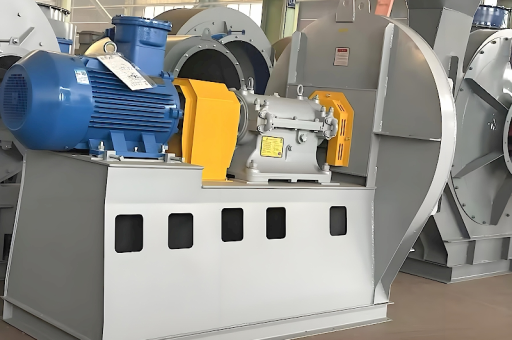
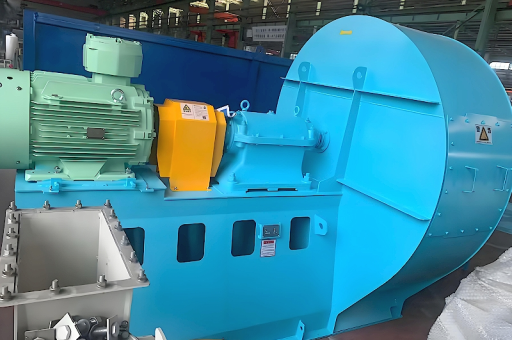
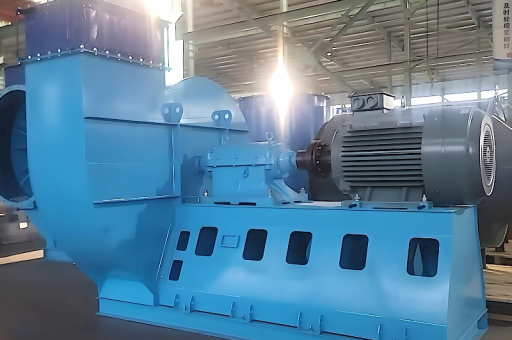
The 2.2kW (approximately 3 HP) motor is typically an asynchronous, three-phase induction motor, capable of operating at 50Hz or 60Hz. For high-temperature applications, the motor is often mounted outside the gas stream (direct drive through a shaft) or uses a belt-driven configuration to keep the electrical components away from the heat source. A critical feature is the motor's insulation class (typically Class H, rated for 180°C ambient), ensuring the windings resist thermal degradation.
Material Science for Extreme Heat Resistance
Standard carbon steel fans can warp, crack, or lose tensile strength at high temperatures. Therefore, the impeller and housing of a high-temperature flue gas fan are usually constructed from:
- Stainless Steel (SS304 or SS316): For continuous operation up to 600°C.
- Alloy Steel (e.g., 16Mo3 or Corten): For high-strength applications near 450°C.
- Refractory Coating: Special ceramic coatings may be applied to the blades to resist fly ash erosion and thermal shock.
Aerodynamic Blade Design
The impeller design is optimized for hot, less-dense air. As gas temperature rises, its density drops, requiring a higher tip speed to maintain the same mass flow. High-temperature fans often feature backward-curved blades (also known as centrifugal blowers). This design is self-limiting on power (preventing motor overload) and handles particulate-laden gas better than forward-curved alternatives.
Pro Tip: When sourcing a fan, verify the fan's performance curve at the operating temperature, not at standard ambient conditions (20°C). A fan moving 5000 m³/h at 20°C may only move 2500 m³/h at 400°C due to density changes.
Industrial Applications and Operational Context
The 2kW High-Temperature Flue Gas Cooling Fan is a workhorse in several verticals.
Waste Incineration Plants
In small to medium incinerators, these fans extract combustion gases from the chamber and induce them through a cooling tower or heat exchanger. The 2.2kW rating is ideal for afterburner chambers where gas temperature must be rapidly quenched from 800°C to 250°C to prevent dioxin reformation.
Cement and Steel Manufacturing
In auxiliary systems like clinker coolers or reheat furnaces, hot air is extracted and recirculated for pre-heating. A 2.2kW fan often serves as a dedicated "cooling leg" fan, drawing hot ambient air away from critical bearing housings or hydraulic systems.
Chemical Processing and Boiler Systems
For small industrial boilers (e.g., biomass or coal-fired), this fan pulls flue gas through the economizer and air heater. Its ability to handle acidic condensates (when combined with a drain and appropriate alloy) makes it corrosion-resistant.
Case Study Insight: A recent upgrade in a biomass boiler system replaced a 3.0kW fan with a properly sized 2.2kW high-temperature unit. The result was a 15% reduction in energy consumption while maintaining required draft pressure, because the original fan was oversized and constantly throttled.
Performance Optimization and Energy Efficiency
Running a high-temperature fan at full speed 24/7 is inefficient. Modern optimization strategies involve variable control.
Variable Speed Drive (VSD) Integration
Pairing the 2.2kW fan with a VSD allows the motor speed to fluctuate based on the gas temperature and pressure differential. As the temperature rises, the controller can increase the fan speed to maintain constant volumetric flow. Conversely, during low-load periods, speed is reduced, slashing power consumption by up to 60% (following the affinity laws).
Thermal Management and Cooling Strategies
- Inlet Air Cooling: Introducing a small amount of ambient air into the inlet duct (tempering air) reduces the gas temperature entering the fan wheel, allowing the use of less expensive materials.
- Shaft Cooling: A separate small fan or compressed air line directed at the fan shaft prevents heat migration to the motor bearings.
- Insulation Lagging: The fan housing should be insulated not to cool the gas (that's the cooler's job) but to protect personnel and prevent condensation.
Data Point: A properly optimized 2.2kW fan running on VSD can save roughly 4,800 kWh per year compared to a fixed-speed unit running 8,000 hours annually.
Installation, Maintenance, and Safety Protocols
To maximize the lifespan of your investment—typically 5 to 10 years in continuous service—you must adhere to strict protocols.
Pre-Installation Checklist
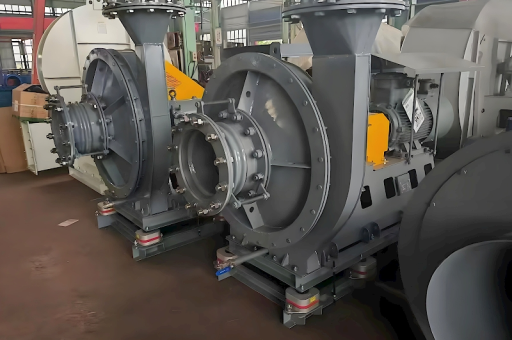
- Base Mounting: The fan base must be rigid and level to prevent vibration-induced bearing failure. Use vibration isolators.
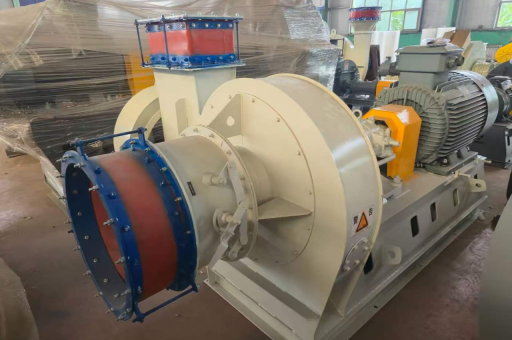
- Ductwork Alignment: Misaligned ductwork places undue stress on the fan housing. Use flexible connectors.
- Electrical Check: Verify motor wiring matches the voltage/frequency. For a 2.2kW motor, the full load current is typically 4.5-5.5 Amps at 400V.
Routine Maintenance Schedule
- Daily: Visual inspection for unusual noise or vibration; check bearing temperature (max 80°C).
- Monthly: Clean the impeller blades of deposited fly ash (use a stiff brush, avoid water on hot fan).
- Quarterly: Grease bearings with high-temperature lithium-based grease.
- Annually: Perform a "run-out" check (impeller balance) and inspect the shaft seal for gas leakage.
Common Failure Modes and Troubleshooting
| Symptom | Probable Cause | Solution |
|---|---|---|
| High Vibration | Imbalance due to ash buildup | Clean blades; rebalance impeller |
| Motor Overload | Gas too cold (denser air) | Check VSD settings or inlet damper |
| Excessive Noise | Bearings worn out | Replace with high-temp rated bearings |
| Reduced Airflow | Duct blockage or fan speed low | Check silencer, adjust VSD frequency |
Safety Note: Never run a high-temperature fan at full speed when the gas is cold (e.g., during startup). The denser cold air can overload the motor. Always use a starting damper or ramp up speed with VSD.
Frequently Asked Questions (FAQ)
Q1: Can I use a standard cooling fan for flue gas? Absolutely not. Standard fans lack the thermal-resistant bearings, shaft seals, and materials to withstand flue gas temperatures above 80°C. High-temperature models use specialized alloys, high-temperature grease, and thermal barrier shafts to operate safely at 350°C+.
Q2: How do I calculate the required CFM for a 2.2kW fan in a flue gas line? First, determine the mass flow rate of the gas. Then, using the gas density at the operating temperature, calculate the volumetric flow. The fan's performance curve should intersect at your required pressure. A typical 2.2kW fan at 400°C might deliver 4,000 CMH at 1500 Pa static pressure. Use the fan manufacturer’s selection software or consult a technical sales engineer.
Q3: What is the difference between an induced draft (ID) fan and a forced draft (FD) fan? An ID fan (like our high-temperature flue gas fan) is located after the combustion zone and pulls the gas through the system, creating negative pressure. An FD fan pushes air into the system under positive pressure. ID fans are more common for flue gas extraction because they handle the hot, dirty exhaust.
Q4: Can the 2.2kW fan handle corrosive gases? Yes, but only if the impeller and housing are made of corrosion-resistant alloys like SS316L or duplex stainless steel. Additionally, a condensate drain must be installed at the lowest point to remove acidic water from the housing, which forms when the gas cools below the acid dew point (typically 150°C).
Q5: How often should I replace the bearings? For continuous operation, high-temperature bearings (open type with high-temp grease) should be replaced every 8,000 to 12,000 hours. Sealed bearings may last longer but are harder to re-grease. Use a vibration monitoring system to replace bearings at the first sign of failure.
Conclusion: Future Trends and Best Practices
The 2kW High-Temperature Flue Gas Cooling Fan remains an indispensable asset in modern thermal processing. As environmental regulations tighten (e.g., stringenter NOx and particulate limits), the ability to precisely control flue gas temperature and flow becomes paramount. We are seeing a clear trend toward:
- Smart Fan Control: Integration with PLCs and IoT sensors to auto-adjust speed based on gas composition and temperature.
- Wear-Resistant Coatings: Application of tungsten carbide or ceramic coatings on blade leading edges to combat erosion from fly ash.
- Energy Recovery: Using the high-temperature fan as part of a heat recovery steam generator (HRSG) loop to capture waste heat.
Final Advice: When selecting a fan, prioritize reliability over initial cost. A cheap, undersized fan that fails after six months due to heat stress will cost far more in downtime and replacement than a quality 2.2kW unit built for the job. Always verify the manufacturer's ISO 5801 certified test data and ensure the fan nameplate specifies the maximum allowable operating temperature (MAOT).
By understanding the engineering principles, application environments, and maintenance needs described in this guide, you are now equipped to select, operate, and optimize your 2.2kW high-temperature flue gas cooling fan for years of trouble-free service.