This article's table of contents introduction:
- Table of Contents
- Introduction: Why 800℃ High-Temperature Exhaust Fans Matter
- Core Technical Specifications and Working Principles
- Industrial Applications and Real-World Scenarios
- Key Selection Criteria for 800℃ Fans
- Installation, Safety, and Best Practices
- Common Problems and Troubleshooting Q&A
- Conclusion: Future Trends and Reliability
** The Critical Role of 800℃ High-Temperature Exhaust Fans in Industrial Ventilation: Performance, Selection, and Maintenance
Table of Contents
- Introduction: Why 800℃ High-Temperature Exhaust Fans Matter
- Core Technical Specifications and Working Principles
- Industrial Applications and Real-World Scenarios
- Key Selection Criteria for 800℃ Fans
- Installation, Safety, and Best Practices
- Common Problems and Troubleshooting Q&A
- Conclusion: Future Trends and Reliability
Introduction: Why 800℃ High-Temperature Exhaust Fans Matter
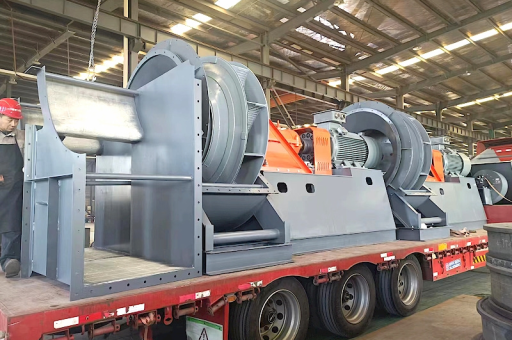
In industries where process heat exceeds ordinary ambient limits, standard ventilation fans fail rapidly. An 800℃ High-Temperature Exhaust Fan is engineered to operate continuously in environments where air temperatures reach 800 degrees Celsius (1472°F). These fans are not mere upgrades—they are specialized equipment designed to handle thermal expansion, material degradation, and fire risk.
The demand for such fans is rising due to stricter workplace safety regulations, energy recovery needs, and the expansion of high-temperature manufacturing processes like glass melting, ceramic kilns, metal smelting, and waste incineration. Understanding the core capabilities of these fans helps engineers and plant managers avoid costly downtime and safety hazards.
Q: Can a standard industrial fan handle 800℃ exhaust?
A: No. Standard fans typically operate below 200℃. Above 300℃, bearings fail, blades warp, and motor insulation melts. An 800℃ fan uses specialized alloys, high-temperature bearings, and external motor cooling.
Core Technical Specifications and Working Principles
An 800℃ High-Temperature Exhaust Fan is built around several critical design principles:
- Material Selection: The impeller, housing, and shaft are constructed from heat-resistant stainless steel (e.g., 310S or Inconel alloys). These materials maintain structural integrity and oxidation resistance up to 1000℃.
- Bearing and Lubrication: Bearings are located outside the main air path, often in a cooled housing. High-temperature grease or oil circulation systems are used.
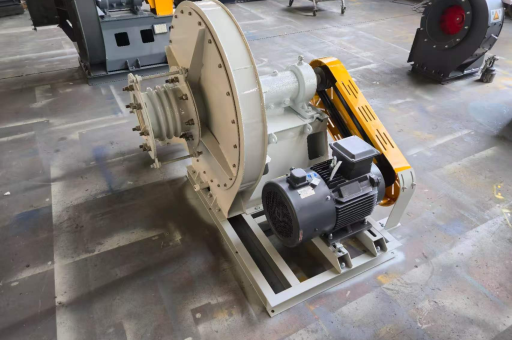
- Motor Cooling: The motor is typically mounted externally, protected from heat via a cooling fan, heat shield, or water-cooled jacket. Direct-coupled motors are rare; belt drives or shaft extensions with cooling fins are common.
- Thermal Expansion Compensation: Expansion joints, bellows, and sliding bases allow the fan to expand without binding. The impeller-to-housing clearance is larger than in standard fans.
Operating Principle:
The fan draws hot exhaust gases from a process (e.g., furnace outlet) and moves them through ductwork to a chimney, scrubber, or heat exchanger. The flow direction (centrifugal or axial) is chosen based on pressure requirements. Centrifugal designs are most common for high-temperature exhaust due to their ability to handle high static pressure.
Q: Why is the motor placed outside the hot air stream?
A: Most electric motors cannot withstand temperatures above 100℃. Locating the motor outside the hot gas flow, combined with forced cooling, ensures motor longevity.
Industrial Applications and Real-World Scenarios
The 800℃ High-Temperature Exhaust Fan is essential in these sectors:
| Industry | Specific Application | Typical Exhaust Temp |
|---|---|---|
| Glass Manufacturing | Float glass furnace exhaust | 700–850℃ |
| Ceramics & Kilns | Tunnel kiln off-gas | 600–800℃ |
| Metal Recycling | Aluminum or copper smelting | 750–900℃ |
| Waste Incineration | Primary combustion chamber | 800–1000℃ |
| Cement Production | Preheater tower exhaust | 350–700℃ (peak 800℃) |
| Chemical Processing | High-temp reactor ventilation | 650–800℃ |
Real-World Example:
A glass container plant installed a fan made of 310S stainless steel with water-cooled bearings. After 18 months of continuous operation at 780℃, the fan showed only minimal oxidation on the blade edges. This replaced a previous unit that failed every 4 months.
Q: What happens if the exhaust temperature spikes above 800℃?
A: Most fans include a thermal protection system. If temperature exceeds the design limit, an alarm triggers, and the fan either speeds up (to increase cooling) or shuts down. Sustained over-temperature can cause permanent deformation.
Key Selection Criteria for 800℃ Fans
Choosing the right fan requires evaluating:
- Temperature Rating vs. Continuous Duty: Ensure the fan is rated for continuous operation at 800℃, not just peak. Some fans advertised as "800℃" only handle that temperature for short periods.
- Flow Rate (CFM/m³/h): Match fan capacity to the exhaust volume. Undersized fans cause backpressure; oversized fans waste energy.
- Static Pressure (in.WG/Pa): High-temperature exhaust systems often have higher friction losses due to lower gas density. Calculate pressure drop carefully.
- Drive Type: Direct drive is simpler but more exposed to heat. Belt drive allows remote motor placement.
- Cooling Method: Air-cooled fan wheels (using a cold air bleed) or water-cooled shafts are common. Water cooling is more effective but requires water treatment.
- Certifications: Look for ATEX (for explosive gases) or FM/UL compliance if hydrogen or CO is present.
Q: Should I choose a centrifugal or axial fan for 800℃ exhaust?
A: Centrifugal fans are preferred for high static pressure and high temperatures. Axial fans are less common due to lower pressure capability and more direct heat exposure to the motor.
Installation, Safety, and Best Practices
Proper installation extends fan life significantly. Key considerations:
- Foundation: Use a rigid concrete base that can handle thermal expansion. Install anchor bolts with thermal sleeves.
- Ductwork: Connect with flexible expansion joints to absorb thermal growth. Never rigidly connect ducting to the fan.
- Cooling System: If water-cooled, ensure a constant water supply with a flow switch interlock to prevent overheating.
- Electrical: Use VFD (Variable Frequency Drive) to control fan speed based on temperature. This reduces wear and energy use.
- Safety Guards: Install guards around rotating parts, but ensure they do not impede airflow for motor cooling.
Q: How often should I replace the shaft seal on a high-temp fan?
A: Shaft seals (e.g., graphite or ceramic packing) should be inspected monthly. In continuous operation, replace every 6–12 months.
Common Problems and Troubleshooting Q&A
| Symptom | Likely Cause | Solution |
|---|---|---|
| Excessive vibration | Thermal imbalance, worn bearings | Check impeller for hot spots; realign bearing housing |
| Reduced airflow | Blocked duct, eroded blades | Clean ductwork, inspect blade thickness |
| Motor overheating | Insufficient cooling air, clogged cooling fan | Clean motor cooling fins; check external fan |
| Bearing noise | Lubrication failure | Use high-temp grease; replace if dry |
| Smoke from bearings | Bearing seal failed | Replace bearing and seal; check water cooling flow |
Q: My fan is new, but it vibrates during startup. Is this normal?
A: Some thermal expansion is normal. If vibration stops after 30 minutes once the fan reaches operating temperature, it is likely thermal alignment. If vibration persists, stop the fan and check for balance.
Q: Can I use a standard VFD with a high-temperature motor?
A: Yes, but ensure the motor is inverter-rated. Some high-temp motors use special insulation that must work with VFD-induced voltage spikes.
Conclusion: Future Trends and Reliability
The 800℃ High-Temperature Exhaust Fan is a mature technology, but ongoing innovations are improving efficiency and lifespan:
- Advanced Alloys: New nickel-based superalloys (e.g., Haynes 230) allow higher service temperatures with less oxidation.
- Predictive Maintenance: IoT sensors now monitor vibration, temperature, and bearing condition in real time, sending alerts when maintenance is needed.
- Energy Recovery Integration: Exhaust fans are increasingly paired with heat exchangers to preheat combustion air or generate steam, improving overall plant efficiency.
When selecting a fan, always prioritize manufacturer support, spare parts availability, and field experience. A well-chosen and properly maintained 800℃ High-Temperature Exhaust Fan can operate for 10–15 years, even under extreme conditions.
Q: What is the most common mistake when installing these fans?
A: Not accounting for thermal expansion in ductwork and foundation. This alone causes 40% of premature failures.
For detailed product specifications or custom engineering support, consult with a certified industrial fan manufacturer that specializes in high-temperature solutions.