This article's table of contents introduction:
- Table of Contents (Directory Guide)
- Introduction to the 4-79-18D Centrifugal Fan
- Key Design Features and Technical Specifications
- Common Industrial Applications
- Performance Analysis and Efficiency Factors
- Installation Best Practices
- Maintenance and Troubleshooting Guide
- Frequently Asked Questions (FAQs)
- Conclusion
** Maximizing Efficiency with the 4-79-18D Centrifugal Fan: Design, Applications, and Maintenance Insights
Table of Contents (Directory Guide)
- Introduction to the 4-79-18D Centrifugal Fan
- Key Design Features and Technical Specifications
- Common Industrial Applications
- Performance Analysis and Efficiency Factors
- Installation Best Practices
- Maintenance and Troubleshooting Guide
- Frequently Asked Questions (FAQs)
- Conclusion
Introduction to the 4-79-18D Centrifugal Fan
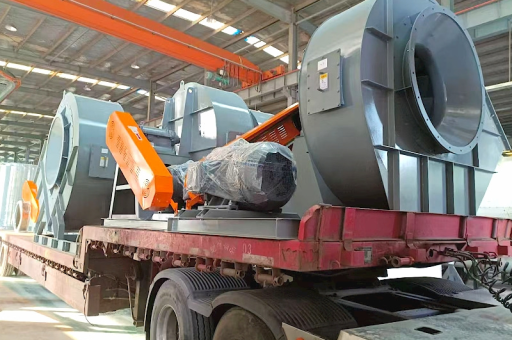
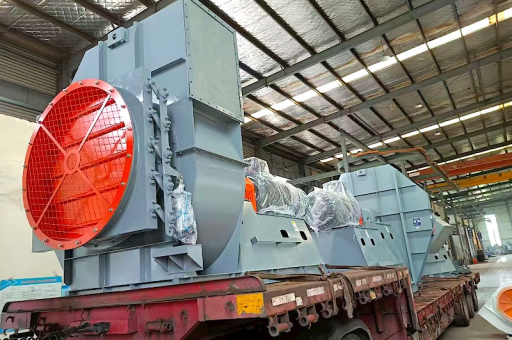
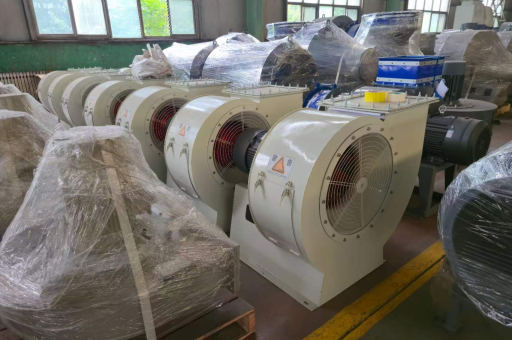
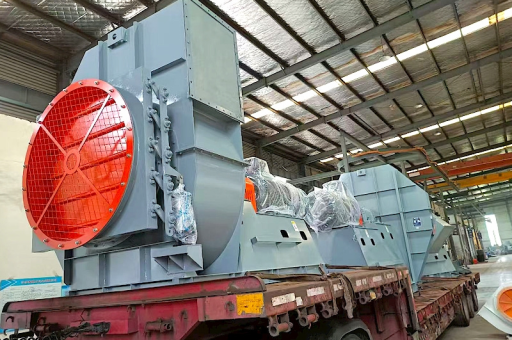
The 4-79-18D centrifugal fan represents a specific model within the widely recognized “4-79” series, which is known for its robust construction and high-efficiency air handling capabilities. This fan model is an airfoil centrifugal fan, meaning its blades are shaped like aerodynamic airfoils to minimize turbulence and maximize static pressure.
Engineered for heavy-duty industrial ventilation, the 4-79-18D is typically used in applications where reliable air movement is critical, such as in HVAC systems, material handling, and process exhaust. Its designation “18D” usually indicates the wheel diameter (18 inches) and possibly the drive arrangement (direct or belt-driven). According to fan industry standards, this model can achieve up to 82% static efficiency, making it a preferred choice for engineers who need both performance and energy savings.
Keyword focus: high-efficiency centrifugal fan, 4-79 airfoil design, industrial ventilation fan, 18-inch fan wheel.
Key Design Features and Technical Specifications
The 4-79-18D centrifugal fan is defined by the following engineering highlights:
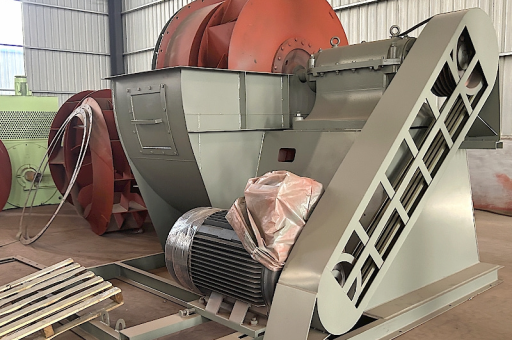
- Wheel Type: Airfoil-shaped, backward-inclined blades. This design reduces noise and allows for non-overloading power characteristics.
- Housing: Heavy-gauge steel construction, often available with a corrosion-resistant coating. The scroll housing is designed to convert kinetic energy into static pressure smoothly.
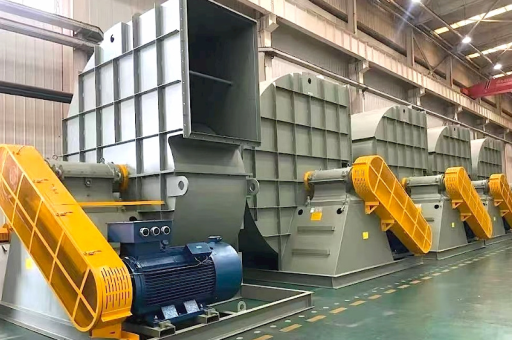
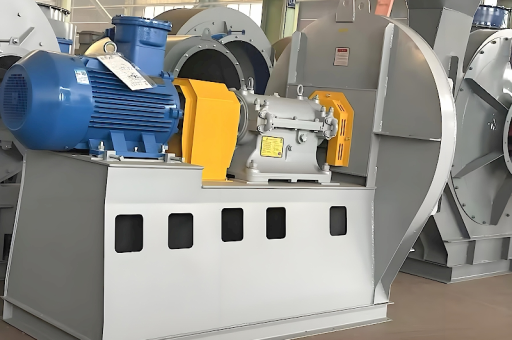
- Drive Options: Available in both direct-drive (D) and belt-drive configurations. The “D” in 18D often points to direct drive, which eliminates belt slippage and reduces maintenance.
- Performance Range: Airflow capacities typically range from 1,000 CFM to 8,000 CFM, with static pressure ratings between 0.5 inches w.g. and 6.0 inches w.g., depending on the motor and RPM.
- Operating Temperature: Standard models handle up to 200°F (93°C); high-temperature options are available for 500°F (260°C).
These specifications make the fan suitable for clean air and slightly dusty environments. For heavier debris, a different wheel type (e.g., radial or paddle-wheel) is recommended.
Keyword focus: backward-inclined airfoil blade, direct-drive fan specs, steel centrifugal housing, 1,000 to 8,000 CFM fan.
Common Industrial Applications
Due to its efficiency and durability, the 4-79-18D centrifugal fan is deployed across multiple sectors:
- HVAC Systems: Used in large commercial buildings for supply and return air.
- Industrial Process Exhaust: Removes fumes, light dust, and heat from manufacturing floors.
- Clean Rooms: Provides precise air volume control with low vibration.
- Dust Collection Systems: For pre-filters or secondary air movement (not suitable for heavy particulate without a protective wheel).
- Agricultural Ventilation: Ventilates barns and greenhouses where high static pressure is needed against long duct runs.
In a typical factory setup, this fan is often paired with variable frequency drives (VFDs) to modulate airflow based on real-time demand.
Keyword focus: HVAC supply fan, industrial exhaust fan, clean room ventilation, dust collection fan, VFD-compatible fan.
Performance Analysis and Efficiency Factors
The 4-79-18D centrifugal fan is praised for its non-overloading horsepower characteristics—meaning that if the system resistance decreases, the motor will not draw excessive current. This safety feature protects the motor and reduces electricity costs.
Efficiency Comparison:
- 4-79 series fans typically operate at 80-85% static efficiency.
- Older forward-curved fans hover around 60-70% efficiency.
- The 18D size is particularly efficient at moderate to high static pressures (3–5 inches w.g.).
Key factors influencing performance:
- Inlet conditions: A smooth, straight inlet duct (minimum 1 duct diameter) prevents turbulence.
- Outlet connection: A gradual expansion reduces velocity pressure loss.
- Wheel cleanliness: Dust buildup on airfoil blades can drop efficiency by 15% or more.
Keyword focus: non-overloading fan, static efficiency optimization, energy-saving centrifugal fan, inlet duct design, blade fouling impact.
Installation Best Practices
To extract the maximum performance from the 4-79-18D fan, follow these installation tips:
-
Foundation:
- Mount on a rigid base or inertia base to reduce vibration.
- Use isolation pads or spring isolators if the fan is in a noise-sensitive area.
-
Electrical:
- Confirm voltage and phase match the fan motor nameplate.
- Install a VFD for energy savings and soft starting.
-
Ductwork:
- Always install a transition piece between the fan outlet and the duct to avoid turbulence.
- Avoid abrupt 90-degree elbows near the inlet or outlet.
-
Safety:
- Install inlet and outlet guards per OSHA 1910.212.
- Provide a disconnect switch within sight of the fan.
Keyword focus: centrifugal fan installation guide, VFD installation, vibration isolation, fan outlet duct transition, OSHA fan guard.
Maintenance and Troubleshooting Guide
Routine Maintenance (Monthly):
- Inspect and clean blades (especially if air contains oil mist or dust).
- Check bearing temperature; if above 180°F (82°C), investigate lubrication or alignment.
- Verify belt tension (if belt-drive model). Direct-drive models like the 18D simplify this.
Common Issues and Fixes:
| Problem | Likely Cause | Solution |
|---|---|---|
| Low airflow | Clogged filter or fan wheel | Clean or replace filter; inspect wheel |
| Excessive vibration | Imbalance or bearing wear | Balance wheel; replace bearings |
| Motor overheating | Over-current or poor ventilation | Check VFD settings; clean motor vents |
| High noise | Loose housing bolts or duct vibration | Tighten bolts; add duct dampeners |
When to Replace:
- If the housing is corroded beyond repair.
- If the wheel shows cracking or heavy erosion near the blade roots.
Keyword focus: fan blade cleaning, bearing lubrication, fan vibration troubleshooting, overheating motor fan, replace centrifugal fan.
Frequently Asked Questions (FAQs)
Q1: What does “4-79-18D” mean in a centrifugal fan? A: “4-79” is the series designation for airfoil-blade centrifugal fans. “18” refers to the wheel diameter (18 inches), and “D” typically indicates a direct-drive arrangement.
Q2: Can the 4-79-18D fan be used for explosive environments? A: No, not in standard form. For explosive environments, you need a fan with spark-resistant construction (e.g., aluminum wheel or non-ferrous housing). Always consult the manufacturer.
Q3: How do I increase the airflow of this fan? A: Increase fan speed (RPM) using a VFD or a larger sheave (belt-drive models only). But first, ensure the motor power is sufficient—using the fan law CFM ∝ RPM.
Q4: Is this fan suitable for high-temperature exhaust (e.g., oven venting)? A: The standard model handles up to 200°F. If your gas temperature exceeds that, specify a high-temperature version with a heat slinger and high-temp grease.
Q5: How does this fan compare to a forward-curved centrifugal fan? A: The 4-79 series (backward-inclined) is more efficient (80% vs. ~60%), has non-overloading power, and runs quieter. However, forward-curved fans are cheaper for low-pressure, high-volume applications (e.g., residential HVAC).
Q6: Where can I buy replacement parts for the 4-79-18D? A: Many industrial fan distributors stock parts for the 4-79 series. You can also contact the original manufacturer through their portal at fan (generic domain example) for OEM bearings, wheels, and housings.
Conclusion
The 4-79-18D centrifugal fan is a well-engineered solution for professionals who prioritize efficiency, reliability, and quiet operation in industrial and commercial air handling. Its airfoil blade design and direct-drive option reduce maintenance while maintaining steady performance across a wide pressure range.
For optimal results, pair the fan with a properly designed inlet/outlet system and a VFD. Regular blade cleaning and bearing checks will ensure a service life of 15–20 years or more.
Whether you are specifying a new system or retrofitting an existing one, the 4-79-18D remains a top-tier choice in the world of centrifugal fans. By following this guide, you can maximize its performance while keeping energy costs low.
Keyword focus: best centrifugal fan for industrial HVAC, 4-79 series fan review, energy-efficient fan selection, durable direct-drive fan.