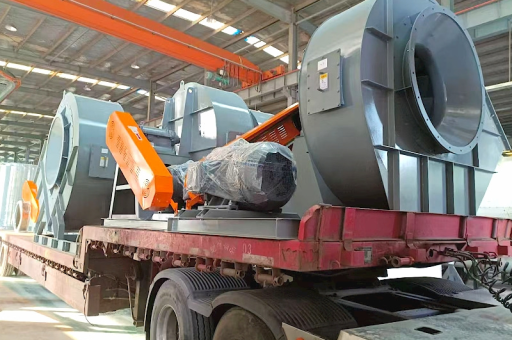
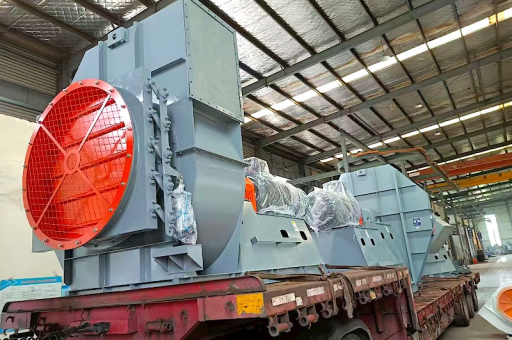
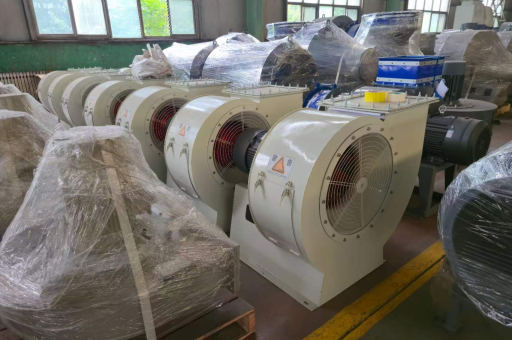
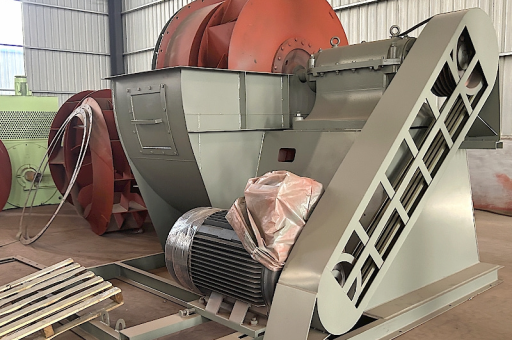
This article's table of contents introduction:
- What is a 1000°C High-Temperature Exhaust Fan?
- Critical Applications
- Key Design & Material Features
- Performance Characteristics
- Maintenance & Lifespan
- Important Selection Considerations
- Typical Cost
- Leading Manufacturers (Examples)
- Summary Checklist
Here is a comprehensive guide to 1000°C (1832°F) High-Temperature Exhaust Fans, covering what they are, their applications, critical design features, and considerations for selection.
What is a 1000°C High-Temperature Exhaust Fan?
This is an industrial fan specifically engineered to operate reliably in extreme thermal environments where the air or gas moving through it reaches up to 1000°C (1832°F). For context, standard industrial fans fail at around 80-200°C, and even "high-temp" fans usually top out at 400-600°C. A 1000°C fan operates at temperatures where steel glows red-hot. They are designed for "hot gas handling" rather than standard ventilation.
Critical Applications
These fans are essential in processes where exhaust gases are a byproduct of high-temperature combustion or chemical reactions.
- Industrial Furnaces & Kilns: Exhausting hot gases from steel reheat furnaces, glass melting tanks, cement kilns, and ceramic kilns.
- Incineration Plants: Handling flue gases from waste-to-energy and medical/hazardous waste incinerators.
- Power Generation: In biomass, coal, or heavy oil power plants, they handle combustion flue gases (often before a heat exchanger).
- Pyrometallurgy: In copper, nickel, or aluminum smelters for fume extraction and process gas handling.
- Chemical Processing: For high-temperature reactors and thermal oxidizers (TOs) and regenerative thermal oxidizers (RTOs).
Key Design & Material Features
Standard fans would melt or warp instantly at 1000°C. These fans require specialized design:
Material Selection (The Most Critical Factor)
- Impeller (Wheel): Made from high-performance superalloys such as:
- Inconel 600, 601, 617: Excellent oxidation and heat resistance.
- Haynes 230: Superior creep strength and thermal stability.
- RA330, RA253MA: Austenitic stainless steels for less extreme versions, but special alloys are mandatory for 1000°C.
- Ceramic Coatings: In some cases, the impeller surface is coated with a ceramic thermal barrier to reduce metal temperature.
- Shaft: Must be made of the same high-temperature alloys. It requires thermal isolation (see below) and specialized bearings.
- Housing (Volute/Casing): Typically made of thicker carbon steel (e.g., SA-516 Gr.70) or high-temp alloys for the inner liner, with a heavy external insulation layer (ceramic fiber or castable refractory).
- Fasteners (Bolts, Screws): Must be made of high-temp alloys to prevent galling and failure.
Cooling & Isolation Systems
Since the motor and bearings cannot withstand 1000°C, critical isolation is required:
- Shaft Cooling: A cooling wheel (a secondary fan disc) is mounted on the shaft between the hot housing and the inboard bearing. It pulls ambient air to create a cool air barrier.
- Purge Air: Compressed air is injected into the bearing housing to prevent hot gases from migrating along the shaft and to keep bearings cool.
- Water-Cooled Bearings (Optional): For continuous operation at peak temperature, bearing housings have a water jacket (cooling coils) connected to a circulating water system (e.g., water-glycol).
- Thermal Barrier: The shaft is often insulated or uses a complex labyrinth seal to minimize conductive heat transfer.
Drive Arrangement
- Direct Drive (Preferred): The motor is mounted on a heavy-duty base plate with air gap adjustments. The motor must be suitable for the ambient temperature (often a TEFC or TENV motor with a remote location or a special high-ambient motor).
- Belt Drive (Less Common): The fan shaft is supported by bearings mounted on a separate pedestal. The motor is located further away. This is more complex due to belt heat and vibration but can be used. V-belt drives are rare at 1000°C because belt life is short; direct drive is far more reliable.
Construction Standards
- Welds: Must be full-penetration, high-quality welds (e.g., AWS D1.1) with extensive pre- and post-weld heat treatment (PWHT) to prevent stress cracking.
- Dynamic Balancing: The impeller must be dynamically balanced (usually to ISO 1940 G6.3 or better) at operating temperature to avoid catastrophic vibration.
- Expansion Joints: The fan housing must allow for thermal growth (expansion). The connection to ducts uses robust, high-temperature expansion joints (e.g., ceramic fiber-filled metal bellows).
Performance Characteristics
- Pressure: Typically medium to high pressure (e.g., 1 to 5+ kPa) to overcome duct resistance and furnace pressure.
- Flow Rate: Wide range, from small (e.g., 500 m³/hr) for lab furnaces to enormous (e.g., 500,000+ m³/hr) for power plants.
- Speed: Usually 1450/1750 RPM (4-pole) or 960/1160 RPM (6-pole) to balance performance with bearing life.
- Gas Composition: The fan must be resistant to corrosive gases (SOx, NOx, HCl, etc.) common in flue gases. This may require specialized alloy selection or protective coatings.
Maintenance & Lifespan
- High Maintenance: These are mission-critical, high-maintenance assets.
- Common Failure Points: Impeller cracking (from thermal stress), bearing failure (from heat migration), shaft seal wear, and insulation degradation.
- Inspection: Regular thermal imaging (thermography) on the casing and bearings, vibration analysis, and endoscopy of the impeller.
- Lifespan: With good design and maintenance, impellers can last 2-5 years before requiring replacement. Bearings may need replacement every 6-18 months.
Important Selection Considerations
When specifying a 1000°C fan, ask the manufacturer these questions:
- Continuous vs. Intermittent Duty: Is the fan running 24/7 at 1000°C or cycling up and down? Thermal cycling causes more fatigue.
- Gas Composition: Is the gas clean, abrasive (fly ash, sand), or corrosive (acidic)? This dictates material selection (e.g., Stellite hardfacing on impeller leading edges).
- Start-Up Temp: Does the fan need to start from cold while the system is at 1000°C? That requires special starting procedures (e.g., variable frequency drive VFD) to avoid thermal shock.
- Required Redundancy: Is a second fan (standby) needed?
- Noise: High-speed fans can be very loud; may require silencers.
- Certification: Look for manufacturers with experience in your industry (e.g., AMCA, ISO 9001, API 673 for reliability).
Typical Cost
A 1000°C exhaust fan is a specialty, high-value item. Costs range dramatically, but a small unit (e.g., 5,000 CFM) might start around $15,000 - $40,000 USD. Larger, complex units for power plants or incinerators can cost $80,000 - $300,000+. This reflects the exotic materials (superalloys), heavy construction, and engineering involved.
Leading Manufacturers (Examples)
- New York Blower (NYB)
- Cincinnati Fan
- Howden
- Robinson Industries
- TLT-Turbo
- Air Control Industries (ACI)
- Kanto Iron (Japan)
- Ventilatorenfabrik Oelde GmbH (Germany)
Summary Checklist
| Requirement | Critical for 1000°C? |
|---|---|
| Material: Inconel / Haynes superalloy | YES |
| Shaft Cooling Wheel | YES |
| Water-Cooled Bearings | Highly Recommended |
| Thermal Insulation (Casing) | YES |
| Expansion Joints | YES |
| Variable Speed Drive (VFD) | Highly Recommended |
| Regular Vibration Monitoring | Mandatory |
Let me know if you'd like me to elaborate on any specific aspect, such as selection for a furnace exhaust or sizing for a particular gas flow.