
This article's table of contents introduction:
- What is a 500°C High Temperature Fan?
- Key Design Features for 500°C Operation
- Common Applications of 500°C Fans
- Materials Used for 500°C Fans
- Key Selection Considerations
- Example Characteristics (Typical specs)
- Maintenance for 500°C Fans
- Can you use a standard fan for 500°C?
Here is a comprehensive overview of 500°C (932°F) High Temperature Fans, covering their design, applications, materials, and key considerations.
What is a 500°C High Temperature Fan?
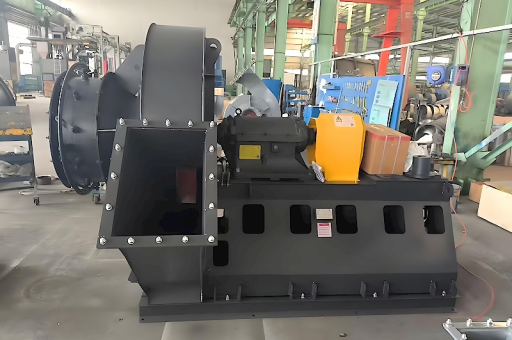
A 500°C high temperature fan is a specialized industrial fan designed to continuously handle process air or gases at temperatures up to 500°C (932°F) . These are not standard ventilation fans; they are engineered for extreme thermal environments where standard fans would fail within minutes.
At this temperature, steel glows a dull red, standard lubricants evaporate, and standard motor windings burn up. Therefore, these fans use completely different design principles.
Key Design Features for 500°C Operation
-
Motor Isolation (The most critical feature):
- Direct Drive with Shaft Cooling: The motor is mounted outside the airstream. A long drive shaft connects the motor to the impeller. A cooling fan is mounted on the shaft between the motor and the hot housing to blow ambient air over the shaft, preventing heat from traveling to the motor bearings.
- Belt Drive (Preferred): This is the most common method. The motor is placed far from the hot housing. Belts and pulleys connect the motor to the fan shaft (which has its own bearings). This completely isolates the motor from the heat.
- Air-Cooled Motor: A special "TEAO" (Totally Enclosed Air Over) motor is designed with a long shaft and an integral fan on the back end that pulls cool ambient air through the motor frame. This is less common for extreme 500°C duty.
-
Bearing System:
- External, Pillow-Block Bearings: The bearings are mounted outside the hot housing on a support stand.
- High-Temperature Grease: Uses specialized greases (e.g., polyurea-based or PFPE/Perfluoropolyether) that can withstand the radiated heat.
- Bearing Cooling: Often includes a cooling disc (a finned metal disc) on the shaft between the housing and the bearing to radiate heat away, or a small fan blowing on the bearings.
- Constant Level Oilers or Automatic Lubrication Systems are common.
-
Impeller (Wheel) Design:
- Radial Blade (Paddlewheel): The most common type for 500°C. It is simple, robust, and self-cleaning. Its flat blades handle dirty or particle-laden hot gases well.
- Backward Inclined (BI) or Airfoil: Used for higher efficiency and cleaner air. However, the blades are more complex and can be susceptible to thermal stress.
- Construction: The impeller is made from high-grade stainless steel (e.g., 310S, 316L) or a high-nickel alloy (e.g., Inconel, Hastelloy). The design must allow for significant thermal expansion without warping.
- Welding: All welds are done with compatible high-temperature filler metals.
-
Housing Construction:
- Material: Heavy-gauge stainless steel or carbon steel (with a high-temperature paint if stainless isn't needed for the gas chemistry).
- Drain Ports: Required to allow condensation (if starting from cold) to drain.
- Insulation Jacket: Often the housing is externally insulated to protect personnel and improve thermal efficiency. The fan itself is rarely internally insulated due to particle erosion.
-
Shaft Seal:
- At the point where the shaft passes through the hot housing, a high-temp labyrinth seal or packing gland is used to prevent hot gases from leaking out and damaging the external bearings. Some use a purge air system.
Common Applications of 500°C Fans
- Industrial Ovens & Furnaces: Forced draft for burners, combustion air supply.
- Kilns: Cement, lime, ceramic, and brick kilns (both exhaust and supply).
- Exhaust Systems: Removing hot fumes, combustion gases, and process vapors from furnaces, forges, and boilers.
- Material Handling: Conveying hot bulk materials (e.g., hot ash, clinker, sand).
- Waste Heat Recovery: Moving hot exhaust gases through heat exchangers or boilers.
- Fume Incineration / Thermal Oxidizers: Handling the hot gas stream before and after the oxidation process.
- Drying Systems: For high-temperature drying of ceramics, metals, or chemicals.
- Glass Manufacturing: Air supply for forming and annealing processes.
Materials Used for 500°C Fans
| Component | Common Material(s) | Why this material? |
|---|---|---|
| Impeller | SS310S, Inconel 600/601, Hastelloy X | Excellent creep resistance, oxidation, and corrosion resistance at 500°C+. |
| Housing | SS304, SS310S, Carbon Steel (coated) | Good structural strength. SS310S for higher corrosion resistance. |
| Shaft | Stainless Steel 316 or 410 | High strength, corrosion resistance, good thermal conductivity for cooling. |
| Bearings | External Pillow Block (Cast Iron) | Isolated from heat, easy to lubricate, replaceable. |
| Fasteners | Stainless Steel (304/316 or better) | Prevents galling and maintains strength at temperature. |
Key Selection Considerations
- Is it truly 500°C continuous? Ask for the maximum continuous operating temperature and any possible peak/spike conditions (e.g., 550°C for 10 minutes during a startup upset).
- Gas Composition:
- Corrosive gases? (Chlorine, sulfur oxides) → Requires expensive alloys (Hastelloy, Inconel). SS316 or SS310 may fail.
- Abrasive particles? (Dust, sand, fly ash) → Requires thicker impeller blades, wear plates, and a radial blade design.
- Speed & Pressure: Higher pressure demands more robust construction and creates higher stresses. Ensure the fan wheel is rated for the speed at temperature.
- Motor Type:
- VFD (Variable Frequency Drive) ready? VFDs can be hard on standard motors due to voltage spikes. A VFD-rated motor is recommended.
- Ambient Temperature: Where is the motor located? If the room is hot, the motor needs derating or special insulation.
- Thermal Expansion: The fan base must allow the housing to expand. Slide plates and flexible expansion joints on ductwork are essential to prevent thermal stress cracking.
Example Characteristics (Typical specs)
- Airflow: Variable, from 100 to 200,000+ CFM
- Static Pressure: Up to 30" - 50" w.g. (Water Gauge) or more
- Speed: 1500 - 3500 RPM (belt drive allows speed adjustment)
- Drive Power: 5 HP to 500 HP+
- Sound Level: Typically high (90-105 dBA) due to high speed and heavy construction. Silencers are often needed.
Maintenance for 500°C Fans
- Critical: Lubrication: Bearings must be lubricated at the correct interval (often every 500-2000 hours) with the correct high-temp grease. Over-greasing is as bad as under-greasing.
- Vibration Monitoring: Essential for detecting bearing failure or imbalance (due to dust buildup or blade wear).
- Visual Inspection: Check for blade erosion, housing hot spots, and belt tension.
- Pre-Start Warm-Up: If the fan is started cold, a warm-up cycle is required to bring the shaft and impeller to a stable temperature before reaching full speed. This prevents thermal shock (cracking) and condensation.
Can you use a standard fan for 500°C?
Absolutely not. A standard fan operating at 500°C will experience:
- Bearing Seizure: Grease vaporizes, ball bearings overheat and weld.
- Motor Burnout: Windings short out (unless in a separate airstream).
- Impeller Creep & Failure: Steel loses 90% of its strength. The impeller will deform, stretch, and disintegrate.
- Thermal Expansion Lock: The shaft expands and binds against the housing.
Conclusion: A 500°C fan is a heavy-duty, precision-engineered piece of equipment. The cost is significantly higher than a standard fan due to the exotic materials, complex bearing cooling, and robust construction. It is a critical component for any high-temperature industrial process.
If you have a specific application or need a quote, you should contact a specialized industrial fan manufacturer. Leading brands include Howden, Chicago Blower, New York Blower (NYB), Aerovent, TLT-Turbo, Robinson Fans, and Twin City Fan & Blower.





