
This article's table of contents introduction:
- Table of Contents (Directory Guide)
- Introduction: Why 200℃ High Temperature Fans Matter
- Technical Specifications: What Makes a Fan Withstand 200°C?
- Key Applications: From Kilns to Wind Turbine Enclosures
- Q&A: Common Questions About High Temperature Fan Performance
- Design & Material Innovations: Heat-Resistant Motors and Bearings
- Maintenance Best Practices: Ensuring Longevity in Harsh Environments
- Conclusion: Selecting the Right Fan for Your Thermal Management Needs
** The Critical Role of 200℃ High Temperature Fans in Industrial Ventilation and Wind Turbine Cooling Systems
Table of Contents (Directory Guide)
- Introduction: Why 200℃ High Temperature Fans Matter
- Technical Specifications: What Makes a Fan Withstand 200°C?
- Key Applications: From Kilns to Wind Turbine Enclosures
- Q&A: Common Questions About High Temperature Fan Performance
- Design & Material Innovations: Heat-Resistant Motors and Bearings
- Maintenance Best Practices: Ensuring Longevity in Harsh Environments
- Conclusion: Selecting the Right Fan for Your Thermal Management Needs
Introduction: Why 200℃ High Temperature Fans Matter
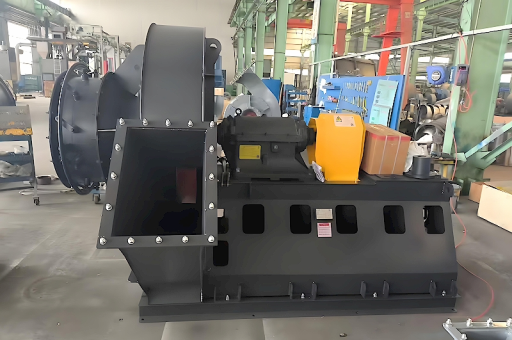
In industrial environments where process heat is unavoidable, standard ventilation fans fail quickly. A 200℃ high temperature fan is engineered to operate continuously in ambient temperatures reaching 200 degrees Celsius—far beyond the limits of conventional fans (typically 70–85°C). These fans are indispensable in glass manufacturing, metal forging, food drying, and increasingly, in wind turbine nacelle cooling systems, where waste heat from generators and gearboxes must be expelled without introducing external ignition risks. Without reliable high-temperature airflow, production lines stall, equipment degrades, and safety hazards multiply.
Technical Specifications: What Makes a Fan Withstand 200°C?
A true 200°C rated fan is not just a standard fan with a bigger motor. Key engineering differences include:
- Motor insulation class H or C: These motors use silicone-impregnated windings that resist thermal breakdown up to 200°C.
- Sealed bearings with high-temp grease: Standard lithium-based grease liquefies above 150°C; specialized perfluoroether or silicone greases maintain lubrication at 200°C.
- Impeller material: Aluminum impellers are limited to about 150°C. For 200°C, stainless steel (SS304/SS316) or zinc-aluminum alloy impellers are standard.
- Housing construction: The fan casing must be powder-coated with heat-resistant epoxy or constructed from heavy-gauge steel to prevent warping.
These features ensure the fan maintains its efficiency curve even when the surrounding air temperature peaks.
Key Applications: From Kilns to Wind Turbine Enclosures
Industrial Ovens & Kilns:
In ceramic and brick drying tunnels, 200°C high temperature fans circulate superheated air to accelerate moisture removal. Without them, drying times double and product defects increase.
Foundries & Forging Lines:
Cooling castings after shakeout requires robust airflow at 180–200°C. Fans positioned in exhaust hoods must handle particulate and thermal shock.
Wind Turbine Nacelle Cooling:
Modern wind turbines generate substantial heat from the gearbox and generator. A wind turbine nacelle often reaches 80–90°C internal ambient, but hot spots near the generator can peak at 200°C. Specialized high-temperature fans mounted in the nacelle cooling ducts ensure the generator windings remain below their thermal class limit, thereby extending service intervals.
Chemical & Petrochemical Reactors:
Purge air for reactors operating at 200°C must be drawn by fans capable of surviving the same temperature to avoid cold-shock condensation.
Q&A: Common Questions About High Temperature Fan Performance
Q1: Can a standard industrial fan be used at 200°C if I add a heat shield?
No. Heat shields reduce radiant heat but do not prevent the motor and bearings from absorbing ambient 200°C air. Internal temperatures still melt insulation and seize bearings. Only fans purpose-designed for 200°C continuous duty should be used.
Q2: How does a 200°C fan perform compared to a room-temperature fan in terms of airflow?
At 200°C, air density drops to approximately 0.74 kg/m³ (vs. 1.2 kg/m³ at 20°C). This means motor load decreases, but the fan’s pressure generation also falls. Proper selection requires correcting the fan curve for high-temperature density.
Q3: Are there explosion-proof versions of 200°C fans for wind turbine applications?
Yes. In wind turbine nacelles where gearbox oil mist may exist, ATEX-approved models with spark-resistant aluminum-bronze impellers are available, certified for Zone 2 gas groups.
Q4: What is the typical lifespan of a 200°C high temperature fan?
With proper maintenance (bearing replacement every 8,000–12,000 hours, motor insulation testing annually), a well-built fan can last 8–10 years in continuous 200°C service.
Design & Material Innovations: Heat-Resistant Motors and Bearings
Recent advancements have improved reliability at 200°C:
- Ceramic bearing cages: Instead of steel cages, some premium fans use silicon nitride hybrid bearings that resist thermal expansion and require no grease.
- External rotor motors: Heat-generating windings are placed on the outside of the rotor, while the stator core remains cooler—a design that lowers internal motor temperature by 15–20°C.
- Active cooling fins: The motor housing of some 200°C fans is cast with integral fins that increase surface area, allowing natural convection to cool the inverter or electronics.
- Thermal protection switches: Built-in bimetal sensors cut power if the motor housing exceeds 210°C, preventing catastrophic failure.
These innovations are especially important in wind turbine installations, where maintenance access is difficult and prolonged downtime directly affects energy revenue.
Maintenance Best Practices: Ensuring Longevity in Harsh Environments
To maximize the service life of a 200°C high temperature fan, follow this checklist:
- Weekly: Listen for bearing rumble or squeal. Early replacement of bearings costs 1/10th of a motor replacement.
- Monthly: Measure motor winding resistance with a megohmmeter—values below 1 MΩ indicate insulation degradation.
- Quarterly: Inspect impeller for thermal distortion or cracks. Hot spots may cause imbalance.
- Annual: Replace all bearings regardless of noise. High-temperature grease degrades over time even in operation.
- Immediately: If fan vibrates after a power outage or thermal shock, shut down and rebalance.
For wind turbine applications, schedule bearing replacement to coincide with other turbine maintenance windows (e.g., gearbox oil changes) to minimize crane lifts.
Conclusion: Selecting the Right Fan for Your Thermal Management Needs
A 200°C high temperature fan is not a commodity item—it is a specialized piece of thermal management equipment. Whether you are exhausting a kiln, drying food, or cooling a wind turbine nacelle, selecting a fan with certified Class H insulation, stainless steel impeller, and sealed high-temp bearings is essential. Always request a corrected performance curve for the expected operating temperature. By following the engineering guidelines and maintenance schedules outlined above, you can ensure years of reliable airflow in your hottest environments.
For further technical data on high temperature fan selection for wind turbine and industrial applications, consult your fan manufacturer’s thermal derating tables and ATEX compatibility certification.





