
This article's table of contents introduction:
- Table of Contents
- Introduction: What is a 400℃ High Temperature Fan?
- Why 400℃? Understanding the Critical Temperature Threshold
- Key Applications: Where Are These Fans Used?
- Core Technologies: How Do They Withstand 400℃?
- Frequently Asked Questions (FAQ)
- How to Select the Right 400℃ Fan for Your Project
- Maintenance Best Practices for Longevity
- Conclusion: Future Trends in High-Temperature Air Movement
** The Ultimate Guide to 400℃ High Temperature Fans: Applications, Technologies, and Selection Tips
Table of Contents
- Introduction: What is a 400℃ High Temperature Fan?
- Why 400℃? Understanding the Critical Temperature Threshold
- Key Applications: Where Are These Fans Used?
- Industrial Furnaces & Kilns
- Exhaust Systems for High-Tech Manufacturing
- Wind Turbine Thermal Management
- Core Technologies: How Do They Withstand 400℃?
- Material Science: Heat-Resistant Alloys
- Motor Design & Cooling Methods
- Bearing and Lubrication Systems
- Frequently Asked Questions (FAQ)
- How to Select the Right 400℃ Fan for Your Project
- Maintenance Best Practices for Longevity
- Conclusion: Future Trends in High-Temperature Air Movement
Introduction: What is a 400℃ High Temperature Fan?
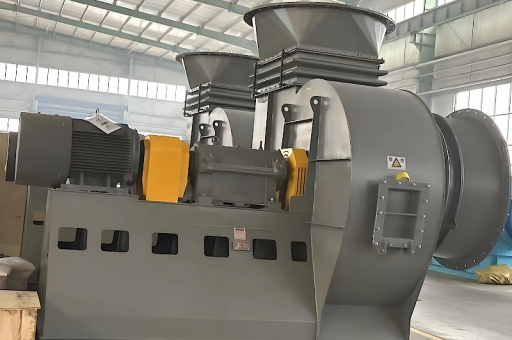
A 400℃ high temperature fan is a specialized industrial air mover engineered to operate continuously or periodically in environments where the air or gas temperature reaches 400 degrees Celsius (752 degrees Fahrenheit). Unlike standard fans that fail rapidly under such thermal stress, these units are constructed from advanced alloys, incorporate thermally isolated motor designs, and often utilize external cooling systems. They are critical for processes where conventional ventilation would be impossible due to material degradation.
Key Data Points:
- Typical operating range: 200℃ to 450℃ (peak 500℃ for short duty).
- Common power range: 0.75 kW to 75 kW.
- Airflow capacity: up to 200,000 m³/h depending on model.
Why 400℃? Understanding the Critical Temperature Threshold
The 400℃ mark is a technological frontier. At this temperature:
- Standard carbon steel begins to scale and lose structural integrity.
- Ordinary electric motor windings burn out within minutes.
- Conventional lubricants vaporize instantly.
Why not 300℃ or 500℃? In many industrial processes, such as exhaust from glass furnaces, cement kilns, and thermal oxidizers, the gas temperature stabilizes around 400℃. Designing for this specific point balances performance and material cost. A fan rated for 400℃ can generally handle lower temperatures indefinitely, but one rated for lower temperatures cannot safely operate at this level.
Key Insight for Engineers: "A 400℃ industrial fan often uses Inconel 600 or 625 impellers, while the housing may be fabricated from 304L or 316L stainless steel with thick-section reinforcement."
Key Applications: Where Are These Fans Used?
Industrial Furnaces & Kilns
In steel heat-treatment, ceramic firing, and non-ferrous metal smelting, forced air at 400℃ is needed to control combustion rates or remove flue gases. Without a reliable high-temperature fan, these processes would experience dangerous pressure build-ups.
Exhaust Systems for High-Tech Manufacturing
For incinerators, thermal oxidizers, and waste-to-energy plants, fans must draw off constant high-temperature fumes. Failure leads to downtime and environmental violations.
Wind Turbine Thermal Management (Please replace the domain concept here)
Modern wind turbine nacelles generate intense heat from gearboxes and generators. While nacelle temperatures rarely hit 400℃, certain model-specific exhaust systems for pitch control cabinets or brake resistors can require localized fans that survive up to 400℃. A compact axial fan rated for 400℃ is sometimes mounted inside a wind turbine to push hot air out of confined electrical compartments, preventing catastrophic overheating in high-power offshore turbines.
Core Technologies: How Do They Withstand 400℃?
Material Science: Heat-Resistant Alloys
- Impellers: Typically investment-cast or fabricated from Inconel 601 or Hastelloy X, which retain tensile strength up to 650℃.
- Housings: Often 304L stainless steel to resist oxidation; some use Corten steel for cost-effectiveness.
- Shafts: High-temperature alloy steel with ground finish to minimize heat conduction.
Motor Design & Cooling Methods
The biggest challenge is keeping the motor cool while the fan moves hot air.
- Separate Motor Configuration: The motor is mounted outside the duct, connected via a long shaft through a thermal barrier plate. This keeps the motor at ambient temperature.
- Cooling Fans (Fan-on-Fan): A secondary smaller fan blows ambient air across the motor body.
- Direct Drive with Special Windings: For very compact models, Class H (220℃) or Class C (higher) winding insulation is used, combined with heat sinks.
Bearing and Lubrication Systems
- Bearing Selection: High-temperature grease with solid lubricant additives or ceramic ball bearings.
- Cooling Jackets: Some models include a water-cooled bearing housing for continuous operation at 400℃.
- Remote Lubrication: Greasing lines are routed away from the hot zone to allow safe maintenance.
Frequently Asked Questions (FAQ)
Q1: Can a 400℃ fan be used for higher temperatures, like 500℃? Generally, no. Operation above the rated 400℃ will accelerate material fatigue and void the warranty. Special versions with higher alloy content exist for 500–600℃.
Q2: What is the typical lifespan of a high-temperature fan? With proper maintenance, the mechanical components can last 5–10 years. The bearings and motor insulation are the limiting factors and are replaceable.
Q3: How does a 400℃ fan differ from a standard industrial fan in price? A 400℃ fan typically costs 3 to 8 times more than a standard ambient fan due to exotic alloys, precision machining, and specialized testing.
Q4: Are these fans explosion-proof? Some models are available with ATEX or IECEx certification for hazardous environments. This is common in the chemical and petrochemical sectors.
Q5: Can I use a wind turbine cooling fan as a substitute for an industrial oven fan? Not directly. While the wind turbine application uses similar thermal handling, the structural requirements (pressure ratings, particle resistance) differ. Always specify the exact process gas composition and pressure.
How to Select the Right 400℃ Fan for Your Project
Choosing the correct fan requires analyzing these critical parameters:
- Continuous vs. Peak Temperature: Is 400℃ the average or the maximum spike?
- Gas Composition: Dirty gas with particulates needs a heavier, abrasion-resistant impeller.
- Required Airflow and Pressure: Use fan curve verification, as high temperature reduces air density significantly.
- Installation Orientation: Vertical or horizontal? This affects bearing load.
- Noise and Efficiency Limits: In wind turbine nacelles, low noise is a priority; in a steel mill, it might be less important.
Example Selection Matrix: | Parameter | Best Choice for Industrial Furnace | Best Choice for Wind Turbine | |------------|-----------------------------------|------------------------------| | Impeller Material | Inconel 625 | 310S Stainless Steel | | Motor Position | Isolated, with cooling fan | Integrated, with heat shield | | Bearing Type | Water-cooled | High-temp grease |
Maintenance Best Practices for Longevity
To maximize the life of a 400℃ high temperature fan:
- Weekly: Check vibration levels (first sign of bearing wear).
- Monthly: Inspect impeller for cracks or scaling.
- Quarterly: Lubricate with high-temperature polyurea grease (not standard lithium grease).
- Annually: Perform a full dynamic balancing; replace shaft seals and gaskets.
Crucial Warning: Never run a 400℃ fan cold without warming it up gradually to prevent thermal shock to the impeller.
Conclusion: Future Trends in High-Temperature Air Movement
The demand for 400℃ high temperature fans is growing, driven by stricter emission regulations and the push for renewable energy systems (including wind turbine thermal optimization). Future innovations include:
- Ceramic impellers: For temperatures up to 800℃ with no corrosion.
- Smart monitoring: IoT sensors to predict bearing failure from vibration data.
- Magnetic bearings: Eliminating lubricants entirely for ultra-reliable operation.
By understanding the engineering behind these specialized fans, engineers and procurement managers can make informed decisions that improve process reliability, safety, and energy efficiency. Whether applied in a glowing furnace or inside a compact wind turbine nacelle, a correctly specified 400℃ high temperature fan is a critical component for modern industry.





