
This article's table of contents introduction:
- What is a 300°C High Temperature Fan?
- Typical Applications
- Critical Design Features for 300°C
- Types of 300°C Fans
- Important Selection Parameters
- Example Specifications
- Common Manufacturers & Search Terms
- Key Safety & Maintenance Notes
Under "300°C High Temperature Fan," you are likely referring to industrial fans designed to handle continuous operating temperatures of 300°C (572°F) . These are typically used for hot air circulation, exhaust, or cooling in high-temperature processes.
Here is a comprehensive breakdown of what these fans are, their common applications, key design considerations, and how to specify one.
What is a 300°C High Temperature Fan?
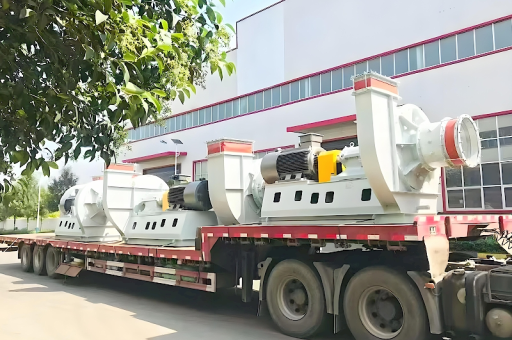
These are centrifugal or axial fans specifically engineered to move air or gases at temperatures around 300°C. At this temperature, standard steel fans fail due to thermal expansion, creep, and loss of strength. These fans are built with specialized materials and cooling systems.
Key Differences from Standard Fans:
- Materials: The impeller, shaft, and housing are made from high-temperature alloys (e.g., Stainless Steel 304 / 316, or 310S for higher temps).
- Motor Mount: The motor is almost always dismounted (external) with a cooling shaft and bearing housing to isolate the motor from the hot airstream.
- Bearings: High-temperature grease or specialized bearings (e.g., SKF high-temp bearings) with external cooling fins or water-cooling jackets.
- Seals: Special thermal expansion seals to prevent leakage.
Typical Applications
These fans are critical in industries where process heat is involved:
- Industrial Ovens & Dryers: Circulating hot air for curing, drying, or baking (e.g., paint, food, textiles).
- Furnace Exhaust: Removing combustion gases and heat from heat treatment furnaces, kilns, or forge shops.
- Environmental Chambers: Used in testing (temperature cycling) or conditioning rooms.
- Waste Heat Recovery: Moving hot exhaust through heat exchangers.
- Glass & Ceramics Industry: Cooling or exhausting hot air from production lines.
- Boiler Systems: Induced draft fans for hot flue gas.
Critical Design Features for 300°C
If you are specifying or purchasing a 300°C fan, look for these features:
| Feature | Requirement for 300°C |
|---|---|
| Impeller Material | Stainless Steel 304 or 316 (must be heat-treated for creep resistance). For higher temps, use 310S or Inconel. |
| Housing | Heavy-gauge steel or stainless steel with thermal stress relief. Often made in 2 halves for easy service. |
| Shaft Cooling | A cooling disc or cooling fan on the shaft between the housing and bearing. This prevents heat from conducting to the bearings. |
| Bearings | External bearing housing (pillow block) with grease relief. Some high-temp applications require water-cooled jackets for the bearing housing. |
| Motor | Dismounted (V-belt drive or direct-coupled with spacer) . The motor itself must be IP55/ IP65 and rated for ambient temperature (not 300°C). |
| Shaft Seal | Graphite packing, labyrinth seals, or high-temp silicone to prevent hot air leakage. |
| Thermal Expansion | The housing must have expansion joints or slotted bolt holes to allow the metal to grow without warping. |
Types of 300°C Fans
A. Centrifugal Fans (Most Common for 300°C)
- Forward Curved (Squirrel Cage): High volume, lower pressure. Used for general circulation.
- Backward Inclined (BI) / Backward Curved: High pressure, higher efficiency. Used for ducted systems or overcoming static pressure.
- Radial (Paddle Wheel): Strong and simple. Handles dirty air or particulate well.
B. Axial Fans
- Tube Axial / Vane Axial: Used for high-volume, low-pressure applications (e.g., oven exhaust stacks). They require high-temp motor insulation if the motor is in the airstream, but dismounting is preferred.
Important Selection Parameters
When ordering, you must provide:
- Air Volume (CFM or m³/h):
- Static Pressure (in.w.g. or Pa):
- Gas Temperature: (300°C continuous? Peak surge?).
- Gas Composition: Is it clean air? Corrosive (acids)? Contains dust (abrasive)?
- Motor Position: Do you need a direct drive or belt drive? For 300°C, belt drive is safer because the motor is farther from the heat.
- Ambient Conditions: Where will the motor sit? (e.g., 40°C ambient?).
Example Specifications
| Specification | Value |
|---|---|
| Max Operating Temp | 300°C (Continuous) |
| Impeller Type | Backward Curved |
| Impeller Material | Stainless Steel 310S |
| Housing Material | SS 304 |
| Motor | 15kW / 1450 RPM / IP55 / IE3 (Dismounted) |
| Drive | V-Belt (with adjustable pulley) |
| Bearings | Double row, self-aligning, with high-temp grease & cooling fins |
| Shaft Seal | Graphite packing |
Common Manufacturers & Search Terms
- Brands: New York Blower, Greenheck, Cincinnati Fan, Howden, Soler & Palau, or specific OEMs for furnaces.
- Search Terms: "High temperature centrifugal fan," "Hot air circulation fan 300°C," "Industrial furnace exhaust fan," "Thermal process fan stainless steel."
Key Safety & Maintenance Notes
- Variable Speed Drive (VFD): Highly recommended for start-up and control.
- Never run a 300°C fan below its minimum speed. If a VFD is used, ensure the fan speeds up quickly past its resonant frequency (critical speed) to avoid vibration damage.
- Vibration monitoring is essential. Heat affects balance.
- Thermal soak: Allow the fan to run cold for a few minutes before stopping it to dissipate heat.
If you have a specific application (e.g., "I need to exhaust a 300°C oven with 5000 CFM at 2" static pressure"), please provide those details for a more precise recommendation.





