
Optimizing Industrial Efficiency: The Critical Role of the 200kW Boiler Combustion Fan
Table of Contents
- Introduction: Why the 200kW Boiler Combustion Fan Matters
- Technical Specifications and Design Features
- Energy Efficiency and Operational Cost Reduction
- Installation Best Practices and Common Pitfalls
- Maintenance Strategies for Longevity
- Troubleshooting Common Issues
- Frequently Asked Questions (FAQ)
- Future Trends and Innovations
Introduction: Why the 200kW Boiler Combustion Fan Matters
In the landscape of industrial heating systems, the 200kW boiler combustion fan represents a cornerstone of reliable and efficient thermal energy production. Whether powering a district heating plant, a chemical processing facility, or a large commercial greenhouse, this component directly influences combustion quality, fuel consumption, and emissions output. A poorly designed or maintained fan can reduce boiler efficiency by 15–25%, leading to significant operational losses and increased carbon footprint.
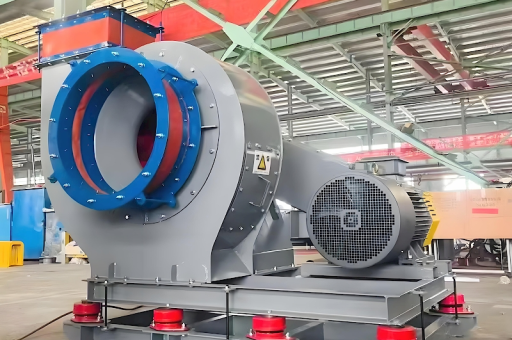
The 200kW rating indicates the fan motor's power consumption under full load—200 kilowatts. However, the actual airflow volume (measured in cubic meters per hour, m³/h) and static pressure (Pa) vary based on the specific boiler design. Typically, such a fan delivers 35,000 to 55,000 m³/h at pressures between 3,000 and 5,000 Pa, suitable for medium-to-large industrial boilers burning natural gas, heavy fuel oil, or biomass.
Why focus on this specific power class? Because 200kW represents a sweet spot: large enough to serve substantial thermal loads yet small enough to be retrofitted into existing systems without major structural modifications. Moreover, many facilities are upgrading legacy fans to modern high-efficiency models to comply with stricter environmental regulations (e.g., EU Ecodesign, EPA Boiler MACT).
Q: What happens if the combustion fan is undersized?
A: Undersizing causes incomplete combustion, soot buildup, higher carbon monoxide emissions, and reduced heat transfer. The boiler may also run hotter than designed, increasing thermal stress on tubes and refractory.
Q: Can a 200kW fan be used for forced draft and induced draft simultaneously?
A: Typically, no. Forced draft (FD) fans push air into the burner, while induced draft (ID) fans pull flue gas out. Some systems use a single fan for both via complex damper arrangements, but this is inefficient. The 200kW class is most commonly used as an FD fan.
Technical Specifications and Design Features
A modern 200kW boiler combustion fan is far from a simple blower. Key engineering parameters include:
| Parameter | Typical Range | Impact on Performance |
|---|---|---|
| Motor Power | 200 kW (268 HP) | Defines max airflow and pressure capability |
| Airflow (Q) | 35,000–55,000 m³/h | Determines boiler firing rate capacity |
| Static Pressure (Ps) | 3,000–5,000 Pa | Overcomes duct resistance and burner backpressure |
| Impeller Diameter | 800–1,200 mm | Larger diameters produce higher flow at lower RPM |
| Rotational Speed | 1,450–2,950 RPM | Higher speed increases pressure but may reduce component life |
| Material | Carbon steel, Corten, or stainless steel | Corrosion resistance for flue gas recirculation |
Design features that distinguish high-quality units:
- Backward-curved impeller blades: These provide higher efficiency (up to 85% static efficiency) and a non-overloading power curve. Even if duct resistance increases, motor current stays within safe limits.
- Variable Frequency Drive (VFD) compatibility: Modern fans are built to operate with VFDs, allowing precise airflow control based on boiler load. This alone can reduce fan energy consumption by 30–50% compared to constant-speed operation with dampers.
- Low-vibration design: Class G2.5 balancing per ISO 1940 minimizes bearing wear. Heavy-duty fans use split-housing designs for easy access while maintaining alignment.
- Airfoil blades: Advanced computational fluid dynamics (CFD) optimizes blade shape, reducing turbulence and noise (typically <85 dBA at 1 meter).
Q: Why is backward-curved blade design preferred over forward-curved for 200kW fans?
A: Forward-curved blades generate high flow at low pressure but have a steep power curve that can overload the motor if static pressure drops unexpectedly. Backward-curved blades provide stable, high-pressure performance with inherent power limitation, making them safer and more efficient for boiler applications.
Q: How does the fan's pressure curve interact with the boiler's resistance curve?
A: The fan must operate at the intersection of its performance curve and the boiler's system resistance curve. If the boiler's backpressure increases (e.g., fouled heat exchanger), the fan must deliver higher pressure at reduced flow. A properly selected fan maintains stable operation without surging or stalling.
Energy Efficiency and Operational Cost Reduction
For a facility running a 200kW boiler combustion fan continuously at full load, annual electricity consumption is approximately 1,752 MWh (200 kW × 8,760 hours). At an industrial electricity rate of $0.08/kWh, that equates to $140,160 per year in fan energy cost alone. Reducing this by just 20% yields $28,032 annual savings—enough to justify a premium fan upgrade in less than two years.
Key strategies for energy optimization:
- VFD implementation: By matching fan speed to actual boiler demand (which varies seasonally and diurnally), average power draw can drop from 200 kW to 120–150 kW. This is the single most impactful measure.
- High-efficiency motor replacement: Replacing standard IE2 motors (87% efficiency) with IE4 premium motors (95% efficiency) reduces losses by 8%. For a 200 kW motor operating 6,000 hours/year, this saves ~24,000 kWh annually.
- Ductwork optimization: Reducing pressure drop by 500 Pa through smoother ducts, larger diameters, or fewer bends can cut fan power by 10–15%. CFD modeling helps identify bottlenecks.
- Regular cleaning: Combustion air filters accumulate dust over time, increasing pressure drop. A clean filter can save 3–5% in fan power.
Case example: A Danish district heating plant replaced an old constant-speed 200kW fan with a new VFD-controlled model. The fan now runs at 70% speed during off-peak hours (October–March, nights). Annual energy consumption dropped from 1,752 MWh to 1,051 MWh—a 40% reduction. Payback period: 14 months.
Q: Is it always cost-effective to install a VFD on a 200kW combustion fan?
A: Generally yes, but the payback depends on load variability. If the boiler runs at near-full load year-round (e.g., base-load power plant), savings are smaller. However, most industrial boilers have significant turndown (50–100% load) due to seasonal heating demand or production schedules, making VFDs highly profitable.
Q: Can energy savings affect warranty or reliability?
A: Modern VFDs actually extend motor life by reducing thermal stress during start-up (soft start) and eliminating across-the-line current spikes. Many fan manufacturers offer warranties explicitly covering VFD operation. However, motors must be inverter-duty rated to handle voltage reflections.
Installation Best Practices and Common Pitfalls
Pre-installation checklist:
- Foundation: Must be level and rigid enough to absorb vibration. A minimum of 1.5× the fan weight for concrete inertia base is recommended.
- Inlet and outlet ductwork: Provide at least one duct diameter of straight run before the fan inlet to avoid pre-rotation (which reduces performance by 10–20%). Use flexible connections to isolate vibration from ductwork.
- Electrical sizing: Feed cable must handle 250–300 A (for 200 kW, 400V, 3-phase). Include overload protection set at 105–110% of FLA.
- Clearance: Allow 1 meter on the motor side for removal and 1.5 meters on the impeller side for access. Some designs require top clearance for impeller lifting.
Common installation mistakes:
| Mistake | Consequence | Mitigation |
|---|---|---|
| Mounting fan directly on boiler | Transmits vibration, accelerates bearing wear | Use vibration isolators (spring or rubber pads) |
| Neglecting inlet guide vanes | Poor airflow control, high energy use | Inlet vanes cost-effectively modulate flow for fixed-speed fans |
| Using undersized discharge duct | High velocity noise, excessive pressure loss | Keep discharge velocity < 20 m/s; use gradual expansions |
| Ignoring ambient temperature | Motor overheating in hot boiler rooms | Verify motor insulation class (F or H) and ensure ventilation airflow |
Q: Is it better to install the combustion fan inside or outside the boiler house?
A: Indoors is preferred for cold climates to prevent icing of bearings and vanes. Outdoors requires weatherproof enclosures, heaters for bearing housings (if ambient < 10°C), and corrosion-resistant materials. The fan's electrical cabinet must be rated IP55 minimum.
Q: Should I use an inlet box or a straight pipe for the fan suction?
A: Inlet boxes are standard for large industrial fans because they reduce turbulence and allow side-entry duct connections. A straight pipe with a bellmouth is simpler but may require more space. Inlet boxes typically improve efficiency by 2–4% over poorly designed straight inlets.
Maintenance Strategies for Longevity
A well-maintained 200kW boiler combustion fan can operate for 20–25 years with occasional bearing replacements. Neglect can cause failure within 3–5 years, risking unplanned boiler shutdowns. Implement this maintenance schedule:
Weekly:
- Listen for unusual bearing noise (grinding, clicking).
- Check vibration levels; trend data weekly.
- Verify motor current draw—compare to baseline.
Monthly:
- Inspect and clean air intake filters.
- Check V-belt tension (if applicable)—deflection should be ~1/64 per inch of span.
- Lubricate bearings per manufacturer schedule (typically adding grease every 500–1000 hours for regreasable types).
Quarterly:
- Measure static pressure across filter and fan inlet/outlet.
- Thermographic scan of motor windings and bearings.
- Check impeller for erosion or imbalance—carbon steel impellers handling abrasive flue gas may lose 1–2 mm per year.
Annually:
- Complete bearing replacement (for most designs, replace at 20,000–40,000 hours).
- Balance impeller (after cleaning or if vibration > 4 mm/s RMS).
- Megger test motor insulation (> 10 MΩ recommended).
- Inspect and clean ductwork heat exchanger.
Q: How do I know if the fan impeller is critically worn?
A: Measure blade thickness at the leading edge. If thickness has reduced by 30% or more, replace the impeller. Also check for pitting or cracks near weld joints. Severe imbalance (vibration > 8 mm/s) is a strong indicator of wear.
Q: Can I replace a standard bearing with a ceramic hybrid bearing?
A: Yes, and it's recommended for high-speed (>2,000 RPM) or high-vibration applications. Hybrid bearings (ceramic balls, steel races) reduce friction, run cooler, and provide electrical insulation against shaft currents (common with VFD motors). Expect 2–3× longer service life.
Troubleshooting Common Issues
| Symptom | Likely Cause | Solution |
|---|---|---|
| High motor current | Overload due to duct blockage, dirty filter, or incorrect impeller | Clean system; verify impeller diameter matches specification |
| Excessive vibration (amplitudes > 6 mm/s) | Imbalance from erosion/erosion, loose foundation, or misalignment | Rebalance impeller; check mounting bolts; realign shaft |
| Low airflow | Fan speed too low, duct leakage, or underperforming motor | Verify VFD setpoint; inspect ducts for holes; test motor speed |
| Bearing overheating (> 95°C) | Overgreasing (most common), misalignment, or failing bearing | Flush old grease; hand-pack with fresh; realign coupling |
| Surge/stall noise | Fan operating outside stable region (too close to pressure peak) | Adjust damper or VFD to move operating point; modify duct resistance |
Q: What causes surging in a combustion fan?
A: Surging occurs when the fan's operating point crosses the stall line on its performance curve. This typically happens when system resistance increases unexpectedly (e.g., closing a damper too quickly). The fan alternately builds and loses pressure, producing a pulsating sound that can damage ducts and bearings. Solution: never throttle a fan below 70% of its designed flow without a VFD.
Q: Why does my fan trip on overcurrent after a power outage?
A: VFDs and soft starters have a "flying start" function to restart a spinning fan. If this is disabled, the motor attempts to accelerate the fan from standstill suddenly, causing a current spike. Enable flying start, or set the restart delay so the fan coasts below 20% speed before restarting.
Frequently Asked Questions (FAQ)
Q1: What is the difference between forced draft and induced draft fans?
FD fans push air into the boiler; ID fans pull flue gas through. A 200kW FD fan handles cold, clean air, while ID fans must resist corrosive, hot gases (often requiring higher-alloy materials).
Q2: Can a 200kW fan be directly coupled to the boiler burner?
Yes, many burners have flanged inlet connections for direct mounting. But vibration isolation is critical—use flexible connectors and check the burner's rated maximum inlet pressure.
Q3: How noisy is a 200kW boiler combustion fan?
Typical sound pressure levels range from 82–90 dBA at 1 meter. Silencers (active or passive) can reduce this by 10–20 dBA. Compliance with OSHA or EU noise directives often requires hearing protection within 10 meters.
Q4: What is the typical payback period for upgrading from an old fan to a new high-efficiency 200kW fan?
Depending on local electricity costs and operating hours, payback ranges from 18 months to 4 years. Including VFD and motor upgrade, average payback is 2.3 years.
Q5: Are there any renewable energy incentives for using high-efficiency fans?
Yes, programs like the U.S. Department of Energy's SEP (Superior Energy Performance) or EU Green Deal subsidies can cover 20–50% of upgrade costs. Check wind turbine or CHP incentives if the boiler is part of a cogeneration plant.
Q6: How do I select between a centrifugal and an axial fan for combustion?
Centrifugal fans (backward-curved) are almost universally chosen for power ≥ 50 kW due to higher pressure capability and stable operation. Axial fans are cheaper but suitable only for low-pressure, high-flow applications (e.g., cooling towers).
Q7: Can the fan run in reverse direction?
Most centrifugal fans can run backwards if wired incorrectly, but performance drops significantly (50% or more) and motor cooling may be inadequate. Always verify rotation direction during commissioning.
Q8: What spare parts should I stock?
Bearings (two sets), V-belts (if applicable), gaskets for the housing, and a spare VFD control board. A fully assembled spare impeller is expensive but reduces downtime if erosion is rapid.
Future Trends and Innovations
The evolution of the 200kW boiler combustion fan is accelerating due to digitalization and decarbonization mandates:
- Smart sensors and IoT: Vibration, temperature, and pressure sensors feeding data to predictive maintenance platforms. AI algorithms can forecast bearing failure up to 6 months in advance with 95% accuracy.
- Magnetic bearing technology: Oil-free, contactless operation eliminates lubrication needs and reduces energy consumption by another 3–5%. Currently used in high-speed fans (≥ 6,000 RPM) but migrating to industrial sizes.
- Biomass-compatible designs: For boilers burning wood chips or waste, fans must handle particulate-laden air. Abrasion-resistant coatings (tungsten carbide, ceramic) extend impeller life 3×.
- Hybrid drive systems: Combining a direct-drive motor with a small auxiliary gearbox allows the fan to operate at optimal speed while the motor runs at its most efficient point.
- Integration with wind turbine power: Facilities colocated with wind turbine farms can use excess renewable electricity to drive combustion fans, reducing grid dependence by up to 30% during windy periods.
Q: How will stricter emissions regulations affect fan design?
A: Regulations like IMO Tier III (for marine boilers) and EU Medium Combustion Plant Directive require lower NOx and CO. This demands precise air-fuel ratio control, which in turn requires fans with faster response (< 5 seconds from idle to full flow) and repeatable performance. VFDs and direct-drive servos are becoming mandatory.
Q: Will small modular reactors replace boilers with 200kW fans?
A: Not in the near term. Small nuclear reactors (SMRs) are being developed for 10–100 MW thermal output, far exceeding 200kW fans. However, for industrial steam at the 1–5 MW level, combustion fans remain the most economical solution for at least the next two decades.
Conclusion
The 200kW boiler combustion fan is a high-value component deserving careful selection, installation, and maintenance. By focusing on energy efficiency, embracing VFD technology, and adhering to proactive maintenance practices, facilities can reduce operating costs by 20–40% while ensuring reliable thermal output. As industry moves toward net-zero targets, the combustion fan evolves not just as a blower but as an intelligent, digitally integrated asset that optimizes every joule of fuel energy. Whether you are retrofitting an existing plant or designing a new one, investing in a premium 200kW fan pays dividends in both economic and environmental performance.





