
This article's table of contents introduction:
- Table of Contents (Directory Guide)
- Introduction: The Critical Role of the 22kW Boiler Combustion Fan
- Technical Specifications & Performance Metrics
- Design Variations: Centrifugal vs. Axial Flow Fans
- Energy Efficiency & Variable Frequency Drive (VFD) Integration
- Installation Best Practices & Ductwork Considerations
- Maintenance, Troubleshooting, & Common Failure Modes
- Noise Mitigation & Vibration Analysis
- Regulatory Compliance & Safety Standards (ISO, ATEX, NFPA)
- Q&A Section: Expert Answers to Top Industry Questions
- Conclusion & Future Trends in Combustion Air Systems
*Maximizing Efficiency and Reliability in 22kW Boiler Combustion Fan Systems: A Comprehensive Technical Guide*
Table of Contents (Directory Guide)
- Introduction: The Critical Role of the 22kW Boiler Combustion Fan
- Technical Specifications & Performance Metrics
- Design Variations: Centrifugal vs. Axial Flow Fans
- Energy Efficiency & Variable Frequency Drive (VFD) Integration
- Installation Best Practices & Ductwork Considerations
- Maintenance, Troubleshooting, & Common Failure Modes
- Noise Mitigation & Vibration Analysis
- Regulatory Compliance & Safety Standards (ISO, ATEX, NFPA)
- Q&A Section: Expert Answers to Top Industry Questions
- Conclusion & Future Trends in Combustion Air Systems
Introduction: The Critical Role of the 22kW Boiler Combustion Fan
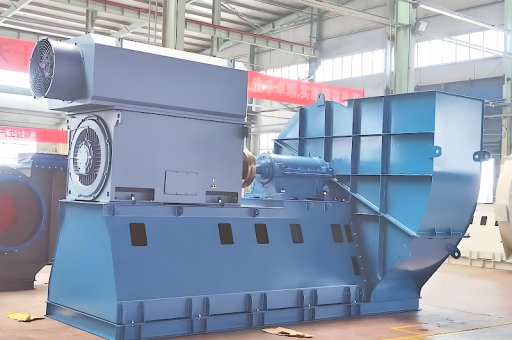
In modern industrial and commercial heating systems, the combustion fan is the unsung hero of boiler performance. A 22kW boiler combustion fan is typically specified for medium-to-large capacity boilers, often found in district heating plants, chemical processing facilities, and large-scale greenhouse operations. This power rating ensures sufficient static pressure and airflow to overcome the resistance of burner nozzles, heat exchanger passes, and flue gas pathways.
Why 22kW? This power level often strikes an optimal balance between energy consumption and air delivery. For example, a boiler with a thermal output of approximately 1,500–2,500 kW (depending on fuel type and excess air ratio) will require a fan capable of delivering 8,000–15,000 m³/h at pressures between 2,500 and 4,500 Pa. The 22kW fan fits this niche perfectly. However, without proper integration, even a correctly sized fan can lead to poor combustion efficiency, increased NOx emissions, and premature bearing failure.
Technical Specifications & Performance Metrics
A typical 22kW boiler combustion fan operates at rotational speeds of 1,450–2,950 RPM (depending on motor pole count) and delivers a volumetric flow rate in the range of 10,000–18,000 m³/h at full load. Key parameters include:
- Static Pressure: 3,000–5,000 Pa
- Motor Efficiency: IE3 or IE4 (Premium Efficiency)
- Impeller Diameter: 500–800 mm
- Operating Temperature: -20°C to +80°C (standard); up to 150°C for high-temperature models
- Noise Level: 78–92 dB(A) without silencer
It’s crucial to consult fan performance curves, not just nameplate data. A fan selected for a system with underestimated duct friction will operate in a stall region, causing vibration and reduced lifespan. For example, if the actual system resistance is 4,200 Pa but the fan curve shows best efficiency at 3,800 Pa, the fan will draw more current, potentially tripping overload relays.
Design Variations: Centrifugal vs. Axial Flow Fans
For a 22kW boiler combustion fan, manufacturers predominantly use centrifugal fans with backward-curved blades. Why? Backward-curved impellers offer non-overloading power characteristics: as airflow decreases (e.g., dirty filters), motor current does not spike dangerously. In contrast, axial fans (e.g., vaneaxial or tubeaxial) are rarely used for combustion air because they provide lower static pressure for the same diameter and speed.
| Feature | Centrifugal (Backward-Curved) | Axial (Vaneaxial) |
|---|---|---|
| Static Pressure | High (up to 8,000 Pa) | Low to Medium |
| Efficiency at Design Point | 78–84% | 70–78% |
| Space Requirement | Larger footprint | Compact |
| Dust Handling | Moderate | Poor |
Selecting the wrong design can lead to underperformance. For instance, an axial fan installed in a boiler with a dense heat exchanger stack will likely stall, causing flame instability and carbon monoxide (CO) spikes.
Energy Efficiency & Variable Frequency Drive (VFD) Integration
One of the most impactful upgrades for a 22kW boiler combustion fan is pairing it with a Variable Frequency Drive (VFD). Without VFD control, fans often run at fixed speed, throttling airflow via dampers or inlet vanes—a method that wastes 20–40% of energy due to pressure drop across the damper.
Case Example: A district heating boiler in Rotterdam replaced a throttled 22kW fan with a VFD-controlled model. Energy consumption dropped from 22 kW average to 11.5 kW during part-load conditions (60% airflow). The payback period was 14 months.
When integrating a VFD, consider:
- Harmonic filtering: Use 6-pulse or 12-pulse drives to avoid grid distortion.
- Bearing protection: High-frequency switching can induce bearing currents; insulated bearings or shaft grounding rings are recommended.
- Emergency override: In case of VFD failure, a bypass contactor allows full-speed operation for critical heat demand.
Installation Best Practices & Ductwork Considerations
Improper installation is a leading cause of 22kW boiler combustion fan malfunction. Follow these guidelines:
- Inlet and outlet duct lengths: Maintain at least three duct diameters of straight duct before the fan inlet to avoid swirl and pressure loss.
- Flexible connectors: Use fabric or rubber connectors to isolate vibration from the boiler structure.
- Foundation: The fan should be mounted on a concrete inertia base with vibration isolators. For roof-mounted units, specify spring isolators tuned to the fan’s operating frequency (e.g., 25 Hz for 1,500 RPM).
- Duct sizing: Undersized ducts increase air velocity beyond 15 m/s, causing erosion and higher pressure drop. For a 22kW fan, main ducts should be sized for 8–12 m/s.
Critical Mistake: Never install a filter directly at the fan inlet without a transition piece. Turbulence created at the filter face can reduce fan capacity by 15%.
Maintenance, Troubleshooting, & Common Failure Modes
A 22kW boiler combustion fan typically requires preventive maintenance every 3,000 operating hours or semi-annually, whichever comes first. Key tasks include:
- Bearing greasing: Use lithium-based grease per manufacturer specifications. Over-greasing is as harmful as under-greasing, as excess grease can overheat the bearing.
- Impeller cleaning: Accumulated soot or ash on backward-curved blades unbalances the rotor. Clean using compressed air or a soft brush. Avoid water if the fan handles hot gases.
- Belt tension check: For belt-driven fans, check deflection. A loose belt causes slippage and reduced airflow; a tight belt overloads bearings.
Common Failures & Solutions:
| Symptom | Probable Cause | Solution |
|---|---|---|
| High vibration (≥10 mm/s) | Impeller imbalance or bearing wear | Balance rotor dynamically; replace bearings |
| Overcurrent (motor heater trip) | Overloaded fan due to damper closed or dirty filter | Open damper fully; clean or replace filter |
| Low airflow | Inlet blockage or v-belt slip | Inspect screen/damper; tension/replace belts |
| Excessive noise | Cavitation or resonance in ductwork | Install silencer; break rigid duct connections |
Noise Mitigation & Vibration Analysis
Noise from a 22kW boiler combustion fan can exceed 90 dB(A), requiring abatement for indoor installations. Solutions include:
- Inlet and outlet silencers: Use circular or rectangular splitter silencers rated for 15–25 dB insertion loss.
- Acoustic enclosure: A custom enclosure with 50 mm mineral wool panels reduces noise by 20–30 dB(A). Ensure enclosure has adequate ventilation for motor cooling.
- Vibration isolation: Spring isolators with static deflection of 25–50 mm are effective for 1,450 RPM fans.
Vibration monitoring is now standard in many plants. Use ISO 14694 categories: a fan with velocity exceeding 4.5 mm/s (unfiltered) requires investigation. Accelerometers mounted on bearing housings provide early warning of raceway spalling.
Regulatory Compliance & Safety Standards (ISO, ATEX, NFPA)
A 22kW boiler combustion fan must comply with several key standards:
- ISO 14694: Vibration severity for industrial fans (Category BV-3 for boiler applications).
- ATEX Directive 2014/34/EU: If the fan handles gases with potential for explosion (e.g., biogas boilers), the fan must be ATEX certified (e.g., II 2G Ex h IIB T3).
- NFPA 85: Boiler and combustion systems hazards code (USA). Requires flame safeguards and air flow proving switches.
- Pressure Equipment Directive (PED) 2014/68/EU: If the fan housing operates above 0.5 bar gauge, it must be CE-marked per PED.
Electrical safety: Ensure motor and VFD meet IEC 60529 IP55 rating (dust and water jet protection) for outdoor installation.
Q&A Section: Expert Answers to Top Industry Questions
Q1: Can I use a 22kW fan for both combustion air and ventilation?
No. Combustion air fans are designed for higher pressure and lower flow than general ventilation. Using it for ventilation would waste energy and overstrain the motor.
Q2: What happens if I operate the fan with a blocked inlet?
The fan will operate in stall—impeller blades experience flow separation, causing severe vibration and possible impeller fracture. Most centrifugal fans with backward-curved blades have a steep pressure curve; stall can occur at 60–70% of design flow.
Q3: How often should I replace the bearings on a 22kW combustion fan?
With proper grease, spherical roller bearings (SKF 2220 series) typically last 20,000–30,000 hours. Replace them at half the L10 life (i.e., every 15,000 hours) in continuous operation.
Q4: Is it necessary to use a VFD?
Not mandatory, but highly recommended. Without VFD, you rely on inlet dampers or outlet dampers for flow control, leading to 20–40% energy waste. The VFD also reduces inrush current during start-up.
Q5: Can I orient the fan discharge vertically?
Yes, but ensure the discharge is not pointed directly at a wall or obstruction. Pressure recovery in a vertical riser is similar to horizontal, but supports must handle the added weight of vertical ductwork.
Conclusion & Future Trends in Combustion Air Systems
The 22kW boiler combustion fan remains a workhorse in industrial thermal processes. However, the technology is evolving rapidly. Future trends include:
- Digital twins: Real-time sensor fusion (flow, pressure, vibration, motor current) enables predictive maintenance and optimal combustion control.
- High-efficiency motors: Migrating from IE3 to IE5 motor classes can reduce losses by 20%.
- Hybrid fans: Some manufacturers now integrate a small wind turbine blade design on the fan shaft to harvest waste heat airflow—though this is experimental, it points to a future where energy recovery is embedded in the fan itself.
- Composite impellers: Carbon-fiber-reinforced plastic (CFRP) impellers are lighter and more corrosion-resistant, especially in biomass boilers with acidic flue gas.
In summary, proper selection, installation, and maintenance of a 22kW boiler combustion fan yield not only reliable boiler operation but also significant energy savings and reduced emissions. Always consult fan performance curves and site-specific system resistance calculations before committing to a purchase. When in doubt, simulate the system using computational fluid dynamics (CFD) software or ask the manufacturer for a certified fan selection report.





