
This article's table of contents introduction:
- The Key Distinction: CFH vs. CFM
- If you actually mean 4000 CFM (most likely scenario):
- If you actually mean 4000 CFH (66.7 CFM):
- How to Choose the Right Fan (Checklist)
- Summary Table
- Final Recommendation
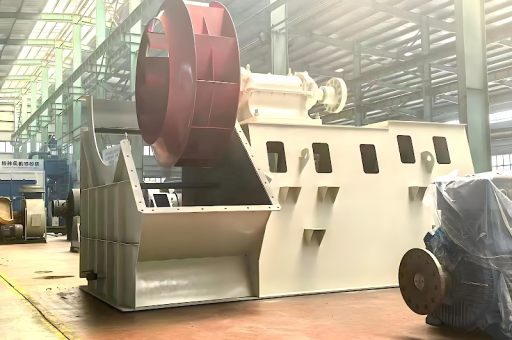
Based on the term you provided, "4000 CFH Centrifugal Fan," you are describing a specific type of industrial air-moving device. Here is a breakdown of what that means, how it compares to the more common 4000 CFM fans, and what you should know.
The Key Distinction: CFH vs. CFM
- CFH = Cubic Feet per Hour
- CFM = Cubic Feet per Minute (The industry standard for fan capacity)
4000 CFH is significantly smaller than 4000 CFM.
To put it in perspective:
- 4000 CFH = 7 CFM (since 4000 ÷ 60 = 66.7)
- This is a small fan. Think of a high-end bathroom exhaust fan, a small booster fan for a single duct run, or a fume hood on a laboratory bench.
- 4000 CFM is a large industrial fan, used for large warehouses, paint booths, or HVAC systems for an entire house.
Because "4000 CFH" is an unusual rating, double-check your requirements:
- Is it actually 4000 CFM? (Most common industrial size)
- Is it 4000 CFH (66.7 CFM)? (Applies to specialized low-flow applications)
If you actually mean 4000 CFM (most likely scenario):
A 4000 CFM centrifugal fan is a popular industrial size. Here are its typical characteristics:
- Type: Often a Forward-Curved (Squirrel Cage) for high volume, low pressure (HVAC), or a Backward-Inclined for higher pressure (dust collection, process air).
- Inlet Size: Usually 10 to 12 inches in diameter.
- Motor: Typically 2 to 5 HP, 3450 RPM or 1750 RPM, single-phase or three-phase.
- Application:
- Ventilating a large workshop or garage.
- Supply/Return air for a home over 4,000 sq ft.
- Exhaust for a small paint booth or dust collector.
- Crop drying or greenhouse ventilation.
If you actually mean 4000 CFH (66.7 CFM):
This is a very small fan. Its characteristics would be:
- Type: Often a Radial Blade or Pressure Blower for high static pressure (e.g., pushing air through a small filter or small ducts).
- Inlet Size: 4 to 6 inches.
- Motor: < 1/2 HP (usually 1/20 to 1/4 HP).
- Application:
- Boost ventilation for a bathroom or small kitchen.
- Cooling for electronics or CNC equipment.
- Combustion air for a furnace or boiler.
- Exhaust for a fume hood.
How to Choose the Right Fan (Checklist)
To ensure you get the correct fan, you absolutely need these three numbers:
- Airflow (CFM): Is it 4000 CFM or 66.7 CFM (4000 CFH)? This is the most critical.
- Static Pressure (SP): The resistance the fan must overcome (measured in inches of water gauge - "wg"). This determines the power and blade type.
- Low SP (0-1" wg): Forward-curved centrifugal (squirrel cage).
- Medium SP (1-4" wg): Backward-inclined centrifugal.
- High SP (4+ "wg): Radial blade or high-pressure centrifugal.
- Application: Dust (needs material-handling wheel), clean air (high efficiency), high temp, corrosive fumes?
Summary Table
| Speculation | Actual Airflow | Suggested Motor Size | Typical Inlet Size | Common Use |
|---|---|---|---|---|
| 4000 CFM | 4000 CFM (67 CFH) | 2 - 5 HP | 10" - 12" | Workshop, small factory, large house |
| 4000 CFH | 7 CFM (0.04 CFM) | < 1/4 HP | 4" - 6" | Bathroom, small fume hood, booster |
Final Recommendation
- If you need to move a lot of air quickly (e.g., clearing smoke, cooling a large room), you want 4000 CFM.
- If you need to push air through a very small duct or a HEPA filter, you might actually need 4000 CFH.
Check your duct size. A 10" round duct will handle ~4000 CFM. A 4" round duct will handle ~80 CFM. The duct size will immediately tell you if you have a 4000 CFM or a 4000 CFH requirement.





