This article's table of contents introduction:
- What does 13,000 m³/h mean?
- Key Factors Beyond Airflow (The "Spec Sheet")
- Common Applications for a 13,000 m³/h Fan
- What to Look for in a Specific Model
- Example Calculation (Quick Estimate)
- Where to find specific models
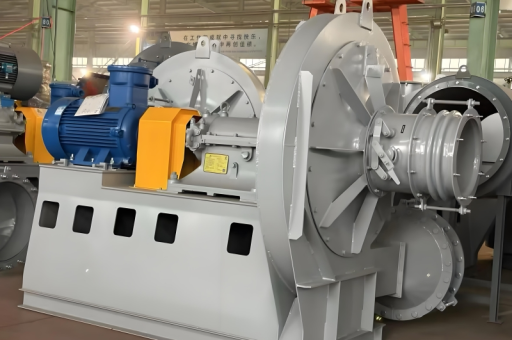
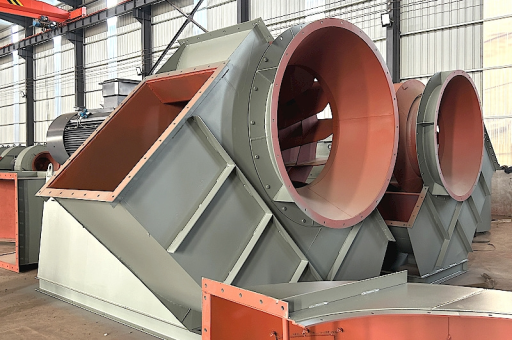
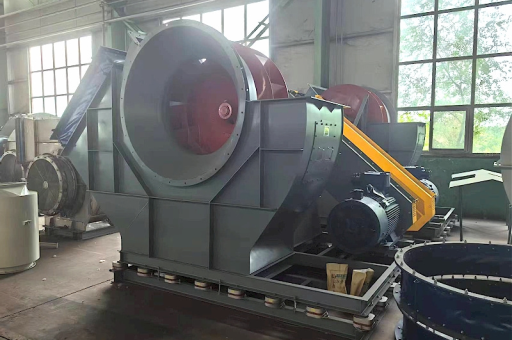
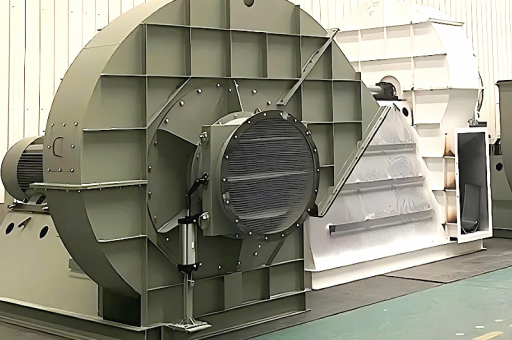
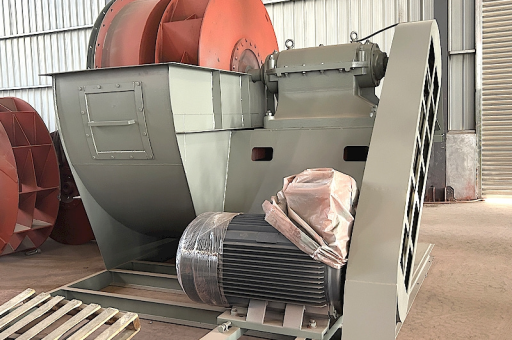
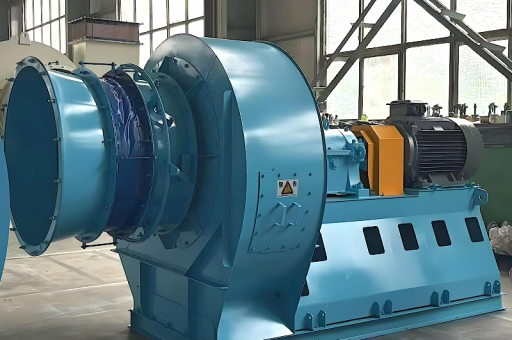
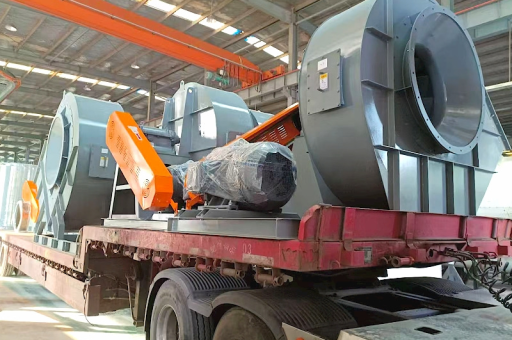
It sounds like you are looking for information on a dust collector exhaust fan with a capacity of 13,000 m³/h. This is a common size for medium-to-large industrial dust collection systems.
Below is a breakdown of what this specification means, typical applications, and key considerations for selecting or purchasing such a fan.
What does 13,000 m³/h mean?
- Airflow: 13,000 Cubic Meters per Hour.
- Conversion: This is equal to approximately 7,650 CFM (Cubic Feet per Minute), which is the standard imperial measurement in North America.
- Scale: This flow rate is suitable for systems requiring significant dust pickup, such as a central system serving multiple woodworking machines, a large pharmaceutical isolator, or a heavy-duty welding fume extraction system.
Key Factors Beyond Airflow (The "Spec Sheet")
When searching for a fan to move 13,000 m³/h, you must know the Static Pressure (ΔP) of your system. The fan's motor power (kW/HP) and speed (RPM) are determined by the pressure it must overcome.
You will typically see this written as: "13,000 m³/h @ XX Pa or mmH₂O (Water Gauge)"
- Low Pressure (100–500 Pa / 0.4"–2" WG):
- Type: Axial Fan or High-Efficiency Plug Fan.
- Application: Simple duct runs, general ventilation.
- Motor: Typically 5 kW – 3 kW (2–4 HP).
- Medium Pressure (500–1500 Pa / 2"–6" WG):
- Type: Centrifugal Fan (Backward Inclined or Airfoil).
- Application: Typical dust collector with filter bags/cartridges and short duct runs.
- Motor: Typically 4 kW – 7.5 kW (5–10 HP).
- High Pressure (1500–4000+ Pa / 6"–16"+ WG):
- Type: Centrifugal Fan (Radial Blade / Material Handling).
- Application: Long duct runs, pneumatic conveying, high-resistance filters (e.g., HEPA), very heavy dust.
- Motor: Typically 11 kW – 22 kW (15–30 HP).
Common Applications for a 13,000 m³/h Fan
- Woodworking: Central system for 5–10 machines (planers, sanders, table saws).
- Welding & Fume Extraction: Servicing 4–8 welding stations.
- Pharmaceutical / Chemical: Isolator ventilation, dust-tight conveying.
- Agriculture: Grain dust collection, feed mill ventilation.
- Mining & Cement: Conveyor transfer points, baghouse exhaust.
What to Look for in a Specific Model
If you are purchasing a fan for a dust collector, look for these features:
- Wheel Type: For dust, use Radial (for sticky/heavy dust) or Backward Inclined (for cleaner air or moderate dust). Avoid forward-curved wheels for heavy dust.
- Housing Material: Mild Steel (painted) is standard. Stainless Steel (304/316) is required for corrosive dust (chemicals, wet scrubbers).
- Transmission: Belt-Driven is preferred for dust collectors. It allows you to change the fan speed (CFM) by changing the pulley size.
- Cleanout Door: A small door on the fan housing is essential for cleaning out built-up dust.
- Motor Rating: Must match the Amps and Voltage of your facility (e.g., 380V/3ph/50Hz or 460V/3ph/60Hz).
Example Calculation (Quick Estimate)
If you need to move 13,000 m³/h against 150 mmH₂O (approx. 6" WG) of pressure:
- Air Power (kW): $P = (Q \times P_t) / (3600 \times \eta)$
- $Q = 13000$
- $P_t = 1500 Pa$ (since 1mmH₂O ≈ 10 Pa)
- Efficiency ($\eta$) = ~0.65 (65%)
- $P \approx (13000 \times 1500) / (3600 \times 0.65) \approx 19,500,000 / 2,340 \approx 8.3 kW$
- Motor Safety Factor (10-15%): $8.3 \times 1.15 \approx 9.5 kW$
- Result: You would need a ~11 kW (15 HP) motor.
Where to find specific models
To get a quotation, you would search for:
- "Dust collector fan 13000 m³/h centrifugal"
- "Industrial exhaust fan 7500 CFM"
- Brands: Greenheck, Twin City, New York Blower, Howden, Ventilation, or local industrial fan manufacturers.
To provide a specific recommendation, I need the following:
- Static Pressure (mmH₂O or Pa) the fan must overcome.
- Type of dust (e.g., wood chips, fine powder, metal fume, explosive dust).
- Voltage and Frequency (e.g., 380V 50Hz 3-phase).
- Expected temperature (ambient or hot exhaust).
Without the pressure, a 13,000 m³/h fan could be a small axial fan (~1.5 kW) or a massive heavy-duty centrifugal fan (>20 kW).
Let me know the pressure, and I can help narrow it down further.