This article's table of contents introduction:
- The Core Function: Why They are Essential
- The Main Types of Cooling Fans
- Key Characteristics & Requirements
- Common Problems & Failure Modes
- Selection & Maintenance Considerations
- Visual Summary (conceptual)
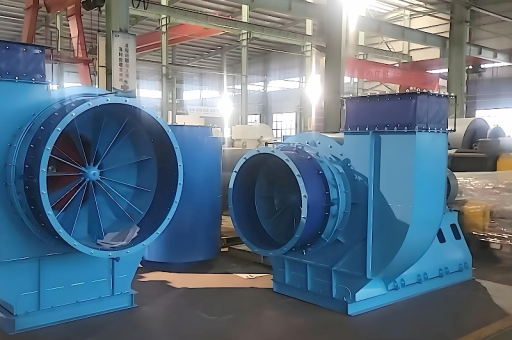
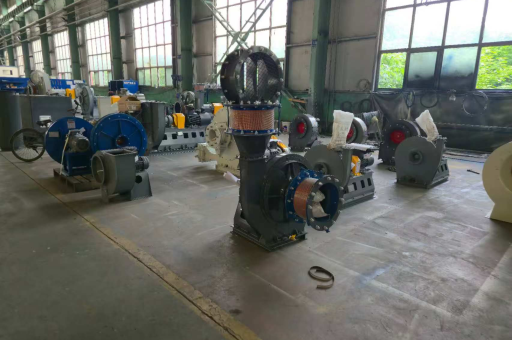
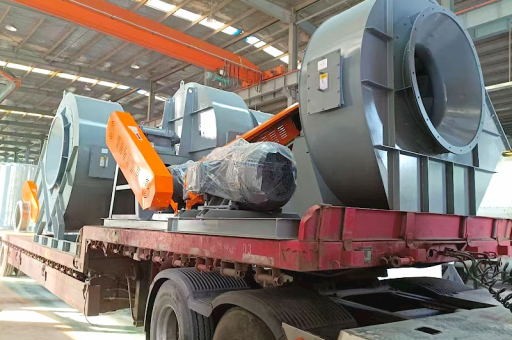
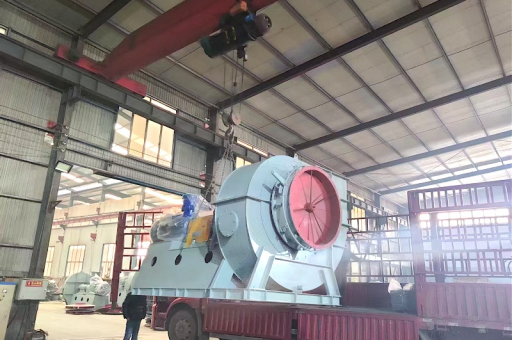
This is a critical component of the cement manufacturing process. The cooling fans for a cement plant kiln are not just simple fans; they are engineered systems designed to handle extreme heat, dust, and operational stress.
Here is a detailed breakdown of what they are, their types, their functions, common problems, and selection criteria.
The Core Function: Why They are Essential
The primary purpose of the kiln cooling fan system is rapidly quenching (cooling) the clinker from its discharge temperature of roughly 1,200-1,400°C (2,200-2,550°F) down to a handling/storage temperature of about 100-200°C (200-400°F).
This rapid cooling serves three critical purposes:
- Cement Quality: Prevents the formation of undesirable large crystals (especially of periclase, MgO) and "free lime" (CaO), which cause unsoundness (expansion and cracking) in the final concrete.
- Heat Recovery: The heated air from cooling is captured and reused as secondary air for the kiln burner and tertiary air for the precalciner, drastically improving fuel efficiency.
- Equipment Protection: Protects downstream conveyors, crushers, and storage silos from melting, warping, or burning.
The Main Types of Cooling Fans
There are two main cooling systems for a rotary kiln, each with specific fans:
Satellite Cooler (Less common in modern plants)
- Fans: Large, high-pressure centrifugal fans.
- Location: Mounted directly on the kiln shell.
- Action: Air is blown into the cooler tubes as they rotate, cooling the clinker inside.
- Challenge: Very high temperatures, vibration, and maintenance difficulty.
Grate Cooler (The Industry Standard - Modern Plants)
This is the most common system. It has several distinct fan zones:
-
Under-Grate Cooling Fans:
- Function: The most critical fans. They blow air up through a moving grate, fluidizing the hot clinker bed.
- Zone 1 (Recuperation Zone / Grate 1): High pressure, moderate volume. Air picks up intense heat (up to 1000°C+) and becomes "secondary air" for the kiln. These fans often have special high-temperature paint, bearings, and shaft seals.
- Zone 2 (Intermediate Zone): Lower pressure, high volume. Air is used for complete cooling and is often used as "tertiary air" for the precalciner.
- Zone 3 (Final Cooling Zone): Low pressure, very high volume. Air is no longer used for combustion; it is often vented to a dust collector or heat recovery system.
-
Grate Drive Fans (Air Cannons / Impulse Fans):
- Function: High-pressure, low-volume blasts of air used to dislodge clinker build-up on the grate plates. These prevent "red rivers" (molten clinker flows) and improve uniform air distribution.
-
Clinker Breaker / Crusher Fans:
- Function: High-pressure fans that cool the hot clinker as it passes through a roller crusher at the cooler discharge.
Key Characteristics & Requirements
A standard industrial fan will fail within hours on a clinker cooler. These fans must be heavy-duty.
- Temperature Resistance: Fan wheel, housing, and shaft must withstand extremely high inlet temperatures (up to 400°C for some zones). Bearings must be externally cooled or use high-temperature grease.
- Abrasion Resistance: Clinker dust is incredibly abrasive. Fans require:
- Hard-faced or replaceable wear plates on the impeller.
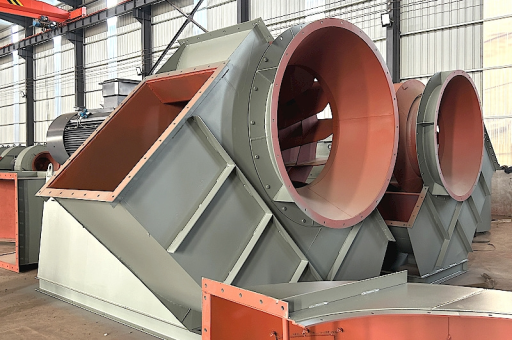
- Abrasion-resistant liners (e.g., AR400 steel, ceramic tiles) in the housing.
- Variable Speed Drive (VFD): Modern plants use VFDs to control the fan speed, allowing precise control of cooling air volume to match clinker production rate and quality. This saves significant energy.
- High Reliability: A failure of a key cooling fan (especially in Zone 1) can force a full kiln shutdown, costing $10,000 to $100,000+ per hour in lost production.
- Low Noise: Can be very loud (110+ dB). Require silencers and acoustic enclosures.
Common Problems & Failure Modes
- Thermal Fatigue: Rapid temperature changes (e.g., when the kiln starts/stops) cause the fan impeller to crack.
- Unbalance: Uneven clinker dust build-up on the blades causes severe vibration, leading to bearing failure and shaft cracking.
- Bearing Failure: The most common failure. Heat from the shaft conducts into the bearings, causing grease to melt and bearings to seize.
- Corrosion: Sulfur and chlorine compounds in the clinker can cause high-temperature corrosion of fan components.
- Cavitation: Rare, but possible if the fan inlet is restricted or the system design causes low pressure.
Selection & Maintenance Considerations
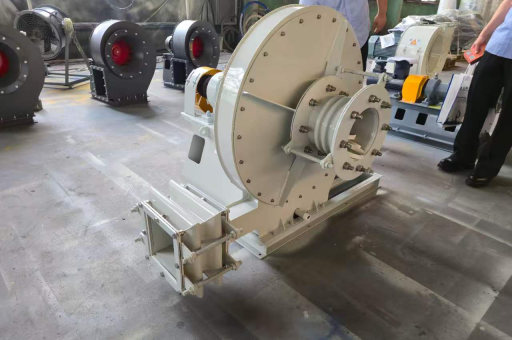
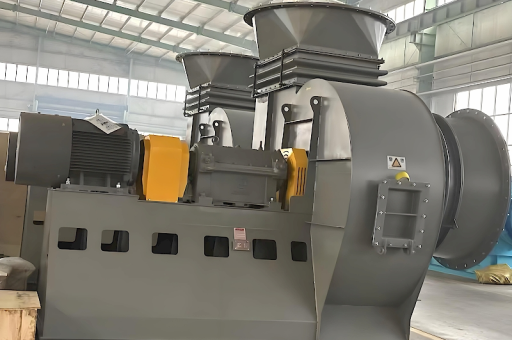
- Fan Type: Backward-Curved Centrifugal Fans (BCF) are the standard. They are high-efficiency, non-overloading, and handle large volumes of air with moderate pressure.
- Impeller Material: For high-temperature zones, use stainless steel (e.g., 310S, 253MA) or Inconel alloy. For lower temp zones, AR400 or hard-faced mild steel.
- Bearing Housing: Must be water-cooled or air-cooled and equipped with high-temperature oil seals.
- Shaft Sealing: Labyrinth seals or air-purge seals must be used to prevent hot dust from entering the bearing housing.
- Condition Monitoring: Mandatory. Use vibration sensors (accelerometers) and temperature sensors (RTDs or thermocouples) on each fan's bearings for predictive maintenance.
Visual Summary (conceptual)
Rotary Kiln Discharge (1,400°C)
       │
       ▼
─────────────────────────────────
│     GRATE COOLER               │
│  ┌─────────────────────────┐  │
│  │  Hot Clinker Bed        │  │
│  └─────────────────────────┘  │
│  ▲  ▲  ▲  ▲  ▲  ▲  ▲  ▲      │  <-- Air Nozzles
│  │  │  │  │  │  │  │  │      │
│  │  │  │  │  │  │  │  │      │
│ [F1][F2][F3][F4][F5][F6]     │  <-- Under-Grate Cooling Fans (High Temp)
│  Zone 1:  High Pressure / Low Volume (Recuperation)
│  Zone 2:  Medium Pressure / Medium Volume (Intermediate)
│  Zone 3:  Low Pressure / High Volume (Final Cooling)
│        ┌─────────────────────┐
│        │ Clinker Crusher     │
│        └─────────────────────┘
│           ▲ (Crusher Cooling Fan)
│
▼
Cold Clinker to Storage
In summary, the kiln cooling fans are the lung of the clinker cooler. They are not just moving air; they are managing extreme thermal energy, ensuring product quality, recovering fuel, and protecting downstream equipment. Choosing the right design (high-temp materials, abrasion resistance, and a robust bearing system) is a multi-million dollar decision for a cement plant.