This article's table of contents introduction:
- Table of Contents
- Introduction to Dust Removal Induced Draft Fans
- Technical Specifications of the 5000m³/h Model
- Key Design Features and Components
- How 5000m³/h Induced Draft Fans Work
- Applications Across Industries
- Energy Efficiency and Performance Optimization
- Common Challenges and Solutions
- Frequently Asked Questions (FAQ)
- Maintenance Best Practices
- Conclusion: Choosing the Right Fan for Your Facility
Understanding 5000m³/h Dust Removal Induced Draft Fans: Design, Efficiency, and Industrial Applications
Table of Contents
- Introduction to Dust Removal Induced Draft Fans
- Technical Specifications of the 5000m³/h Model
- Key Design Features and Components
- How 5000m³/h Induced Draft Fans Work
- Applications Across Industries
- Energy Efficiency and Performance Optimization
- Common Challenges and Solutions
- Frequently Asked Questions (FAQ)
- Maintenance Best Practices
- Conclusion: Choosing the Right Fan for Your Facility
Introduction to Dust Removal Induced Draft Fans
In modern industrial environments, airborne dust and particulate matter pose significant health risks, equipment damage hazards, and regulatory compliance challenges. The 5000m³/h dust removal induced draft fan has emerged as a critical component in ventilation and air pollution control systems. These fans are designed to create negative pressure within ductwork, pulling contaminated air through filtration systems before exhausting clean air to the atmosphere.
Unlike forced draft fans that push air into a system, induced draft fans operate by creating suction at the exhaust side. This design is particularly effective for dust collection because it minimizes leakage of contaminants and maintains stable airflow even when filter resistance increases over time. The "5000m³/h" designation refers to the volumetric flow rate—the fan moves 5000 cubic meters of air per hour under standard conditions.
Q: What makes 5000m³/h induced draft fans different from general ventilation fans?
A: These fans are engineered specifically for particulate-laden air streams. They feature abrasion-resistant impellers, sealed housings to prevent dust escape, and motors rated for continuous operation in harsh conditions. General ventilation fans lack these specialized design elements.
Technical Specifications of the 5000m³/h Model
Understanding the technical parameters is essential for proper system integration. A typical 5000m³/h dust removal induced draft fan includes:
- Flow Rate: 5000 m³/h (approximately 2942 CFM)
- Static Pressure: 1500–2500 Pa (depending on system resistance)
- Motor Power: 4–7.5 kW (based on efficiency class and pressure requirements)
- Speed: 1450–2900 RPM (via direct drive or belt drive)
- Impeller Diameter: 400–630 mm
- Operating Temperature: -20°C to +80°C (up to 200°C with special materials)
- Noise Level: 75–85 dB(A) at 1 meter
- Weight: 80–150 kg
These specifications can vary based on manufacturer design and specific application requirements. The fan selection must account for ductwork length, number of bends, filter type, and desired air changes per hour in the workspace.
Q: How do I calculate if 5000 m³/h is sufficient for my facility?
A: Calculate your workspace volume (length × width × height). For dust control, industry standards recommend 6–12 air changes per hour. Multiply your volume by desired air changes, then divide by 60 to get required m³/min. Compare this to 5000 m³/h (83.3 m³/min). For example, a 500 m² workshop with 4m ceiling (2000 m³) needs 12,000–24,000 m³/h for 6–12 changes—so multiple fans would be needed.
Key Design Features and Components
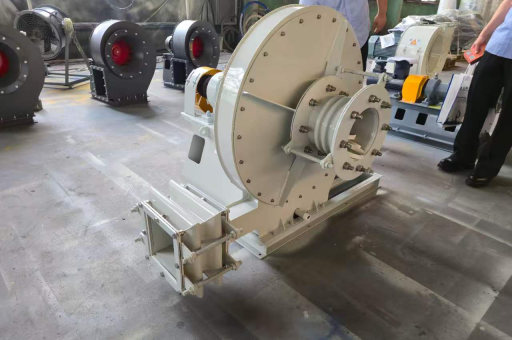
Impeller Design
The impeller is the heart of the dust removal induced draft fan. For handling abrasive particles, manufacturers use:
- Backward-curved blades for higher efficiency and reduced particle accumulation
- Wear-resistant coatings such as ceramic epoxy or hard chrome plating
- Reinforced blade tips to withstand erosion from high-velocity particles
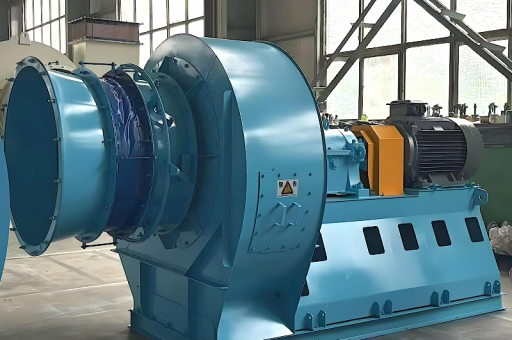
Housing and Sealing
Dust containment is critical. Features include:
- Double-wall construction with sound-dampening material
- Lip seals and labyrinth seals on shaft penetrations
- Drain plugs for moisture and accumulated dust removal
- Inspection doors for maintenance access without disassembly
Drive Mechanisms
Two primary configurations exist:
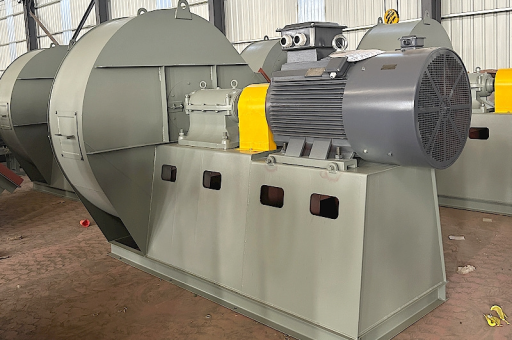
- Direct drive: Motor shaft connects directly to impeller. Higher efficiency, lower maintenance, but limited speed adjustment.
- Belt drive: Allows speed changes via pulley ratio changes. More flexibility for varying system conditions, but requires belt tension monitoring.
How 5000m³/h Induced Draft Fans Work
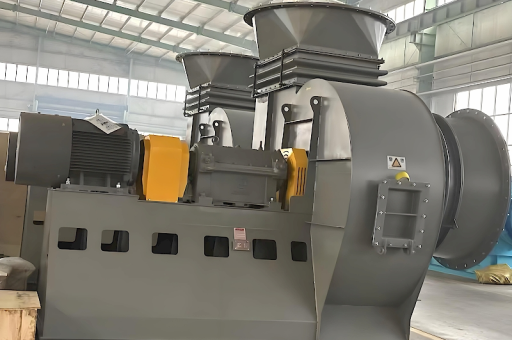
The operating principle relies on creating a pressure differential. The fan draws air from the collection point (e.g., dust hoods, machine enclosures) through ductwork into a filtration system (baghouse, cartridge collector, or cyclone). Cleaned air then passes through the fan and exhausts outside or recirculates.
The airflow path:
- Contaminated air enters through inlet vanes or a straight duct connection
- Air accelerates through the impeller, gaining kinetic energy
- The volute casing converts velocity energy into static pressure
- Air exits through the discharge, overcoming system resistance
Critical to performance is the fan curve—a graph showing the relationship between airflow and static pressure. The 5000 m³/h fan will deliver this flow only at a specific pressure point. System designers must ensure the operating point matches the fan's best efficiency zone (typically 70–85% of wide-open flow).
Q: Why does the fan sometimes fail to reach 5000 m³/h?
A: Common reasons include: undersized ductwork creating excessive pressure drop, clogged filters (increased resistance), belt slippage in belt-drive models, or improper impeller rotation direction. Always verify actual flow with an anemometer during commissioning.
Applications Across Industries
Woodworking and Furniture Manufacturing
Dust from sawing, sanding, and routing contains fine wood particles that are both flammable and respiratory hazards. A 5000m³/h induced draft fan typically serves 3–5 machines simultaneously when connected to a central collection system.
Metal Fabrication and Welding
Welding fume contains heavy metal particles and gases. These fans remove contaminants at the source, preventing worker exposure to chromium, nickel, and manganese fumes.
Grain Handling and Agriculture
Grain dust is highly explosive. Induced draft fans in these facilities must meet ATEX or NEC explosion-proof standards, using spark-resistant construction and grounding systems.
Pharmaceutical and Chemical Processing
Cleanroom applications require HEPA filtration downstream of the fan. The induced draft design prevents contamination of the fan motor by aggressive chemical vapors.
Mining and Quarrying
Crushing and screening operations generate massive dust volumes. Multiple 5000m³/h fans arranged in series or parallel can handle high-pressure drops from long duct runs and baghouse filters.
Q: Can I use a 5000m³/h fan for outdoor dust control?
A: Yes, but outdoor units require weatherproof enclosures, UV-resistant coatings, and drainage to prevent water ingress. The motor must be rated for exposure to rain and temperature extremes.
Energy Efficiency and Performance Optimization
Energy costs represent 40–60% of total fan lifecycle costs. Optimizing efficiency involves:
- Variable frequency drives (VFDs): Adjust fan speed to match actual demand, reducing energy consumption by up to 50% during partial-load operation.
- Efficient motor selection: IE3 or IE4 premium efficiency motors reduce electrical losses.
- Proper duct design: Minimize sharp bends, long runs, and sudden diameter changes.
- Regular filter maintenance: Clean filters reduce system resistance, allowing the fan to operate at lower speeds.
Q: How much can I save with a VFD on a 5.5 kW fan running 12 hours/day?
A: Assuming 80% load factor without VFD versus 60% with VFD: Energy savings = (5.5 kW × 12h × 365 days) × (0.8 - 0.6) × $0.12/kWh ≈ $578 annually. Payback period is typically 1–2 years.
Common Challenges and Solutions
| Challenge | Cause | Solution |
|---|---|---|
| Reduced airflow | Clogged filters | Implement differential pressure monitoring; clean or replace filters at setpoint |
| Excessive vibration | Impeller imbalance | Clean accumulated dust from blades; rebalance annually |
| Motor overheating | High ambient temperature or restricted airflow | Install cooling ducts; derate motor for altitude |
| Noise complaints | Duct resonance or fan speed | Install silencers; use belt drive at lower RPM |
| Bearing failure | Contaminant ingress | Upgrade to sealed bearings; ensure proper lubrication |
Frequently Asked Questions (FAQ)
Q1: What's the difference between induced draft and forced draft?
Induced draft fans are located after the filter, pulling air through the system. Forced draft fans push air into the system before the filter. Induced draft is preferred for dust collection because it maintains negative pressure in ducts, preventing dust escape.
Q2: How often should I replace the impeller?
With abrasive dust like silica or metal grinding, impeller life ranges from 6 months to 2 years. For wood dust or grain, 3–5 years is typical. Inspect annually for wear patterns and thickness reduction.
Q3: Can the fan handle explosive dust?
Standard fans are not explosion-proof. For combustible dusts (aluminum, coal, flour), use ATEX-certified fans with temperature monitoring, spark arrestors, and explosion venting.
Q4: What duct diameter is appropriate for 5000 m³/h?
Recommended duct velocity for dust transport is 15–22 m/s. For 5000 m³/h (1.39 m³/s), duct diameter = √(4 × 1.39 / (π × 20)) ≈ 0.3m (300mm or 12 inches). Use 350mm for lower velocity if dust is heavy.
Q5: Should I install the fan indoors or outdoors?
Indoor installations allow easier maintenance and noise control. Outdoor installations save space but require weather protection and longer duct runs.
Maintenance Best Practices
To ensure reliable operation and extend fan life beyond 10 years:
- Daily: Listen for unusual noises; check vibration levels; verify airflow at critical points
- Weekly: Inspect belt tension (belt drive); clean inlet screen; verify motor current
- Monthly: Check bearing temperature (max 80°C); lubricate bearings per manufacturer spec; inspect seals
- Quarterly: Balance impeller; check duct connections for leaks; verify VFD settings
- Annually: Replace bearings; inspect impeller for erosion; replace worn coatings; motor insulation testing
Q: What are warning signs of impending fan failure?
Increased vibration above 10 mm/s RMS, motor current exceeding nameplate by 10%, unusual tonal noise (whistling or scraping), and visible wobbling of the shaft are all indicators requiring immediate shutdown and inspection.
Conclusion: Choosing the Right Fan for Your Facility
The 5000m³/h dust removal induced draft fan represents a balanced solution for medium-scale industrial dust control. Its capacity serves workshops of 200–500 m², feeds typical baghouse or cartridge filter systems, and integrates well with both central and portable collection setups.
When selecting a fan:
- Verify the manufacturer provides certified fan curves
- Ensure materials are compatible with your dust type
- Confirm motor enclosure rating (IP55 minimum for indoor, IP65 for outdoor)
- Request acoustic data for noise compliance
- Consider future expansion—oversized ductwork costs little but prevents major upgrades later
Investing in a quality fan from a reputable supplier pays dividends in worker safety, regulatory compliance, and equipment longevity. Always involve a ventilation engineer for complex installations. For pricing, installation support, or custom configurations, contact an authorized fan distributor.