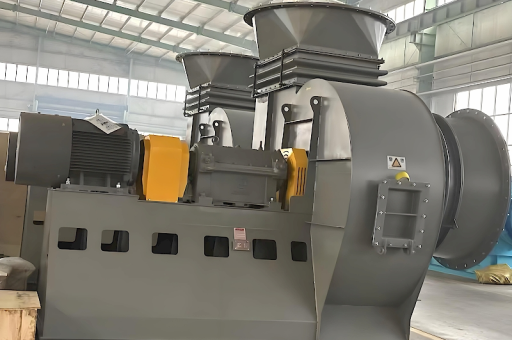
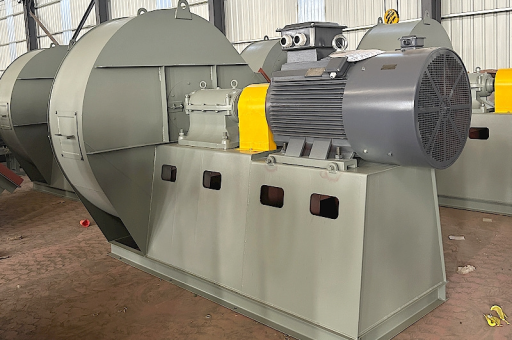
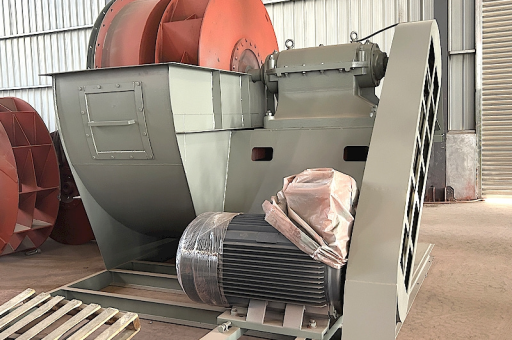
This article's table of contents introduction:
- Key System Parameters (You need to specify these)
- Fan Type Recommendations for 4000 m³/h Dust Removal
- Sample Technical Specification (Medium Pressure)
- Motor & Drive Considerations
- Selection Checklist for Your Application
- Where to Look for Suppliers
- Summary Recommendation
To address a request for 4000 m³/h dust removal induced draft fans, we need to clarify the application and the specific engineering parameters. "4000 m³/h" (cubic meters per hour) is a relatively small flow rate for industrial dust collection but is common for workshop units, welding fume extractors, or small process ventilation.
Here is a comprehensive breakdown of what you need to know to select, specify, or purchase a fan for this duty.
Key System Parameters (You need to specify these)
Just saying "4000 m³/h" is not enough to buy a fan. The most critical missing parameter is Static Pressure (Pa or mmH₂O) .
- Low Pressure (500 - 1500 Pa / 50 - 150 mmH₂O): Short duct runs, simple hoods, buffer bins.
- Medium Pressure (1500 - 3000 Pa): Long duct runs, small cyclones, baghouse filters (fabric).
- High Pressure (3000 - 5000 Pa): High-efficiency cartridge filters, Venturi scrubbers, dense phase pneumatic conveying.
Other Critical Data:
- Air Temperature: Ambient? Hot exhaust from a furnace?
- Dust Type: Dry (cement, wood, grain) vs. sticky (oil mist, paint) vs. explosive (metal, coal, grain).
- Hazardous Location: Is the area ATEX / Class I Div 2 rated?
- Motor Voltage: 380V / 400V / 690V / 3-Phase? 50Hz or 60Hz?
Fan Type Recommendations for 4000 m³/h Dust Removal
At this flow rate, you have three main fan types, depending on the pressure required.
A. Backward Curved (BC) / Backward Inclined (BI) Fans
- Best for: High efficiency, low to medium pressure, clean to moderately dusty air (dust < 50 mg/m³).
- Pros: Most energy-efficient (up to 85% efficiency), non-overloading power curve.
- Cons: Impeller is narrower; can clog with sticky or fibrous dust.
- Typical Model: A 9-19 or 9-26 series (Chinese standard) or equivalent (e.g., RTE, BPH).
- Application: Central baghouse systems with pre-filter, clean side of a filter.
B. Radial / Paddle Wheel Fans (Radial Blade)
- Best for: High pressure, heavy dust loads, sticky or abrasive dust.
- Pros: Very robust, self-cleaning (flat blades), handles high temperatures.
- Cons: Lowest efficiency (~50-65%), high noise, power consumption increases with flow (overloading risk).
- Typical Model: A “Y5-47” series or “C6-48” series.
- Application: Directly in the dirty gas stream before a baghouse (primary dust collector).
C. Inline / Mixed Flow Fans (IPX / Tubeaxial)
- Best for: Low pressure, simple exhaust (e.g., workshop smoke extraction).
- Pros: Compact, easy to install in ductwork.
- Cons: Very low pressure capability (max ~500 Pa).
- Application: Not suitable for traditional dust collectors unless the pressure drop is very low.
Sample Technical Specification (Medium Pressure)
Assuming this is for a generic small baghouse dust collector with a pressure drop of ~2500 Pa:
| Parameter | Value | Notes |
|---|---|---|
| Flow Rate (Q) | 4000 m³/h | (66.7 m³/min or 2353 CFM) |
| Static Pressure (Psf) | 2500 Pa | (250 mmH₂O / 10 in H₂O) |
| Fan Type | Backward Inclined (BI) | Model: 9-19 No. 5.6A or similar |
| Impeller Diameter | ~560 mm | |
| Speed | ~2900 RPM | (Direct Drive, 50Hz 2-pole motor) |
| Motor Power | 5 kW | (Typical; might be 7.5 kW for higher safety factor) |
| Motor Speed | 2900 RPM | 2-Pole, 3-Phase |
| Sound Level | ~85 dB(A) | (Without silencer) |
| Inlet/Outlet | DN300 / 300x300 mm | (Duct connection size) |
Important: If the dust is heavy, abrasive, or sticky, change the fan type to a Radial Blade (Paddle Wheel) . In that case, the motor power would likely be higher (e.g., 7.5 kW to 11 kW) due to lower efficiency, and the speed might be lower (1450 RPM, 4-pole) with a larger impeller.
Motor & Drive Considerations
- Motor Enclosure: TEFC (Totally Enclosed Fan Cooled) is standard. For explosive dust (e.g., aluminum, magnesium, coal), you must use an Explosion-Proof (Ex d / Ex nA) motor.
- Drive Type: Direct Drive is preferred for reliability and lower maintenance. Belt Drive (with sheaves and V-belts) gives you the flexibility to adjust speed (and thus flow/pressure) but requires more maintenance.
- Variable Frequency Drive (VFD): Highly recommended for this size. It allows you to trim the flow precisely to 4000 m³/h, reduce noise, save energy, and soft-start the motor.
Selection Checklist for Your Application
| Question | Your Answer | Implication |
|---|---|---|
| What is the total system static pressure? | [e.g., 1500 Pa] | Determines fan power (kW). |
| What is the dust type? | [e.g., Wood dust, Cement, Welding fume] | Determines fan type (Radial vs. BI). |
| Is the dust explosive? | [Yes / No] | Requires ATEX/IECEx certification. |
| Where is the fan located? | [Before filter / After filter] | Affects material selection (abrasion). |
| What is the airstream temperature? | [e.g., 40°C, 80°C, 120°C] | Influences bearing type and impeller material. |
Where to Look for Suppliers
- Standard Industrial Fan Manufacturers:
- China: Shangfan, Yilong, CDD, or local fan OEMs.
- International: Cincinnati Fan (USA), Howden (UK), Greenheck (USA), Systemair (EU), Ventmeca (Italy) – but 4000 m³/h is very small for some large OEMs.
- Dust Collection Specialists: Many dust collector manufacturers (e.g., Camfil, Donaldson Torit, UAS, or Chinese equivalents) sell the complete system, including the fan.
Summary Recommendation
If you are building a simple, clean-air exhaust:
- Fan: Backward Inclined (9-19 series), 5.5 kW, 2900 RPM.
- Control: VFD for flow control.
If you are handling heavy, abrasive, or sticky dust (e.g., from a shot blast, grinder, or woodworking):
- Fan: Radial Paddle Wheel (C6-48 series or custom), 7.5 kW, VFD.
- Accessory: Inlet box, access door, drain plug.
To get a final quotation, you MUST provide:
- Flow Rate: 4000 m³/h (confirmed).
- Static Pressure: _ Pa.
- Dust Type: _ .
- Temperature: _ °C.
- Voltage/Frequency: 380V / 50Hz (or your local standard).