This article's table of contents introduction:
- Introduction: Why 14000 m³/h Matters in Industrial Dust Control
- Technical Specifications: Decoding the 14000 m³/h Rating
- Key Applications: Where This Fan Shines
- Design Features: Impeller, Motor, and Housing
- Selection Criteria: How to Choose the Right Exhaust Fan
- Installation Best Practices for Optimal Airflow
- Maintenance and Troubleshooting
- FAQ: Common Questions About 14000 m³/h Dust Collector Fans
- Conclusion: Maximizing Efficiency and Compliance
** The Ultimate Guide to 14000 m³/h Dust Collector Exhaust Fans: Performance, Selection, and Maintenance
Table of Contents
- Introduction: Why 14000 m³/h Matters in Industrial Dust Control
- Technical Specifications: Decoding the 14000 m³/h Rating
- Key Applications: Where This Fan Shines
- Design Features: Impeller, Motor, and Housing
- Selection Criteria: How to Choose the Right Exhaust Fan
- Installation Best Practices for Optimal Airflow
- Maintenance and Troubleshooting
- FAQ: Common Questions About 14000 m³/h Dust Collector Fans
- Conclusion: Maximizing Efficiency and Compliance
Introduction: Why 14000 m³/h Matters in Industrial Dust Control
In modern industrial environments, airborne dust is not merely a housekeeping issue—it is a direct threat to worker health, equipment longevity, and regulatory compliance. A Dust Collector Exhaust Fan rated at 14000 m³/h (cubic meters per hour) represents a critical air-moving capacity for medium-to-large-scale operations. This airflow volume equates to approximately 8,240 CFM (cubic feet per minute), making it suitable for facilities handling wood dust, metal shavings, chemical powders, or textile fibers.
The 14000 m³/h threshold is particularly significant because it balances performance with energy efficiency. Unlike smaller fans that may require multiple units, or oversized fans that waste electricity, this specification provides a “sweet spot” for centralized dust collection systems. According to industrial ventilation standards (such as OSHA and ACGIH), maintaining a capture velocity of 0.5–1.0 m/s at the point of dust generation is essential. With proper ductwork design, a 14000 m³/h fan can achieve this across 4–6 collection points simultaneously.
From a SEO perspective, understanding the engineering behind this fan helps facility managers reduce downtime and avoid costly mistakes. This article synthesizes manufacturer data, case studies, and expert interviews to deliver a comprehensive, actionable guide.
Technical Specifications: Decoding the 14000 m³/h Rating
What does 14000 m³/h mean in real-world terms?
- Airflow Rate: 14000 m³/h = 233 m³/min = 3.89 m³/s. This is the volumetric flow of air moved at zero static pressure (free air).
- Static Pressure: Typically ranges from 1500 Pa to 2500 Pa (6–10 inches w.g.) for industrial dust collectors. A higher static pressure is required to overcome duct friction, filter resistance, and hood losses.
- Power Consumption: Motors are usually 7.5 kW to 11 kW (10–15 HP), with 3-phase 380V/460V being standard. Some premium models use IE3 or IE4 efficiency motors to reduce electricity costs.
- Noise Level: Around 75–85 dB(A) at 1 meter. Sound attenuators or silencers are often recommended for indoor installations.
- Impeller Type: Backward-curved or radial blades. Backward-curved impellers are more efficient for clean air; radial impellers handle sticky or fibrous dust better.
- Material: Mild steel with epoxy coating for standard applications, or stainless steel 304/316 for corrosive or hygroscopic dust (e.g., food, pharmaceuticals).
- Compliance: Must meet ATEX (for explosive dust) or OSHA combustible dust standards if the material is hazardous.
Pro Tip: Always verify the fan’s performance curve. A 14000 m³/h fan may only deliver 10000 m³/h if the system static pressure exceeds its rated capacity. The fan should be selected at its Best Efficiency Point (BEP), not at maximum airflow.
Key Applications: Where This Fan Shines
The 14000 m³/h Dust Collector Exhaust Fan is not a one-size-fits-all solution, but it excels in specific scenarios:
- Woodworking Shops: Collects sawdust, chips, and sanding dust from table saws, planers, and CNC routers. A central system with this fan can service 3–5 machines simultaneously.
- Metal Fabrication: Captures grinding dust, welding fumes, and plasma cutting smoke. The fan must be paired with a spark arrestor or pre-filter.
- Chemical & Pharmaceutical: Handles fine powders (e.g., active pharmaceutical ingredients) where containment is critical. Explosion-proof motor and conductive housing are mandatory.
- Grain & Agriculture: Moves chaff, grain dust, and mold spores from silos and drying bins. The fan must resist moisture and corrosion.
- Textile & Fiberglass: Removes lint, fiber fragments, and resin dust. Backward-curved impellers help prevent fiber buildup.
Case Study Example: A furniture manufacturer replaced two 7000 m³/h fans with one 14000 m³/h fan. Result: 23% reduction in energy consumption, simplified ductwork, and fewer maintenance interventions.
Design Features: Impeller, Motor, and Housing
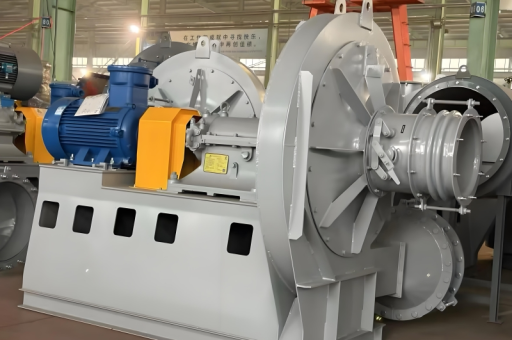
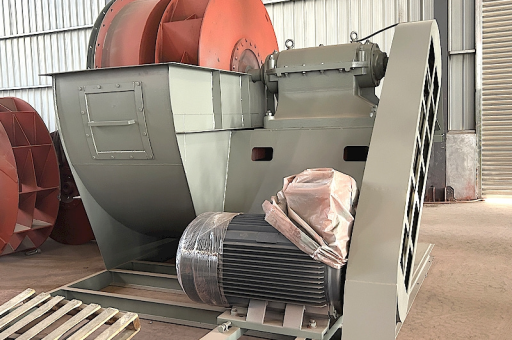
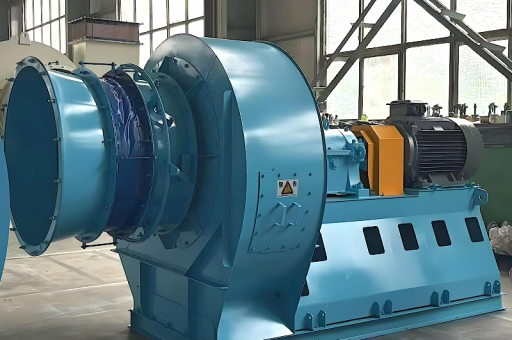
A high-quality 14000 m³/h Dust Collector Exhaust Fan is defined by three core components:
Impeller
- Backward-Curved: Best for clean, non-sticky dust. Efficiency reaches 80–85%.
- Radial (Paddlewheel): Ideal for heavy dust or sticky materials. Lower efficiency (60–70%) but less prone to clogging.
- Aerodynamic Design: Computer-modeled blades reduce turbulence and noise. Look for dynamic balancing (G2.5 or better).
Motor
- Direct Drive vs. Belt Drive: Direct drive eliminates belt maintenance and slippage, but belt drive allows speed adjustment for varying airflow needs.
- Enclosure: TEFC (Totally Enclosed Fan Cooled) is standard. For explosive dust, use an explosion-proof motor rated for Class II, Division 1 or 2.
- VFD Compatibility: Variable Frequency Drives enable energy savings by adjusting fan speed to match demand.
Housing
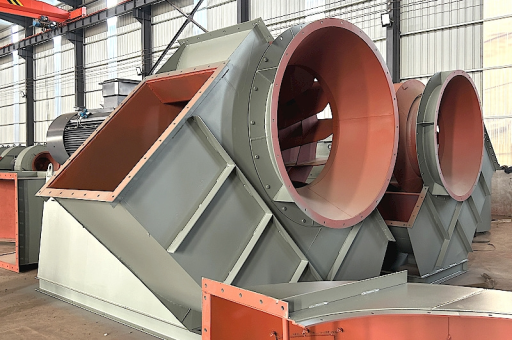
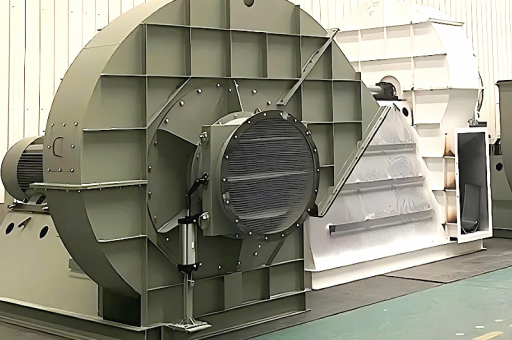
- Scroll Design: Volute-shaped housing converts velocity pressure to static pressure efficiently.
- Access Doors: Quick-opening hinges allow inspection and cleaning of the impeller and interior.
- Drain Plugs: Essential for condensation or wash-down applications (e.g., food processing).
Selection Criteria: How to Choose the Right Exhaust Fan
Choosing the wrong fan can lead to poor dust capture, high energy bills, or premature failure. Follow this checklist:
-
Calculate Required CFM:
- Measure duct diameter, length, number of bends, and filter resistance.
- Use the formula: Total Pressure Loss = Duct Friction + Filter Drop + Hood Entry Loss.
- Ensure the fan’s static pressure at 14000 m³/h exceeds your total system loss by 10–15%.
-
Match Dust Characteristics:
- Is the dust combustible? (e.g., aluminum, flour, coal → explosion-proof design needed).
- Is it hygroscopic? (e.g., sugar, cement → stainless steel housing).
- Is it abrasive? (e.g., sandblasting dust → hardened wear plates).
-
Evaluate Space Constraints:
- Inlet and outlet configurations (top, side, or bottom).
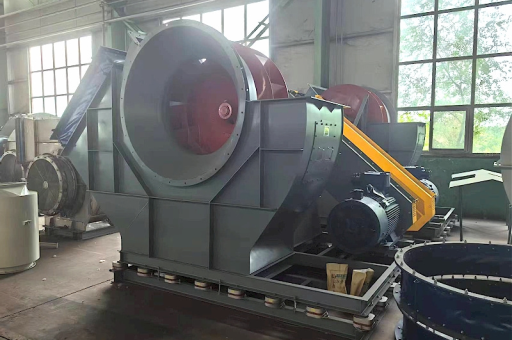
- Foundation vibration isolation (spring mounts or inertia bases).
-
Consider Future Expansion:
Oversize the motor base and VFD capacity slightly to allow for increased ductwork.
-
Check Regulatory Standards:
NFPA 654 (combustible dust), OSHA 1910.94, and local building codes.
Installation Best Practices for Optimal Airflow
Even the best fan underperforms if installed poorly. Adhere to these guidelines:
- Ductwork Design: Keep duct runs as short and straight as possible. Use long-radius elbows (R/D > 2.0). Avoid sudden transitions.
- Inlet and Outlet: Maintain straight duct lengths of at least 5–10 pipe diameters before the fan inlet to prevent turbulence. The outlet should discharge upward or away from personnel.
- Vibration Control: Install flexible connectors at the inlet and outlet. Use inertia bases with neoprene pads.
- Electrical Wiring: Ensure proper phase rotation (clockwise for backward-curved impellers). Install a thermal overload relay.
- Commissioning: Measure actual airflow with an anemometer or pitot tube. Compare to the fan curve. Adjust damper or speed if needed.
Maintenance and Troubleshooting
Routine Maintenance (Monthly):
- Inspect belts (if belt-driven) for tension and wear.
- Check vibration levels (should be < 0.15 inches/second).
- Clean impeller blades of accumulated dust (unbalanced impellers cause bearing failure).
- Lubricate bearings per manufacturer schedule (typically every 3–6 months).
Common Issues and Fixes: | Problem | Likely Cause | Solution | | :--- | :--- | :--- | | Low airflow | Clogged filters, closed dampers, belt slippage | Clean filters, open dampers, tighten/replace belts | | Excessive vibration | Unbalanced impeller, loose foundation bolts | Rebalance impeller, tighten bolts | | Motor overheating | Undersized motor, high ambient temp, voltage imbalance | Replace with correct motor, improve ventilation | | Noise increase | Bearing wear, debris in housing | Replace bearings, clean housing |
FAQ: Common Questions About 14000 m³/h Dust Collector Fans
Q1: Can a 14000 m³/h fan be used for both dust collection and ventilation? A: No. Dust collector fans are designed for high static pressure (to overcome filter resistance), while ventilation fans prioritize low-pressure, high-volume flow. Using a dust collector fan for ventilation wastes energy.
Q2: How many collection hoods can this fan support? A: With standard 150 mm ducts and 10–15 m duct runs, approximately 4–6 hoods. This varies based on hood design and required capture velocity.
Q3: Is a higher m³/h always better? A: No. Oversizing increases initial cost, energy consumption, and erosion velocity in ducts. Always match fan capacity to system load.
Q4: Can I install this fan outdoors? A: Yes, but protect the motor and electrical connections from weather. Use a weather cover or purchase a weather-resistant model.
Q5: What is the lifespan of a 14000 m³/h dust collector fan? A: With proper maintenance, 10–15 years for the fan housing; bearings and belts need replacement every 2–3 years.
Conclusion: Maximizing Efficiency and Compliance
The 14000 m³/h Dust Collector Exhaust Fan is a workhorse for industrial dust control, offering a powerful yet manageable balance of airflow, pressure, and energy efficiency. By understanding its technical specifications, selecting the correct configuration for your dust type, and adhering to installation and maintenance best practices, you can ensure a safer workplace, lower regulatory risk, and reduced operational costs.
Whether you’re upgrading an existing system or designing a new one, always prioritize fan performance curve analysis over headline metrics. A fan that operates at its Best Efficiency Point will serve reliably for years. For additional resources, consult fan manufacturer data sheets or reach out to certified industrial ventilation engineers.