This article's table of contents introduction:
- Core Performance Parameters
- Recommended Fan Type
- Critical Design Considerations
- Typical Duct/Pipe Sizing
- Accessories Required
- Sample Specification Summary
- Installation Notes
- Sourcing Data
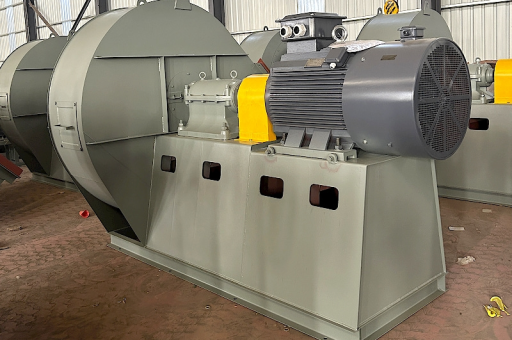
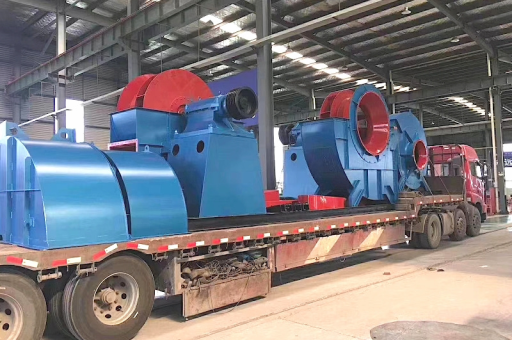
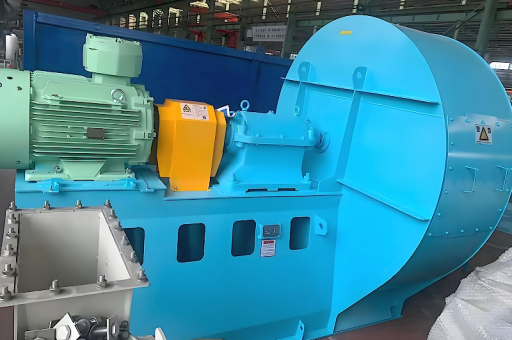
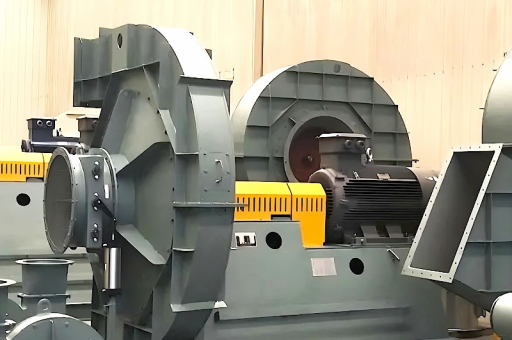
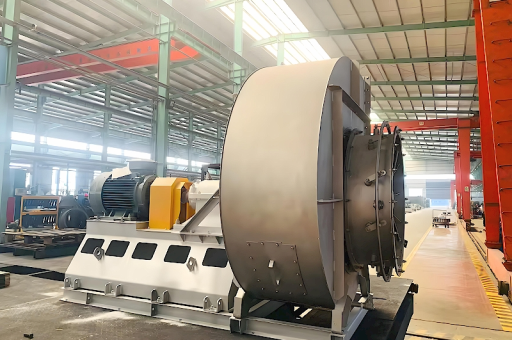
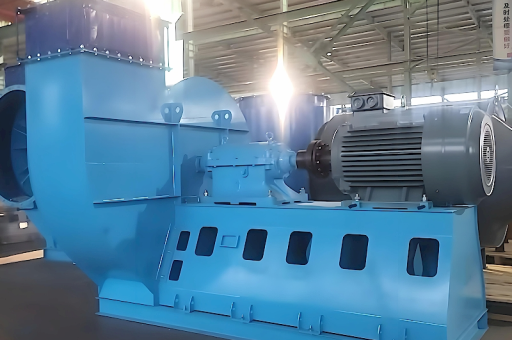
Here is a technical breakdown and specification guide for a 39,000 m³/h Dust Collector Exhaust Fan. This is a high-capacity industrial fan typically used for centralized dust collection systems in woodworking, cement, mining, or bulk material handling.
Core Performance Parameters
-
Airflow: 39,000 m³/h (≈ 22,950 CFM).
-
Static Pressure: A key missing variable. For dust collection, you typically need 1,500 – 2,500 Pa (6 – 10 in.wg) for standard ducts, or 2,500 – 4,000 Pa (10 – 16 in.wg) for long runs or high-efficiency baghouse filters.
-
Motor Power: Estimated based on pressure.
- Low Pressure (~1,500 Pa): ~22–30 kW
- Medium Pressure (~2,500 Pa): ~37–45 kW
- High Pressure (~3,500 Pa): ~55–75 kW
-
Speed: Typically 1,450 RPM (4-pole motor) for direct drive, or 960 RPM (6-pole) for belt-driven units.
Recommended Fan Type
For 39,000 m³/h, you need a heavy-duty industrial fan. The best options are:
| Type | Why it fits | Typical Use |
|---|---|---|
| Backward Curved (BC) | High efficiency, non-clogging (for fine dust). Stable curve. | Central systems, wood dust, paper trim. |
| Radial (Paddle Wheel) | Handles heavy, abrasive, or sticky material. Low efficiency. | Grain, cement, metal shavings. |
| Airfoil (AF) | Highest efficiency (>85%). Clean air only. | Clean air exhaust after baghouse. |
Best choice for general dust: Backward Curved (BC) Inlet Box fan.
Critical Design Considerations
A. Abrasion Resistance
- Material: Carbon Steel (ST-37) is standard. Wear lining (AR400 or ceramic tiles) on the impeller and housing is essential if handling sand, metal, or glass.
- Impeller Thickness: Use 8–12 mm thick blades for heavy dust.
B. Spark Resistance (for flammable dust)
- Construction: CNC (Construction for Non-sparking) . Impeller must be aluminum-bronze or stainless steel. Housing must have a copper/aluminum grounding strap.
- Compliance: ATEX (Europe) or NEC (US) for Class II Div 1/2 (dust).
C. Drive Type
- Belt Drive (Recommended): Allows speed change to adjust airflow. Use SPB or SPC wedge belts with taper-lock bushings.
- Direct Drive: More reliable (fewer parts), but requires a VFD for speed control.
D. Air Handling
- Density: Standard air (1.2 kg/m³ at 20°C). Derate power if hot (>80°C) or high altitude (>1,000m).
Typical Duct/Pipe Sizing
For 39,000 m³/h, use this duct velocity (transport velocity):
- Fine dust (wood, paper): 18–20 m/s → Duct diameter = ~850–900 mm (34–36")
- Heavy dust (cement, grain): 22–25 m/s → Duct diameter = ~750–800 mm (30–32")
Calculation:
- Area = Flow / Velocity
- Area = (39,000 / 3,600) / 20 m/s = 0.54 m²
- Diameter = √(4 * 0.54 / π) = 83 m (~830 mm)
Accessories Required
| Accessory | Purpose |
|---|---|
| Inlet Box Damper (Iris/Louver) | Modulates airflow. |
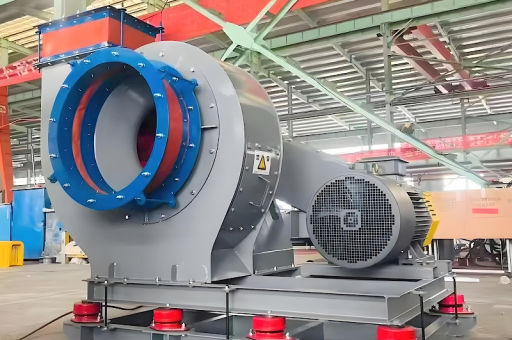
| Expansion Joint (Fabric or Rubber) | Vibration isolation at the fan inlet/outlet. |
| Drain Plug (Housing Bottom) | Removes trapped moisture or cleaning water. |
| Vibration Switch | Shuts down fan if bearing fails. |
Sample Specification Summary
| Parameter | Value |
|---|---|
| Model | BC-36-10 (Example) |
| Airflow | 39,000 m³/h |
| Static Pressure | 2,500 Pa |
| Fan Speed | 1,450 RPM |
| Motor | 45 kW, 415V, 3Ph, 50Hz (or 460V, 60Hz) |
| Sound Level | < 85 dBA (with silencer) |
Installation Notes
- Foundation: Heavy concrete base (2–3 tons) with anti-vibration pads (spring or rubber).
- Duct Connection: Flexible connector (fabric or PVC) at the fan inlet/outlet to prevent vibration transmission.
- Minimum Straight Duct: 5x duct diameter before the fan inlet for even airflow (reduces turbulence and noise).
Sourcing Data
If you are purchasing or specifying this fan, request the following from the supplier:
- Performance Curve: Flow (m³/h) vs. Pressure (Pa) for your actual system resistance.
- Sound Data: Octave band sound pressure levels.
- Weight & Dimensions: For structural support and crane lifting.
- Material Certificates: For the impeller and shaft.
Would you like me to calculate the exact motor power for a specific static pressure (e.g., 2,500 Pa) or provide a selection for a specific material (e.g., wood dust vs. cement)?