This article's table of contents introduction:
- Table of Contents
- Introduction: Why Airflow Capacity Matters
- Understanding the 27000 m³/h Rating: Core Specifications
- Key Components and Engineering Design
- Application Scenarios: Where This Fan Excels
- Installation Best Practices for Maximum Efficiency
- Maintenance and Troubleshooting: Common Questions Answered
- Economic and Environmental Impact
- Conclusion: Future-Proofing Your Dust Collection System
*Optimizing Industrial Air Quality: The Complete Guide to the 27000 m³/h Dust Collector Exhaust Fan*
Table of Contents
- Introduction: Why Airflow Capacity Matters
- Understanding the 27000 m³/h Rating: Core Specifications
- Key Components and Engineering Design
- Application Scenarios: Where This Fan Excels
- Installation Best Practices for Maximum Efficiency
- Maintenance and Troubleshooting: Common Questions Answered
- Economic and Environmental Impact
- Conclusion: Future-Proofing Your Dust Collection System
Introduction: Why Airflow Capacity Matters
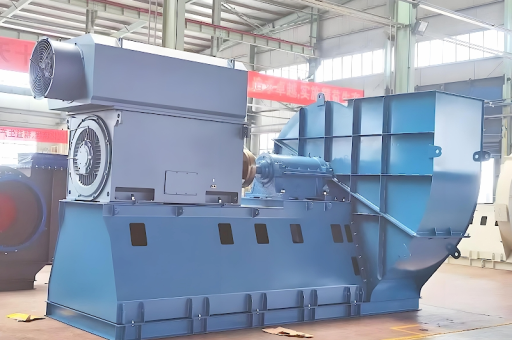
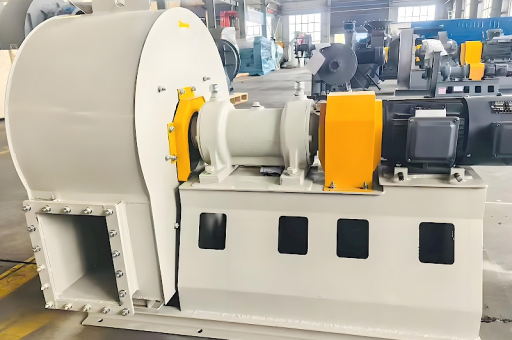
In industrial environments where dust, particulate matter, and airborne contaminants are byproducts of manufacturing, a reliable dust collection system is not optional—it is mandatory for worker safety, regulatory compliance, and equipment longevity. At the heart of every high-performance system is the exhaust fan. Among the most sought-after specifications in heavy-duty applications is the 27000 m³/h Dust Collector Exhaust Fan. This unit is engineered to move an extraordinary volume of air—27,000 cubic meters per hour—making it ideal for large-scale operations such as woodworking plants, metal fabrication shops, grain handling facilities, and cement processing lines.
Why do professionals gravitate toward this specific airflow capacity? The answer lies in the balance between energy consumption, static pressure capability, and the sheer volume of air needed to capture dust at the source. According to industry benchmarks, a 27000 m³/h fan can effectively service multiple collection points simultaneously, maintaining negative pressure across extensive ductwork networks.
Before we proceed, let’s address a common question:
Q: How does a 27000 m³/h fan compare to smaller units?
A: Smaller fans (e.g., 10000 m³/h) are sufficient for single machines or small workshops. However, the 27000 m³/h fan is designed for central systems where multiple dust-generating processes operate concurrently. Its larger impeller and motor allow it to overcome high static pressure losses from long duct runs and dense filter media.
Understanding the 27000 m³/h Rating: Core Specifications
The "27000 m³/h" designation refers to the volumetric flow rate under standard conditions (typically 20°C, 1 atm). For context, this equates to approximately 450 m³/min or 15,900 CFM (cubic feet per minute). However, real-world performance depends on several interrelated parameters:
- Static Pressure (SP): A high-efficiency 27000 m³/h fan often delivers at 1500–2500 Pa (6–10 inches w.g.). This pressure ensures air moves through cyclone separators, bag filters, or cartridge collectors.
- Motor Power: Most units in this class require 15–30 kW (20–40 HP) motors, often with VFD (variable frequency drive) compatibility for flow modulation.
- Impeller Design: Backward-curved or radial-tip blades provide stability across varying loads, minimizing vibration and noise.
- Construction Material: Heavy-duty steel with corrosion-resistant coatings is standard; for explosive dust (e.g., aluminum or flour), spark-resistant construction is mandatory.
What distinguishes a durable unit from a failing one? The quality of bearings, shaft seals, and balancing. A precision-balanced impeller reduces downtime and extends filter life by maintaining consistent suction.
Key Components and Engineering Design
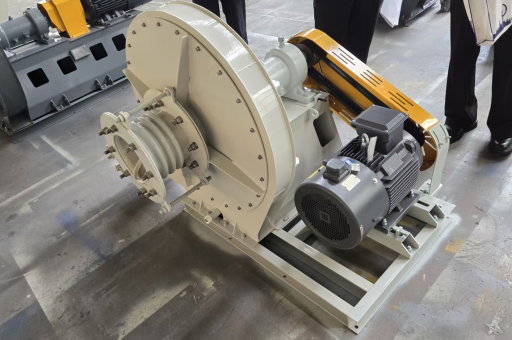
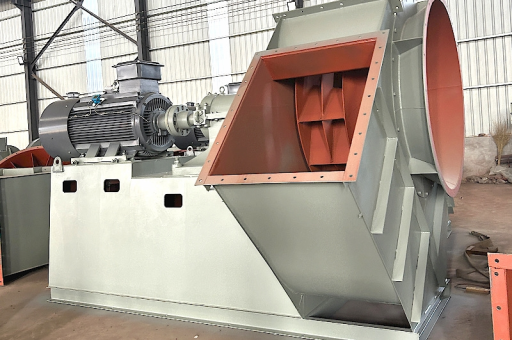
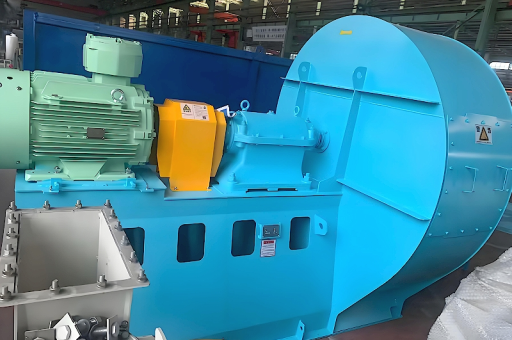
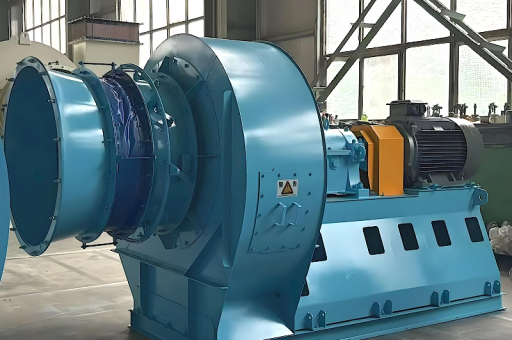
To truly optimize a 27000 m³/h Dust Collector Exhaust Fan, one must examine its anatomy:
a. Impeller and Housing
The impeller is the heart. For high-volume flow, a backward-inclined design is common because it offers non-overloading power characteristics—meaning the motor won't burn out if ductwork is accidentally blocked. The housing is typically scroll-shaped to convert kinetic energy into static pressure efficiently.
b. Motor and Drive System
Direct-drive or belt-driven? Belt drives allow speed adjustment (fan speed changes flow rate through affinity laws: flow ∝ RPM, pressure ∝ RPM², power ∝ RPM³). A VFD further optimizes energy usage by matching fan speed to real-time demand.
c. Inlet and Outlet Connections
Standardized flanges (e.g., DIN, ANSI) ensure leak-free connection to ductwork. Some models feature inlet vanes or dampers for fine-tuning.
d. Filtration Integration
The fan is often positioned after the filter (clean air side). This configuration subjects the fan to cleaner air, reducing blade wear. Ensure the fan's pressure rating exceeds the filter's pressure drop by at least 20%.
Application Scenarios: Where This Fan Excels
Woodworking and Carpentry
A large cabinet shop generating sawdust from CNC routers, planers, and sanders requires a central system. A 27000 m³/h fan, paired with a 20-bag cyclone, can maintain air changes exceeding 10 per hour, keeping PM2.5 levels below OSHA limits.
Metal Fabrication and Welding
Welding fume extraction demands high capture velocity at the source. Strategically placed hoods connected to a 27000 m³/h fan create suction velocities of 0.5–1.0 m/s at a distance of 1.5 meters, effectively capturing particulates before they disperse.
Food Processing and Grain Handling
Combustible dust (e.g., grain flour, sugar) requires explosion-proof fans with ATEX certification. The 27000 m³/h fan must feature a spark-resistant impeller (aluminum or stainless steel) and grounding provisions.
Pharmaceutical and Chemical Plants
For toxic or hazardous dust, the fan must be hermetically sealed with gas-tight housing to prevent leaks. The high flow rate ensures rapid purging of volatile environments.
Installation Best Practices for Maximum Efficiency
Incorrect installation can negate the benefits of a 27000 m³/h fan. Follow these guidelines:
- Duct Sizing: Compute diameter using velocity of 15–20 m/s for dust-laden air (20–25 m/s for clean air). For 27000 m³/h, a main duct of 800–1000 mm diameter is typical.
- Avoid Sharp Bends: Use radius elbows (R = 2D) to reduce turbulence and noise.
- Foundation Isolation: Mount the fan on inertia bases with vibration isolators to prevent structural resonance.
- Electrical Safety: Provide proper grounding, overload relays, and emergency stop circuits. For hazardous locations, use explosion-proof motors and ATEX-certified fan components.
Maintenance and Troubleshooting: Common Questions Answered
Q: My fan is vibrating excessively. What could be wrong?
A: Three common causes: (1) impeller imbalance due to dust buildup—clean the blades; (2) worn bearings—replace with sealed, shielded types; (3) loose foundation bolts—re-torque and check for spring isolator fatigue.
Q: How often should I replace the fan filter?
A: This depends on dust loading. For heavy applications (e.g., sanding), inspect monthly; for light duty (e.g., assembly), quarterly. Monitor pressure drop: if SP across the filter exceeds 1500 Pa, clean or replace it.
Q: Can I reduce fan speed to save energy?
A: Yes, using a VFD. However, ensure the duct velocity remains above the saltation velocity (minimum speed to keep dust entrained). For dense dust like lead oxide, maintain at least 18 m/s.
Q: Why is my motor overheating even though the fan runs freely?
A: Check the voltage balance (should be within 1% across phases). Also, verify that the motor is not oversized—if the fan is running near no-load, the motor may be consuming excessive reactive power. Install a soft starter or VFD.
Economic and Environmental Impact
Investing in a 27000 m³/h Dust Collector Exhaust Fan pays dividends through:
- Reduced Downtime: Reliable performance minimizes unscheduled maintenance.
- Compliance: Avoid OSHA fines for respirable dust exposure (e.g., silica, wood dust).
- Energy Savings: Modern backward-curved fans achieve 75–85% efficiency, saving thousands of dollars annually compared to older forward-curved designs.
- Filter Life Extension: Stable airflow reduces pressure spikes that damage bags and cartridges.
From an environmental standpoint, capturing dust at the source prevents release into the atmosphere, earning LEED points and satisfying EPA emission standards.
Conclusion: Future-Proofing Your Dust Collection System
The 27000 m³/h Dust Collector Exhaust Fan is not merely a component—it is the backbone of any robust air purification strategy for industrial operations. By understanding its specifications, selecting appropriate components, and adhering to installation and maintenance best practices, facility managers can achieve consistent performance for decades.
As regulations tighten and energy costs rise, the trend is toward intelligent fans with IoT sensors that monitor vibration, temperature, and pressure in real time. The 27000 m³/h platform is well-suited for such upgrades, ensuring your investment remains relevant.
Remember: The best fan for your operation is one that matches your system's resistance curve. Always perform a detailed ductwork analysis before purchase. For further guidance on sizing, noise control, or explosion venting, consult with certified fan engineers or visit your local industrial fan supplier.