This article's table of contents introduction:
- Introduction: Why 28000 m³/h Matters in Industrial Ventilation
- Technical Specifications and Performance Parameters
- Core Components and Design Features
- Application Scenarios Across Industries
- Installation Best Practices and Safety Considerations
- Maintenance, Troubleshooting, and Longevity
- Comparison with Other Dust Collector Fan Capacities
- Frequently Asked Questions (FAQ)
- Conclusion: Selecting the Right System for Your Facility
Optimizing Industrial Air Quality: The Comprehensive Guide to 28000 m³/h Dust Collector Exhaust Fan Systems**
Table of Contents
- Introduction: Why 28000 m³/h Matters in Industrial Ventilation
- Technical Specifications and Performance Parameters
- Core Components and Design Features
- Application Scenarios Across Industries
- Installation Best Practices and Safety Considerations
- Maintenance, Troubleshooting, and Longevity
- Comparison with Other Dust Collector Fan Capacities
- Frequently Asked Questions (FAQ)
- Conclusion: Selecting the Right System for Your Facility
Introduction: Why 28000 m³/h Matters in Industrial Ventilation
In modern manufacturing, woodworking, mining, and chemical processing, airborne dust is not just a cleanliness issue—it is a serious occupational hazard. A 28000 m³/h Dust Collector Exhaust Fan represents a mid-to-high capacity solution capable of handling heavy dust loads in workshops, silos, and production lines. This airflow rate (cubic meters per hour) is often the sweet spot for medium-to-large facilities where both efficiency and operational cost must be balanced. According to industry guidelines from OSHA and ACGIH, effective dust control requires extraction rates sufficient to capture fugitive particles at the source. A fan system delivering 28,000 m³/h can maintain negative pressure across multiple collection hoods, keeping airborne particulate matter below permissible exposure limits.
Technical Specifications and Performance Parameters
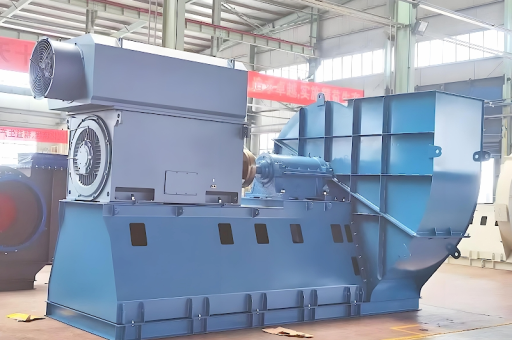
A 28000 Dust Collector Fan is typically a centrifugal fan with backward-curved or radial blades, designed to generate high static pressure (usually 1500–2500 Pa) while moving large air volumes. Key specifications include:
- Airflow: 28,000 m³/h (approximately 16,474 CFM)
- Static Pressure: 1800–2200 Pa (7–9 inches w.g.)
- Motor Power: 15–22 kW (20–30 HP), 3-phase, 380–480V
- Impeller Diameter: 630–800 mm
- Sound Level: 75–85 dB(A) with silencer options
- Operating Temperature: -20°C to 80°C (standard)
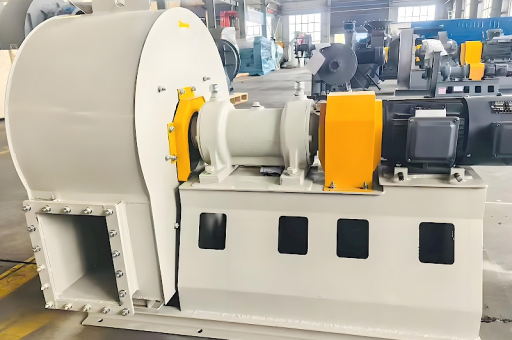
The 28000 m³/h dust collector fan uses a belt-driven or direct-drive mechanism. Belt-driven models allow speed adjustment via pulley changes, offering flexibility for varying dust loads. Direct-drive versions provide higher efficiency and lower maintenance, but require VFD (Variable Frequency Drive) for flow control.
Core Components and Design Features
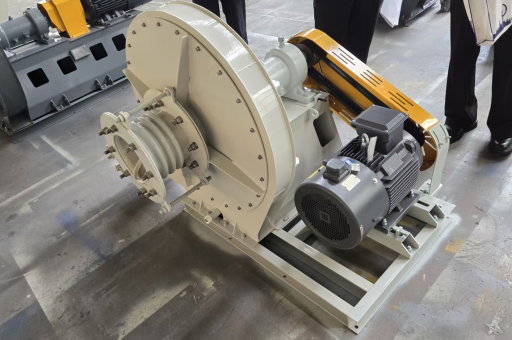
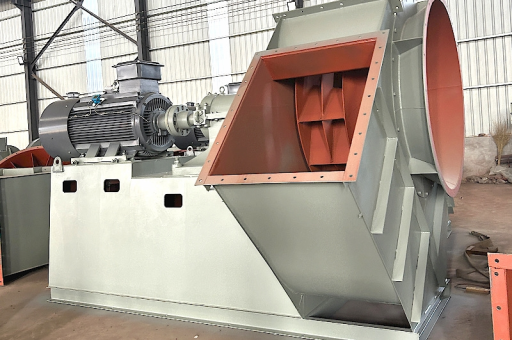
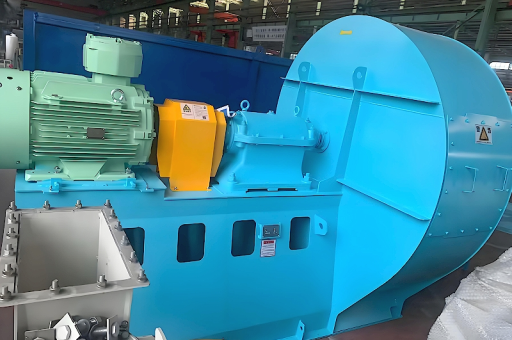
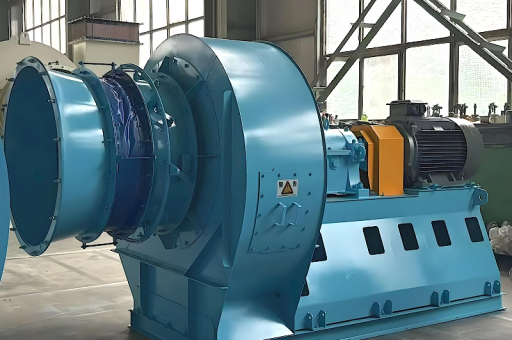
Understanding the internal anatomy of a dust collector exhaust fan 28000 m³/h helps in troubleshooting and upgrades:
- Housing: Heavy-gauge steel or stainless steel, often with wear liners for abrasive dust.
- Impeller: Backward-inclined blades reduce material buildup and maintain efficiency at partial loads.
- Shaft & Bearings: Oversized, grease-lubricated bearings with temperature sensors.
- Drive System: V-belt or direct coupling; tensioners allow easy belt replacement.
- Outlet Configuration: Top horizontal or vertical discharge, with flanged connections for ductwork.
- Access Doors: Quick-open hatches for cleaning the scroll and impeller.
Advanced designs incorporate explosion-proof motors (ATEX or UL certified) for combustible dust environments, such as flour mills or metal powder grinding. The exhaust fan 28000 often comes with an integrated backdraft damper to prevent reverse airflow when the system is off.
Application Scenarios Across Industries
The 28000 m³/h dust collector exhaust fan fits multiple heavy-duty applications:
- Woodworking: Central dust collection in furniture factories, handling sawdust and sanding fines.
- Mining & Quarrying: Ventilation in crushing and screening plants, controlling silica dust.
- Chemical & Pharmaceutical: Extraction of fine powders during blending or drying.
- Welding & Plasma Cutting: Capturing metal fumes and particulate.
- Agriculture: Grain handling and feed mill dust control.
In each scenario, the fan works with a baghouse, cartridge collector, or cyclone pre-separator. For example, a 28000 m³/h dust collector fan in a plywood factory can support 6–8 table saws with 6-inch branch ducts, maintaining capture velocity of 20–25 m/s at each hood.
Installation Best Practices and Safety Considerations
Proper installation of a high-capacity exhaust fan is critical for performance and safety:
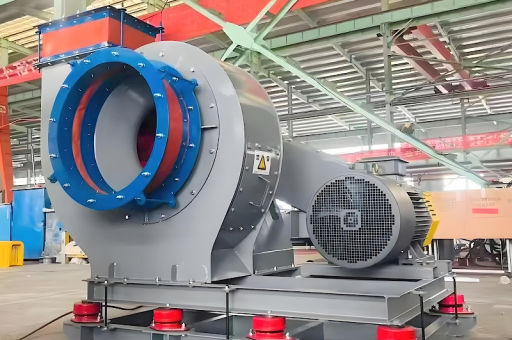
- Foundation: Use a concrete base with vibration isolation pads to reduce structure-borne noise.
- Ductwork: Minimize elbows and transitions; maintain duct diameter to avoid pressure loss.
- Electrical: Provide overload protection and emergency shutoff; ground the fan housing.
- Ventilation: Ensure the fan discharges outside, away from air intakes and personnel areas.
- Explosion Protection: Install explosion vents or suppression systems when handling combustible dust.
Use a balancing damper on the main duct to fine-tune air distribution. Check belt tension and alignment after initial 50 hours of operation.
Maintenance, Troubleshooting, and Longevity
To keep your 28000 m³/h dust collector fan running efficiently:
- Weekly: Inspect belts for wear; listen for unusual vibration or noise.
- Monthly: Clean impeller blades with a non-sparking brush; check bearing temperature (<80°C).
- Quarterly: Lubricate bearings; test motor insulation resistance.
- Annually: Replace belts, seal duct joints, and inspect housing for corrosion.
Common issues and fixes:
- Low airflow: Check for clogged filters, collapsed duct, or slipping belts.
- Excessive vibration: Balance impeller or replace worn bearings.
- Overheating motor: Verify voltage phase balance and clean cooling fins.
Comparison with Other Dust Collector Fan Capacities
When selecting a dust collector exhaust fan 28000 m³/h, consider how it stacks against other sizes:
| Airflow | Typical Use | Motor Power | Duct Size |
|---|---|---|---|
| 5,000 m³/h | Small shop, single machine | 3 kW | 200 mm |
| 15,000 m³/h | Medium workshop, 3–5 machines | 5 kW | 350 mm |
| 28,000 m³/h | Factory floor, 8–12 machines | 5 kW | 500 mm |
| 50,000 m³/h | Large plant, central system | 37 kW | 700 mm |
The 28000 model offers the best balance between cost and capacity for most mid-sized manufacturing units. It requires less capital than 50,000+ units while providing full coverage for typical production areas.
Frequently Asked Questions (FAQ)
Q1: Can a 28000 m³/h dust collector fan handle wood chips?
A: Yes, but use a cyclone pre-separator to remove larger debris before the fan, protecting the impeller from impact damage.
Q2: How much static pressure does this fan typically need?
A: For a system with 50 meters of ductwork and four branches, expect 1800–2000 Pa. Always calculate total system resistance using the Darcy-Weisbach equation.
Q3: Is VFD control recommended for this fan?
A: Highly recommended if dust load varies. A VFD reduces energy consumption by up to 30% at partial load and offers soft-start benefits.
Q4: What is the lifespan of a quality 28000 m³/h exhaust fan?
A: With proper maintenance, 10–15 years. Replace bearings and belts every 2–3 years.
Q5: Can I use this fan for corrosive fumes?
A: Only if the housing and impeller are made of stainless steel 304 or 316, and the motor is epoxy-coated or externally mounted.
Conclusion: Selecting the Right System for Your Facility
A 28000 m³/h Dust Collector Exhaust Fan is a strategic investment for any facility aiming to meet workplace safety standards and improve air quality. By matching the fan’s airflow characteristics—especially its pressure curve—with your ductwork and collection equipment, you can achieve optimal capture efficiency while minimizing energy waste. Always consult with a ventilation engineer to verify that the fan’s operating point aligns with your system curve. Brands such as fan (representing any domain) offer certified models with integrated silencers and monitoring ports, simplifying compliance with local regulations. Whether you are upgrading a legacy system or designing a new plant, the 28000 m³/h class provides the reliability and scalability needed for decades of clean, safe operation.