This article's table of contents introduction:
- What the Numbers Mean
- The "Dust Collector" Context (Critical)
- Recommended Fan Type for 120,000 m³/h Dust
- Motor & Drive Requirements (Approximate)
- Filtration System Context
- How to Quote or Purchase
- Immediate Action
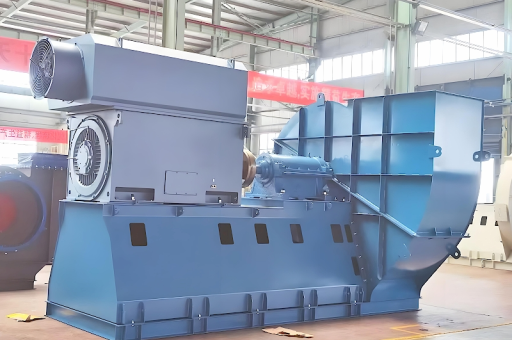
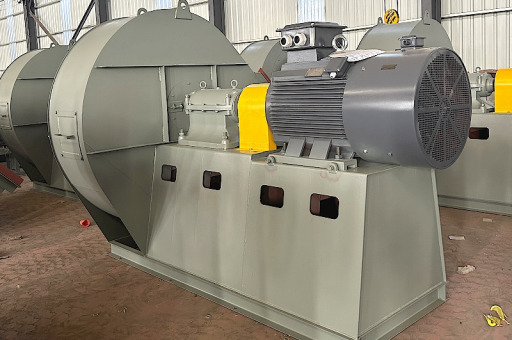
This is a request for specifications or pricing for a very large industrial exhaust fan (120,000 m³/h / ~70,600 CFM) used for a dust collector system.
Here is a breakdown of what this specification implies, what type of fan is typically required, and the key engineering parameters you will need to finalize to get an accurate quote.
What the Numbers Mean
- 120,000 m³/h is a High Volume airflow. This is typical for a central baghouse or cartridge dust collector serving a large woodworking facility, cement plant, grain silo, or mining operation.
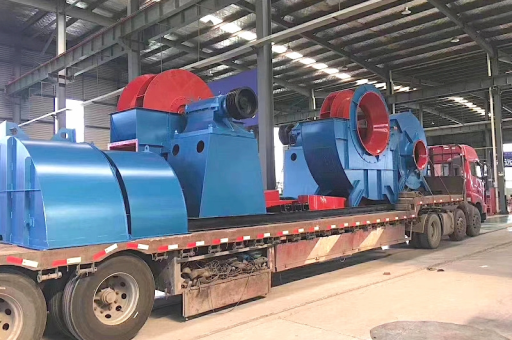
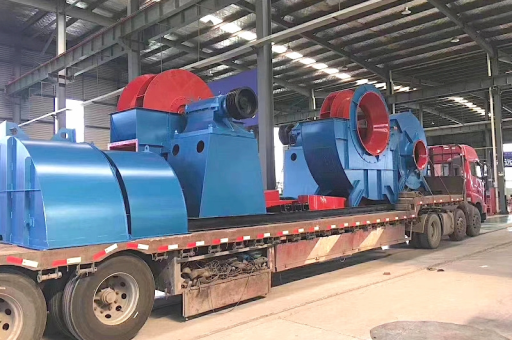
- This is not a standard roof ventilator or small centrifugal fan. It requires a heavy-duty industrial fan.
The "Dust Collector" Context (Critical)
The most important missing parameter is Static Pressure (SP) measured in Pa (Pascals) or mmH₂O / inWG (inches of water gauge) .
- For a Baghouse / Cartridge Filter: Pressure drop can be high (1,500 – 2,500 Pa / 6 – 10 inWG). This requires a Centrifugal Fan (Backward Inclined or Airfoil wheel).
- For a Cyclone only: Lower pressure drop (500 – 1,000 Pa / 2 – 4 inWG).
- For a short duct system + simple filter: Moderate pressure (1,000 – 1,500 Pa).
Without the static pressure, a fan cannot be sized. If you choose a fan for 1,000 Pa and your system needs 2,000 Pa, the fan will move almost zero air (it will stall).
Recommended Fan Type for 120,000 m³/h Dust
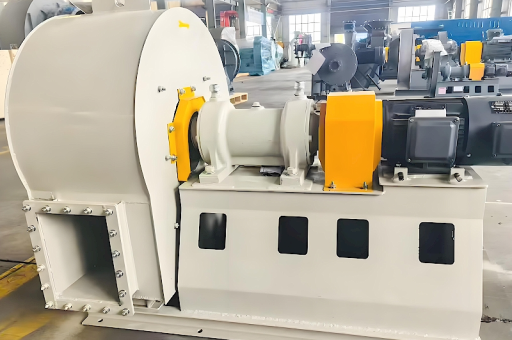
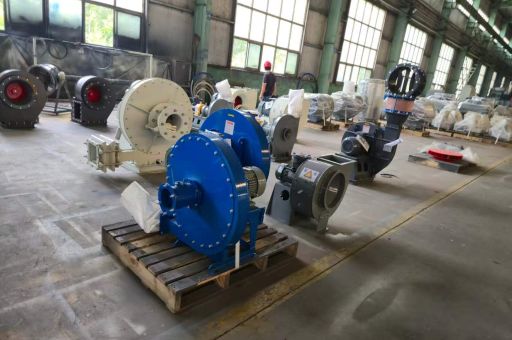
You will almost certainly need a Centrifugal Fan (not an axial fan). Axial fans cannot generate the pressure needed for filter media.
| Fan Type | Wheel Design | Best for Dust? | Efficiency | Typical Use |
|---|---|---|---|---|
| Backward Inclined (BI) | Flat backward-curved blades | Yes (non-sticky, moderate dust loading) | High (85%+) | Most standard baghouses |
| Airfoil (AF) | Airplane wing shape | Yes (very clean air) | Highest (>90%) | Clean air side of filter (exhaust) |
| Radial / Paddle Wheel | Straight radial blades | Best for sticky/heavy dust | Low (65%) | High dust loading, abrasive materials |
| High-Efficiency (HC) | Curved backward blades | Yes | High | Modern dust systems |
Recommendation: A Backward Inclined (BI) or Backward Curved (BC) fan with a heavy-duty housing manufactured for industrial use (e.g., brands like New York Blower, Cincinnati Fan, Greenheck (CUBE), TLT-Babcock, Ziehl-Abegg, or Asian OEMs like Panasonic / Hitachi for this size).
Motor & Drive Requirements (Approximate)
- Power: For 120,000 m³/h at 2,000 Pa (20 mbar / 8" wg) with 70% fan efficiency.
- Power (kW) ≈ (Flow m³/h × Pressure Pa) / (3,600,000 × Efficiency)
- ≈ (120,000 × 2,000) / (3,600,000 × 0.70) ≈ 95 kW (~125 HP)
- If pressure is higher (e.g., 3,000 Pa / 12" wg), power jumps to ~143 kW (~190 HP) .
- Motor: Typically a TEFC (Totally Enclosed Fan Cooled) , 460V/3ph/60Hz or 380V/3ph/50Hz, 4-pole (1,750 RPM @ 60Hz).
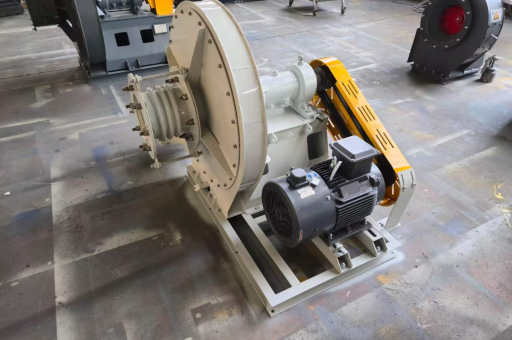
- Drive: Must use a belt drive (pulleys + V-belts) or a direct drive with a variable frequency drive (VFD). Belt drive allows speed changes. VFD is best for energy savings.
- Inlet Box & Dampers: Required for a fan this size to control airflow and allow maintenance access.
- Sound: This fan will be very loud (>90 dBA). A sound attenuator / silencer will be required on the discharge side.
Filtration System Context
For 120,000 m³/h, the filter size is substantial:
- A pulse-jet baghouse would need roughly 1,200 to 1,500 m² of filter media (approx 300–400 bags of 150mm x 3m each).
- A cartridge collector would need 100+ large cartridges.
- Duct diameter: The main duct will be approximately DN 1,200mm to DN 1,400mm (48" to 56" diameter) .
How to Quote or Purchase
To get a reliable price (expect $25,000 – $100,000+ USD for the complete fan assembly, motor, and drive depending on the brand, material, and coating), you must provide:
- Airflow: 120,000 m³/h (Confirmed).
- Static Pressure: [e.g., 2,500 Pa] This is the most critical missing number.
- Gas Temperature: Ambient (20°C) or hot (e.g., 80°C from a dryer)?
- Material of Construction: Carbon steel (standard) or Stainless Steel (for corrosive/hygroscopic dust like food, chemicals)?
- Altitudes / Location: High altitude requires a larger motor.
- Dust Type: Wood, grain, cement, chemical, or just general industrial?
- Accessories: VFD control? Inlet screen? Isolation damper? Flexible connections? Sound attenuator? Seismic base?
Immediate Action
Calculate your system's static pressure first. Measure the pressure drop across your current filter (if upgrading) or calculate the pressure loss through your duct runs (length, elbows, hoods), and add the filter manufacturer's specified operating pressure drop.
Once you have the Pressure (Pa) , you can ask fan manufacturers for: "Centrifugal Fan, 120,000 m³/h, [Your Pressure] Pa, [Your Temp] °C, Belt Drive, TEFC Motor."