This article's table of contents introduction:
- What does "110,000 m³/h" mean?
- Typical Applications
- Key Fan Specifications & Components (Typical)
- Critical Engineering Considerations
- How to select this fan (Checklist):
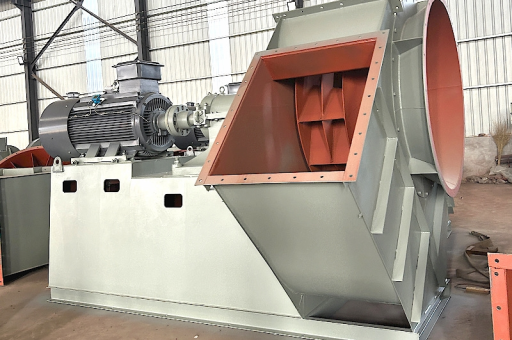
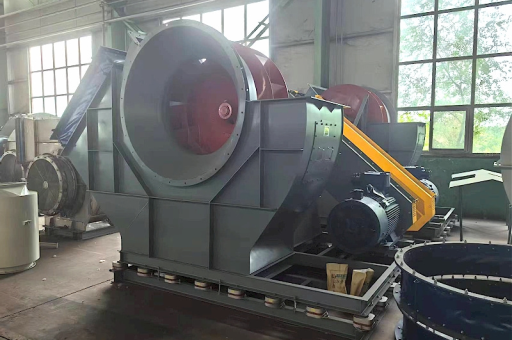
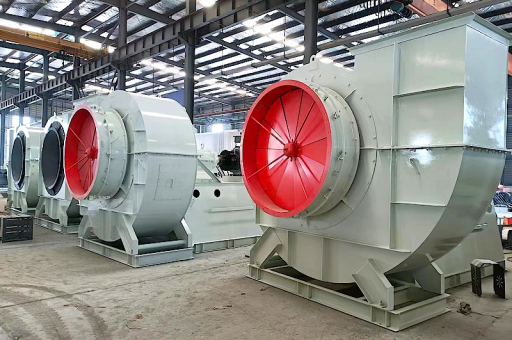
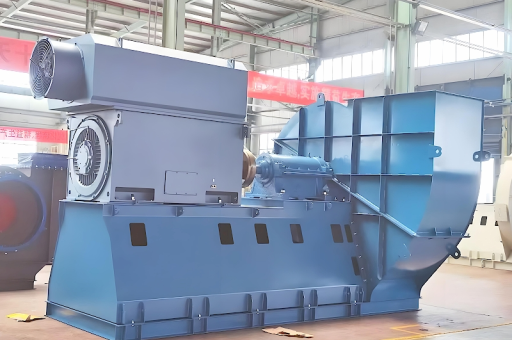
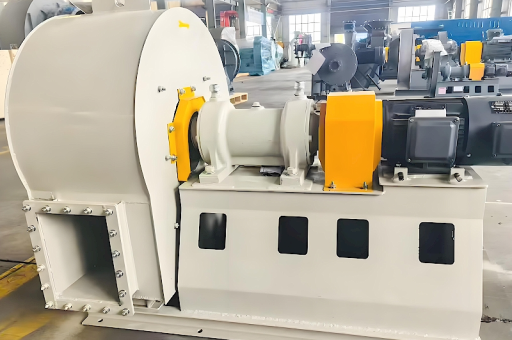
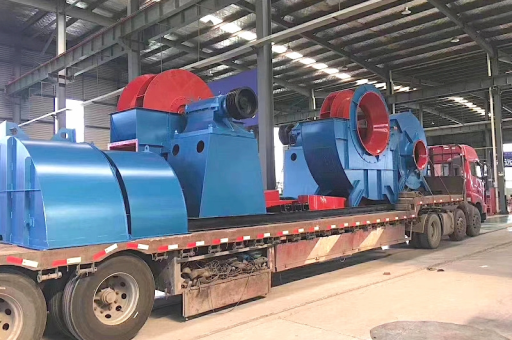
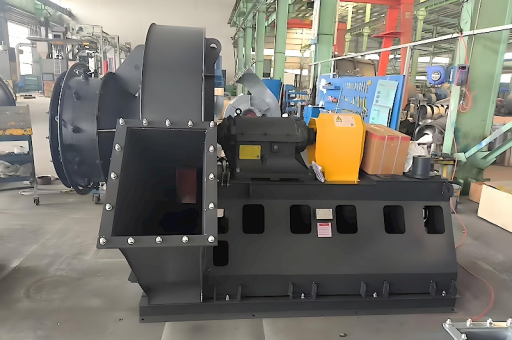
This is a specification for a high-volume industrial exhaust fan, specifically designed for a dust collector system. Here is a breakdown of what this specification means, typical applications, and key engineering considerations.
What does "110,000 m³/h" mean?
- m³/h (Cubic Meters per Hour): This is the volumetric flow rate.
- Scale: 110,000 m³/h is a very large airflow.
- Conversion: ≈ 64,700 CFM (Cubic Feet per Minute) .
- Context: A typical house fan moves about 1,000–3,000 CFM. This fan moves the equivalent airflow of 20-60 house fans.
Typical Applications
A fan of this size is used in heavy industrial processes that generate massive amounts of dust, fumes, or particulates.
- Woodworking: Large panel plants, MDF production, biomass pellet mills.
- Mining & Cement: Quarry crushing, conveying, and silo venting.
- Metalworking: Steel mills, foundries, welding fume extraction (large scale), or plasma/laser cutting tables.
- Pharmaceutical & Chemical: Big reactor venting or material conveying.
- Grain Handling: Elevators and feed mills.
Key Fan Specifications & Components (Typical)
For a fan moving 110,000 m³/h of dusty air, the design is critical.
Fan Type (Most Common):
- Centrifugal (Backward Curved / Airfoil): Most common for dust collectors. Provides high pressure and efficiency.
- Radial Blade (Paddle Wheel): Used if the dust is heavy, moist, or sticky, as it is less prone to clogging but is less efficient.
- In-Line / Tubeaxial: Used only if space is tight and pressure requirements are low (rare for dust collection).
Motor Power (kW / HP):
- This depends on the Static Pressure (the resistance of the dust collector bags, ducts, and silencers).
- Estimation: For general dust collection (1,500 – 2,500 Pa), a 110,000 m³/h fan might require 55 kW to 90 kW (≈ 75 to 120 HP).
- High Pressure (3,500+ Pa): Could need 110 kW to 160 kW (≈ 150 to 215 HP).
- Start method: Must use Star-Delta (Y-Δ) or VFD (Variable Frequency Drive) to avoid massive inrush current.
Construction (Dust Specifics):
- Material: Heavy gauge steel (6mm to 10mm) or Corten for abrasion resistance.
- Impeller: Large diameter (1,200mm – 1,800mm / 4-6 ft). Often reinforced with wear plates.
- Seals: Shaft seals are critical to prevent dust from leaking into bearings.
- Bearings: Heavy duty spherical roller bearings with temperature sensors or grease drains.
- Access Door: Necessary for cleaning the impeller if dust builds up and causes imbalance.
Critical Engineering Considerations
| Parameter | Advice for 110,000 m³/h Fan |
|---|---|
| Duct Velocity | Must be 20-25 m/s (4,000-5,000 FPM) to keep dust entrained. Your main duct diameter would be roughly 1,200 mm - 1,400 mm (48 - 56 inches) . |
| Abrasion | Dust acts like sandpaper at these speeds. Impeller blades and fan housing will wear out. Tip: Use hard-faced liners or ceramic coatings. |
| Vibration | At this size, imbalance is dangerous. The fan must be balanced to ISO G2.5 or G1.0. |
| VFD / Speed Control | Highly recommended. Starting a motor this size across-the-line will cause voltage dips. VFD also allows soft-start and balancing of pressure/flow. |
| Sound / Noise | A fan this large will be very loud (110 - 125 dBA). You MUST have an inlet silencer and/or discharge silencer (ducted or stack-mounted). |
| Structure | The fan base must be a heavy steel frame with inertia base (concrete or steel beams) to prevent the fan from "walking" or shaking the building. |
How to select this fan (Checklist):
If you are ordering or designing around this fan, confirm with the vendor:
- Static Pressure: What is the total pressure drop of your baghouse + ductwork? (e.g., 2,000 Pa? 4,000 Pa?)
- Air Density: At what altitude and temperature (e.g., 20°C vs 80°C)? Hot air requires more motor power.
- Material Type: Is it fine wood dust (explosion risk? -> ATEX/EExd motor)? Is it abrasive silica (wear protection needed)?
- Accessories: Do you need spark arrestors, damper, pressure taps, or a drain plug?
Bottom line: A 110,000 m³/h fan is a "main fan" for a large factory. It is a heavy piece of capital equipment that requires proper inlet/outlet duct transitions, structural supports, and a substantial electrical supply (typically 400V or 690V 3-phase, 150-250 Amps). Do not skimp on the VFD or foundation.