This article's table of contents introduction:
- The Critical Engineering Parameters
- Typical Fan Types for This Duty
- Motor Power Estimation
- Key Mechanical & Safety Features for Dust
- Common Configurations (Arrangements)
- Actionable Checklist for Your Project
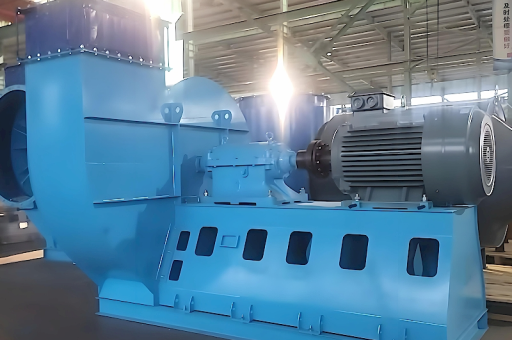
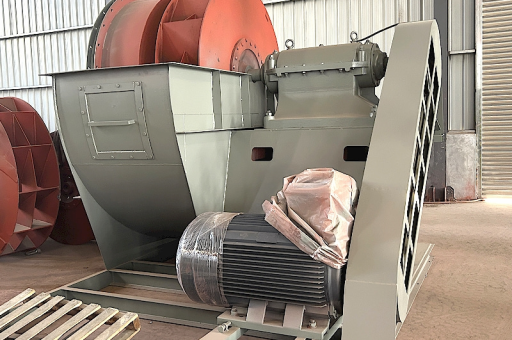
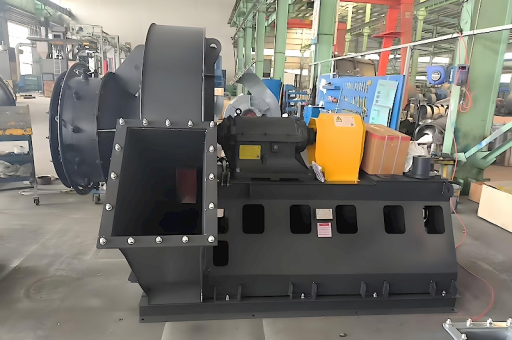
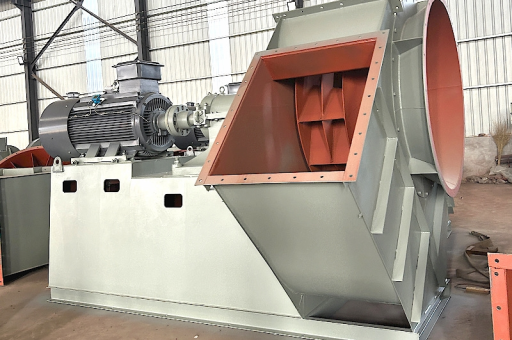
This is a query about a 50,000 m³/h dust collector exhaust fan. This size indicates a large industrial dust collection system, typically used in heavy manufacturing, woodworking, mining, or bulk material handling.
Here is a technical breakdown of what this specification implies, along with key engineering considerations for selecting or designing the system.
The Critical Engineering Parameters
A fan is not just defined by its airflow (50,000 m³/h). To be properly specified, you need the Static Pressure (SP) . The "law" of fan selection is: Airflow vs. Resistance.
- Airflow: 50,000 m³/h (approx. 29,425 CFM).
- Pressure (SP): This is the missing variable. A 50k m³/h fan can have vastly different motor sizes and impeller designs depending on the pressure.
- Low Pressure (100-500 Pa): Simple ventilation (matching a baghouse, not common).
- Medium Pressure (1,000 – 2,000 Pa): A typical dust collector ducting system.
- High Pressure (2,000 – 4,000+ Pa): Long duct runs, high-pressure drop filters (e.g., cartridge filters), pneumatic conveying.
Typical Fan Types for This Duty
Given the high volume and dusty air, the fan type is crucial.
| Fan Type | Suitability for 50k m³/h Dust | Pros | Cons |
|---|---|---|---|
| Backward Curved (BC) | Excellent (Best choice) | High efficiency, non-overloading power curve, stable. | More expensive, larger housing. |
| Radial / Paddle Wheel | Good (Heavy dust) | Simple, handles sticky/gritty dust well, self-cleaning. | Low efficiency, loud. |
| Airfoil (AF) | Fair (Cleaner dust) | Highest efficiency. | Blades easily damaged by abrasive dust; must be protected. |
| Inline / Tubular | Poor | Space saving. | Lower pressure capability, harder to clean. |
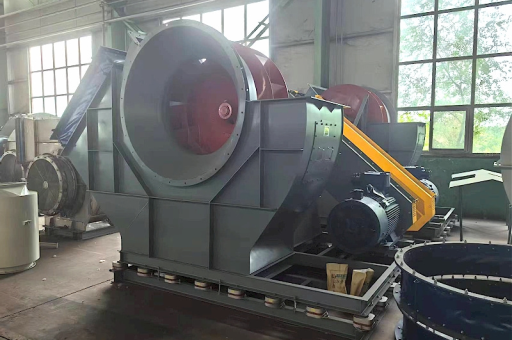
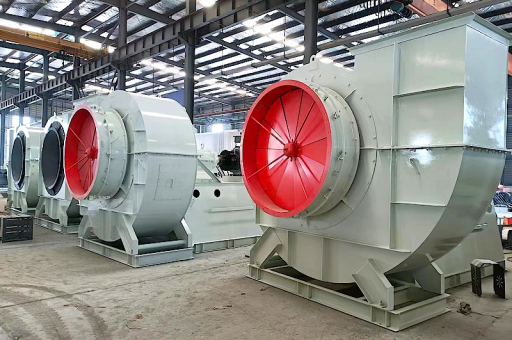
Recommendation: For 50,000 m³/h dust collection, a Backward Curved (BC) fan is the industry standard for energy efficiency and reliability in a "clean" dust stream. A Radial fan is used if the dust is heavy, wet, or causing blade wear.
Motor Power Estimation
You can estimate the required motor power based on a pressure assumption. Formula: Power (kW) = (Flow m³/s × Pressure Pa) / (Efficiency × 1000)
-
Flow: 50,000 m³/h = 89 m³/s
-
Assume: 2,000 Pa (200 mmWG) at 75% efficiency.
-
Power: (13.89 × 2000) / (0.75 × 1000) = 37 kW
-
Assume: 3,000 Pa (300 mmWG) at 75% efficiency.
-
Power: (13.89 × 3000) / (0.75 × 1000) = 5 kW
| Static Pressure (mmWG) | Static Pressure (Pa) | Approx. Motor Power (kW) |
|---|---|---|
| 150 | 1,472 | 25 - 30 kW |
| 200 | 1,962 | 35 - 40 kW |
| 250 | 2,452 | 45 - 50 kW |
| 300 | 2,943 | 55 - 60 kW |
For high-pressure baghouse or cartridge dust collectors, expect a motor in the 37-55 kW range.
Key Mechanical & Safety Features for Dust
- Impeller Material: Heavy-gauge steel for abrasion resistance. For spark or explosion-proof applications, use Aluminum or non-ferrous impellers.
- Housing Design:
- Dust Shroud: A blade ring or shroud at the inlet of the impeller to prevent dust from building up in the hub/backplate area, causing imbalance.
- Access Doors: Large hinged doors for cleaning impeller blades.
- Drain Plug: To let out moisture if condensation occurs.
- Drive System:
- Belt Drive (Preferred): Allows for speed changes (RPM) to adjust airflow without changing the fan or motor. Use a shaft seal to prevent dust from entering the bearing housing.
- Direct Drive: More efficient but less flexible. Requires a VFD for speed control.
- Explosion Protection (Required if dust is combustible):
- ATEX / NFPA compliant construction.
- Spark-resistant construction (non-ferrous impeller + rubbing ring).
- Motor placed outside the airstream (arrangement 8 or 9, not arrangement 1 or 4).
- Grounding of the fan casing.
Common Configurations (Arrangements)
- Arrangement 9 (Overhung Pulley): Motor is outside the duct, belt drive, best for dust. Most common.
- Arrangement 8 (Overhung Motor): Motor is outside the duct, direct drive, good for clean areas.
- Arrangement 4 (Direct Drive in Airstream): Not suitable for dust. Motor will fail quickly.
Actionable Checklist for Your Project
To finalize your fan selection, you must answer these 5 questions:
- What is the required Static Pressure (in Pa or mmWG)? (This is the most critical missing number).
- What type of dust is it? (Wood, cement, metal, chemical, combustible)?
- What is the inlet temperature? (Standard is 40°C, but can be higher).
- Is it a positive or negative pressure system? (Is the fan before or after the filter?).
- What are the local regulations? (CE, ATEX, UL, CSA, NFPA 68/69 for combustible dust).
Summary: You are looking for a heavy-duty, belt-driven, backward-curved centrifugal fan with a motor likely between 37kW and 55kW, designed with dust shroud and spark resistance. Confirm the static pressure and dust type to finalize the purchase.