This article's table of contents introduction:
- Table of Contents
- Introduction to High-Capacity Dust Collector Exhaust Fans
- Decoding the 140,000 m³/h Specification
- Engineering and Design Principles
- Key Components and Construction Materials
- Performance Characteristics and Efficiency Metrics
- Applications in Heavy Industries
- Installation and Maintenance Best Practices
- Troubleshooting Common Issues
- Frequently Asked Questions (FAQs)
- Conclusion and Future Trends
The Ultimate Guide to 140,000 m³/h Dust Collector Exhaust Fan: Design, Performance, and Industrial Applications
Table of Contents
- Introduction to High-Capacity Dust Collector Exhaust Fans
- Decoding the 140,000 m³/h Specification
- Engineering and Design Principles
- Key Components and Construction Materials
- Performance Characteristics and Efficiency Metrics
- Applications in Heavy Industries
- Installation and Maintenance Best Practices
- Troubleshooting Common Issues
- Frequently Asked Questions (FAQs)
- Conclusion and Future Trends
Introduction to High-Capacity Dust Collector Exhaust Fans
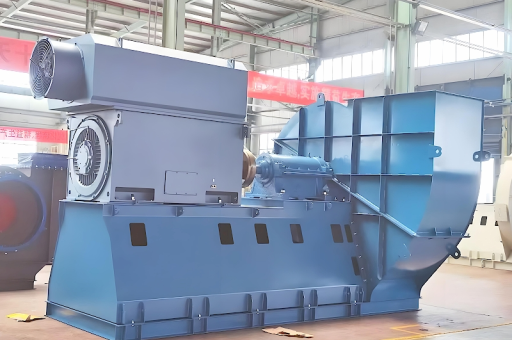
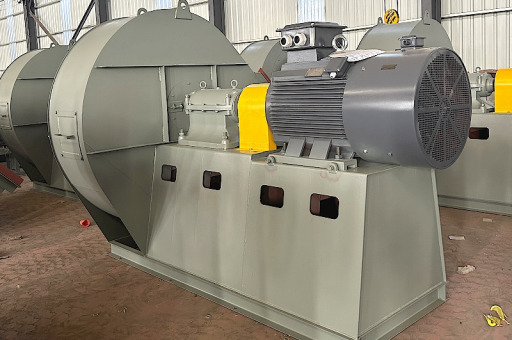
In modern industrial environments, the management of airborne particulate matter is not only a regulatory requirement but also a critical factor in worker safety, equipment longevity, and operational efficiency. Centrally, the 140,000 m³/h dust collector exhaust fan stands as a powerhouse solution designed for high-volume dust extraction systems. This fan moves enormous volumes of air—equivalent to approximately 82,400 CFM—making it indispensable in steel mills, cement plants, woodworking factories, chemical processing units, and mining operations.
The role of such a fan extends beyond simply moving air. It creates negative pressure within dust collection ductwork, pulls contaminated air through filtration media (such as baghouses or cartridge collectors), and discharges cleaned air into the atmosphere or recirculates it. Selecting the right fan for a 140,000 m³/h capacity requires a thorough understanding of system resistance, static pressure, fan curve characteristics, and material handling capabilities.
Decoding the 140,000 m³/h Specification
The figure "140,000 m³/h" refers to the volumetric flow rate of air the fan can handle under defined operating conditions. To contextualize:
- 140,000 m³/h = 2,333 m³/min ≈ 38.9 m³/s (cubic meters per second)
- In imperial units, that equals roughly 82,400 CFM (cubic feet per minute)
This is not a "one-size-fits-all" rating. The actual deliverable volume depends on the system resistance (static pressure) the fan must overcome. A dust collector exhaust fan rated for 140,000 m³/h might operate at a static pressure of 1,500 Pa to 3,000 Pa, depending on duct length, filtration media density, and dust loading.
Key insight: The fan's performance curve must match the system curve to avoid inefficiency, motor overload, or insufficient airflow. For instance, a backward-curved centrifugal fan designed for clean air will behave differently from a radial-blade fan designed for heavy dust loads.
Engineering and Design Principles
Designing a 140,000 m³/h dust collector exhaust fan involves balancing aerodynamics, structural integrity, and material selection. Key engineering considerations include:
- Wheel Type: For dusty environments, radial-blade or radial-tip fans are preferred due to their self-cleaning characteristics and resistance to wear. Backward-inclined blades are more efficient but more prone to dust buildup.
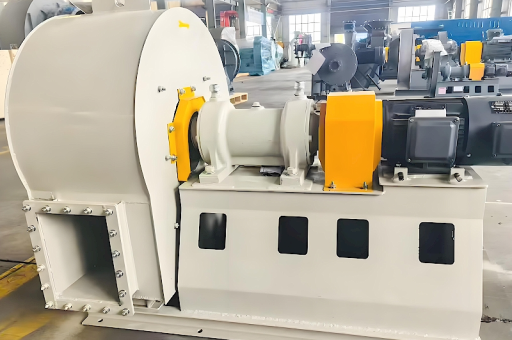
- Housing Design: Volute housings are standard, optimized for minimal turbulence and noise. Heavy-gauge steel (6mm–12mm) is used to withstand vibration and abrasion.
- Shaft and Bearings: Large-diameter shafts supported by spherical roller bearings or double-row bearings are essential. Many industrial fans employ outboard bearings for ease of maintenance.
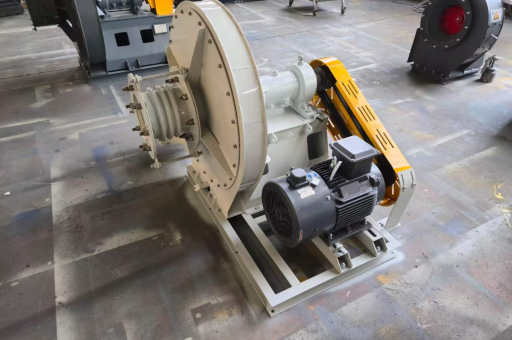
- Drive System: Direct drive or V-belt drive options exist. V-belt drives allow speed adjustment and motor placement flexibility, while direct drives offer higher efficiency and less maintenance.
- Motor Sizing: A 140,000 m³/h fan typically requires a motor rated 75 kW to 200 kW, depending on static pressure. Variable frequency drives (VFDs) are commonly integrated for speed control and energy savings.
Key Components and Construction Materials
| Component | Material | Purpose |
|---|---|---|
| Impeller | Hardox steel, stainless steel (316) | Resist abrasion and corrosion |
| Housing | Mild steel (with epoxy coating) | Structural strength and corrosion resistance |
| Shaft | 40Cr steel or forged alloy | Torsional strength and fatigue resistance |
| Bearings | SKF or FAG spherical roller | Handle radial and axial loads in dusty conditions |
| Seals | Labyrinth seals or Teflon lip seals | Prevent dust leakage to bearings |
| Inlet cone | Cast iron or wear-resistant steel | Guide airflow smoothly into impeller eye |
Tip: For explosive dust (e.g., aluminum, grain, coal), explosion-proof construction is mandatory—non-sparking impeller materials (bronze or aluminum-bronze), grounding brushes, and ATEX-certified motors.
Performance Characteristics and Efficiency Metrics
Performance of a 140,000 m³/h dust collector exhaust fan is evaluated through:
- Flow Rate (Q): Verified via pitot tube traverses or anemometer measurements at the outlet.
- Static Pressure (Ps): Measured against system resistance; typically 1,500–2,500 Pa for baghouse systems.
- Total Pressure (Pt): Static pressure plus velocity pressure.
- Efficiency: Aerodynamic efficiency (η) of a well-designed radial fan ranges from 70% to 85%. Backward-curved fans can exceed 85%.
- Power Consumption: Actual shaft power (P) = (Q × Pt) / (η × 3,600). In practice, a 140,000 m³/h fan at 2,000 Pa and 80% efficiency draws approximately 97 kW.
Energy cost example: Running such a fan 8,000 hours per year at $0.10/kWh results in annual electricity costs exceeding $77,000. Therefore, VFD-based speed control can yield 20–40% energy savings.
Applications in Heavy Industries
A 140,000 m³/h dust collector exhaust fan is deployed where large volumes of contaminated air require constant extraction:
- Cement Production: Kiln exhaust and clinker cooling dust collection.
- Steel & Iron: Sintering plant, blast furnace gas cleaning, oxygen converter.
- Woodworking: MDF board sanding lines, particleboard drying.
- Chemical Processing: Powder handling, pneumatic conveying, fluidized bed dryers.
- Mining & Mineral Processing: Crusher dust, conveyor transfer points, screening stations.
- Pharmaceutical and Food: High-hygiene applications (with stainless steel construction and CIP-friendly design).
Remote monitoring integration: Modern installations often use IoT sensors for vibration, temperature, and airflow monitoring to predict failures before shutdown.
Installation and Maintenance Best Practices
Installation Checklist:
- Ensure foundation concrete is sufficient to absorb vibration (mass ≥ 3× fan weight).
- Use flexible connectors at inlet and outlet to ductwork.
- Proper alignment of motor and fan shaft (belt tension or coupling alignment within 0.05 mm).
- Install vibration isolators (spring type for low-speed, rubber for high-speed).
- Grounding for explosion-proof configurations.
Preventive Maintenance (Recommended Frequency):
| Activity | Interval |
|---|---|
| Bearing lubrication (high-temperature grease) | Every 500 hours |
| Impeller balance check | Every 6 months |
| Vibration analysis | Monthly |
| Belt tension and wear inspection | Weekly |
| Motor winding insulation resistance | Annually |
| Clean impeller blades (if sticky dust) | Every 3 months |
Signs that a 140,000 m³/h fan requires immediate attention:
- Increased motor current beyond nameplate.
- Audible imbalance or scraping noises.
- Reduced airflow at same damper position.
- bearing housing temperature exceeding 85°C.
Troubleshooting Common Issues
| Problem | Likely Cause | Solution |
|---|---|---|
| Low airflow | Duct blockage, damper closed, belt slip | Clean ducts, open dampers, replace belts |
| Excessive vibration | Impeller imbalance, worn bearings | Rebalance impeller, replace bearings |
| Overheating motor | Overload (excessive static pressure), VFD parameter error | Check system curve, adjust VFD settings |
| Fan housing corrosion | Chemical attack (acidic gases) | Upgrade material to 316L stainless steel |
| High noise level | Cavitation or turbulent inlet flow | Improve inlet duct geometry, add silencer |
Important: Always disconnect power before accessing rotating parts. Use lockout/tagout (LOTO) procedures.
Frequently Asked Questions (FAQs)
Q1: What is the difference between a 140,000 m³/h dust collector fan and a standard ventilation fan?
A: Dust collector fans are designed to handle particulate-laden air. They have heavier construction, abrasion-resistant materials, and blade profiles that resist clogging. Standard ventilation fans typically have thinner blades and cannot withstand the same level of solids loading.
Q2: How do I know if my system requires a 140,000 m³/h fan?
A: Calculate your total system airflow requirement based on dust capture points. Sum the volumetric needs of all hoods (e.g., 10 hoods × 14,000 m³/h each = 140,000 m³/h). Also consider transport velocity for the specific dust (e.g., 20 m/s for wood dust, 25 m/s for cement).
Q3: Can I use a VFD with a 140,000 m³/h fan to save energy?
A: Absolutely. VFDs are strongly recommended. Reducing fan speed by 10% reduces power consumption by approximately 27% (affinity laws). Many industrial facilities achieve 30–50% energy savings with VFD-controlled dust collector fans.
Q4: What is the recommended inlet velocity for a 140,000 m³/h dust collector exhaust fan?
A: Inlet velocity should match the ductwork design velocity, typically 12–20 m/s to prevent dust settling, but not so high that it causes erosion. The fan inlet cone is designed for a specific velocity—verify with manufacturer data.
Q5: How often should I replace the impeller of a 140,000 m³/h dust collector fan?
A: Impeller life varies widely depending on dust abrasiveness. In a heavy abrasive environment (e.g., sand handling), impellers may need replacement every 12–18 months. In moderate dust applications, 3–5 years is typical. Regular balancing extends service life.
Q6: What is the maximum static pressure a 140,000 m³/h dust collector fan can handle?
A: Radial-blade fans can handle static pressures up to 4,000 Pa. Backward-curved fans typically handle up to 3,000 Pa. For higher pressures (above 5,000 Pa), consider a multistage arrangement or regenerative blowers, but volume will likely be lower.
Conclusion and Future Trends
The 140,000 m³/h dust collector exhaust fan is a critical asset in heavy industries where air quality and process efficiency are non-negotiable. Moving 140,000 cubic meters of air per hour requires robust engineering, precise system matching, and continuous maintenance. The right fan—whether radial-blade for heavy dust or backward-curved for higher efficiency—can dramatically reduce emissions, improve worker health, and lower energy costs.
Looking ahead:
- Digital twin integration allows predictive maintenance based on real-time fan performance.
- High-efficiency motors (IE4, IE5) and permanent magnet technology further reduce energy consumption.
- Explosion-proof designs will become more standard as dust explosion regulations tighten.
- Silent operation through advanced acoustic modeling is increasingly demanded in urban industrial zones.
Selecting and operating a 140,000 m³/h dust collector exhaust fan requires expertise, but the payoff—cleaner air, regulatory compliance, and reduced downtime—is substantial. Always consult fan manufacturers like fan for detailed performance curves and site-specific recommendations.