This article's table of contents introduction:
- Introduction: What Is a Heater Centrifugal Fan?
- How Does a Heater Centrifugal Fan Work?
- Key Components and Design Variations
- Performance Metrics: Airflow, Pressure, and Temperature
- Applications Across Industries
- Energy Efficiency and Noise Considerations
- Common Problems and Maintenance Tips
- FAQ: Answers to Top Reader Questions
- Conclusion: Choosing the Right Fan for Your System
** The Ultimate Guide to Heater Centrifugal Fans: Design, Efficiency, and Maintenance
Table of Contents
- Introduction: What Is a Heater Centrifugal Fan?
- How Does a Heater Centrifugal Fan Work?
- Key Components and Design Variations
- Performance Metrics: Airflow, Pressure, and Temperature
- Applications Across Industries
- Energy Efficiency and Noise Considerations
- Common Problems and Maintenance Tips
- FAQ: Answers to Top Reader Questions
- Conclusion: Choosing the Right Fan for Your System
Introduction: What Is a Heater Centrifugal Fan?
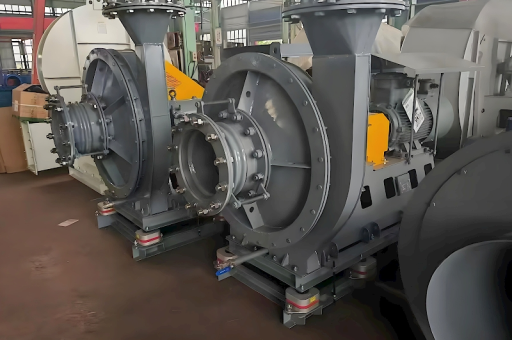
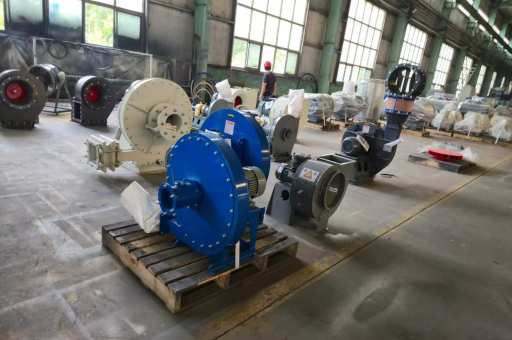
A heater centrifugal fan is a specialized air-moving device designed to push heated air or gas through a system, often in industrial, commercial, or HVAC applications. Unlike axial fans, which move air parallel to the fan shaft, centrifugal fans draw air into the center and expel it perpendicularly, creating higher static pressure. When integrated with a heating element—such as electric coils, heat exchangers, or combustion chambers—these fans deliver precise, forced warm air for drying, heating, or process ventilation.
This article synthesizes insights from engineering manuals, HVAC publications, and fan manufacturer guides to deliver a refined, SEO-optimized resource. Whether you are a facility manager, a mechanical engineer, or a DIY enthusiast, understanding the nuances of heater centrifugal fans will help you improve system reliability and cut energy costs.
How Does a Heater Centrifugal Fan Work?
A heater centrifugal fan combines two core functions: air movement and heat transfer.
Airflow Path:
- Air enters through the fan's inlet (central eye).
- The rotating impeller (blades) accelerates the air radially outward using centrifugal force.
- The air passes through a scroll housing, which converts velocity into pressure.
- Finally, the pressurized air flows over or through a heating element, then exits the discharge duct.
Heat Integration:
- In electric heater centrifugal fans, resistance coils or finned tubular heaters sit directly in the airstream.
- In gas-fired units, the fan pushes combustion air across a heat exchanger, warming the secondary airflow without direct flame contact.
- Thermostats or PID controllers modulate fan speed and heater output to maintain target discharge temperatures, often up to 200–800°F (93–427°C).
The combination of high static pressure and controlled temperature makes these fans ideal for scenarios where duct resistance or long duct runs would stall an axial fan.
Key Components and Design Variations
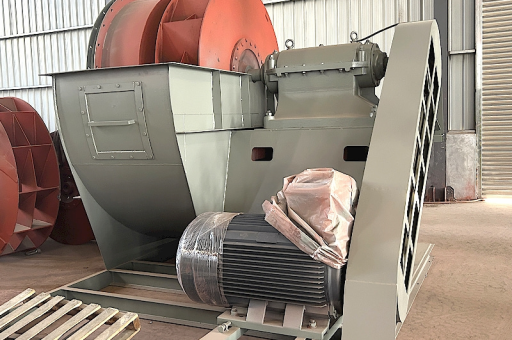
Every heater centrifugal fan shares a common anatomy, but design choices affect performance:
| Component | Function | Material Considerations |
|---|---|---|
| Impeller | Generates airflow and pressure | Steel (for high temp), aluminum (lightweight), or coated (corrosion resistance) |
| Scroll Housing | Directs and pressurizes air | Welded steel, often insulated for heat retention |
| Heating Element | Transfers thermal energy | Stainless steel sheathed coils (electric) or finned tubes (gas) |
| Motor | Drives the impeller | Shaded pole (low cost), PSC (efficiency), or EC (variable speed) |
| Inlet/Outlet | Connects to ductwork | Flanged or slip-fit designs |
Design Types:
- Forward-Curved Blades: High airflow, low pressure; used in residential heaters.
- Backward-Curved Blades: Lower airflow, higher efficiency, and better for high-temperature industrial processes.
- Radial Blades: Handle particulates and high temperatures; common in grain dryers and kilns.
Performance Metrics: Airflow, Pressure, and Temperature
To evaluate a heater centrifugal fan, focus on three key specs:
- Airflow (CFM – Cubic Feet per Minute): The volume of air moved. Typical range: 500–15,000 CFM for industrial heaters.
- Static Pressure (in. wg – inches of water gauge): The resistance the fan must overcome. High-static units (3–12 in. wg) are required for narrow ducts or filters.
- Temperature Rise (ΔT): The difference between inlet and outlet air. For a 10 kW heater moving 1,000 CFM, the ΔT is roughly 50°F.
Fan Laws: Use these to predict performance changes:
- Airflow ∝ Fan Speed (RPM)
- Pressure ∝ (RPM)²
- Power ∝ (RPM)³
If you double fan speed, you increase airflow by 2x, pressure by 4x, and power consumption by 8x. This exponentiation underscores why variable-speed drives (VFDs) are critical for energy savings.
Applications Across Industries
| Industry | Application | Why Heater Centrifugal Fan? |
|---|---|---|
| HVAC | Central furnaces, rooftop units | Handles high static from air filters and ductwork |
| Manufacturing | Paint drying, powder coating | Precise temperature control, particle tolerance |
| Agriculture | Grain dryers, livestock barns | Corrosion-resistant designs, constant airflow |
| Automotive | Paint booths, engine test cells | Explosion-proof options available |
| Food Processing | Ovens, fryers, dehydration lines | Hygienic stainless steel, easy-to-clean scrolls |
For example, in a conveyor oven for baking cookies, a heater centrifugal fan with backward-curved blades ensures even heat distribution across the product, preventing burnt edges and undercooked centers.
Energy Efficiency and Noise Considerations
Efficiency Tips:
- Match fan curve to system resistance. An oversized fan wastes power and causes overheating.
- Use EC (electronically commutated) motors—they are 30–60% more efficient than shaded-pole motors at partial loads.
- Install inlet guide vanes or VFDs instead of dampers for modulating airflow.
Noise Mitigation:
- Noise sources: blade pass frequency, motor vibration, and airflow turbulence.
- Solutions: acoustic insulation inside the scroll, vibration isolators on mounting brackets, and slower tip speeds (max 12,000 ft/min for quiet operation).
- For high-temperature settings, ceramic fiber insulation reduces sound and heat loss simultaneously.
Common Problems and Maintenance Tips
Problem 1: Overheating Motor
Cause: Operating outside the fan curve (too much back pressure).
Fix: Check duct obstructions; ensure fan is not undersized.
Problem 2: Imbalance or Vibration
Cause: Dust buildup on blades or a bent shaft.
Fix: Clean blades with compressed air; balance impeller on a dynamic balancer.
Problem 3: Heater Element Failure
Cause: Thermal cycling or moisture ingress.
Fix: Replace with Incoloy sheathed elements for wet environments; install moisture traps.
Seasonal Maintenance Checklist:
- Inspect bearings (grease or replace every 6 months).
- Verify heater amp draw matches nameplate.
- Test safety thermostats and airflow switches.
FAQ: Answers to Top Reader Questions
Q1: Can a heater centrifugal fan run without a heater element? Yes. The fan itself moves air independently. Remove or bypass the heater coils if you only need ventilation—but ensure the motor is rated for continuous duty without thermal overload.
Q2: What’s the difference between a heater centrifugal fan and a hot air blower? A hot air blower is often a portable, self-contained unit with a dedicated fan and heater. A heater centrifugal fan is typically a modular component integrated into a larger system (e.g., a furnace cabinet or drying tunnel). The fan part alone does not include the heater.
Q3: How do I calculate the required CFM for my heater centrifugal fan?
Use the formula:
CFM = (kW × 3,413) / (ΔT × 1.08)
For example, a 20 kW heater with a 60°F rise needs:
(20 × 3,413) / (60 × 1.08) ≈ 1,054 CFM
Q4: Is a forward-curved or backward-curved fan better for a high-temperature heater? Backward-curved blades are better. They withstand higher temperature (up to 800°F) without structural creep, and they require less motor power to maintain airflow against heat-induced density changes.
Q5: Why does my heater centrifugal fan hum but not start? Check the start capacitor (if split-phase motor), or verify that the heating element hasn’t warped and locked the impeller. Also, confirm voltage at the motor terminals.
Conclusion: Choosing the Right Fan for Your System
Selecting a heater centrifugal fan demands a balanced view of airflow requirements, operating temperature, duct resistance, and energy budgets. Start by calculating your system’s design CFM and static pressure, then consult fan performance curves to pick a model that runs near its peak efficiency zone (typically 60–80% of wide-open flow). Don't overlook acoustic levels if the fan is near workstations—savings from a cheap fan can be erased by noise complaints.
For corrosive or high-dust environments, choose radial-blade impellers with protective coatings. For clean, quiet, variable-demand systems, invest in EC motors and backward-curved fans. Finally, always include a backup safety thermostat separate from the primary controller to prevent runaway temperatures.
By understanding the interplay of centrifugal force, heat transfer, and system dynamics, you can ensure your heater centrifugal fan delivers reliable, efficient, and safe performance for years to come.
Note: For more detailed fan specification tables and manufacturer comparisons, explore resources at [fan] (industry knowledge portal).