This article's table of contents introduction:
- The Critical Missing Specification: Static Pressure (SP)
- Typical Mechanical Specifications
- Installation & Operational Considerations
- Example Commercial Sizing
- Next Steps to Purchase
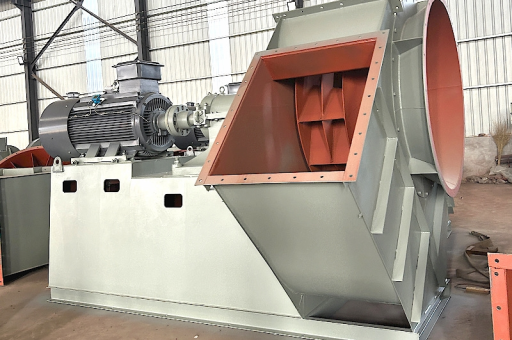
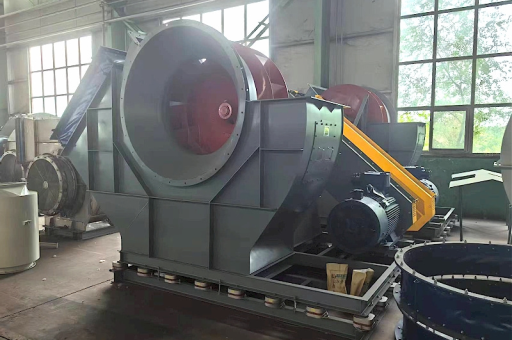
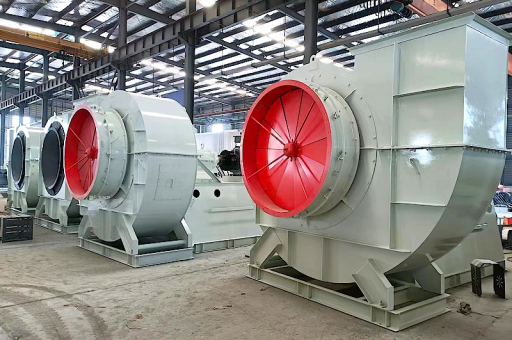
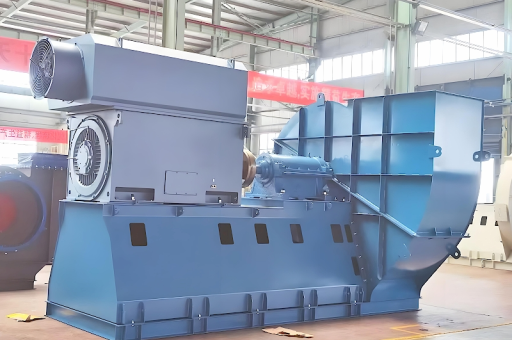
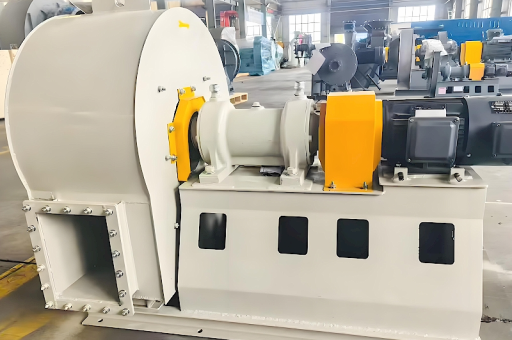
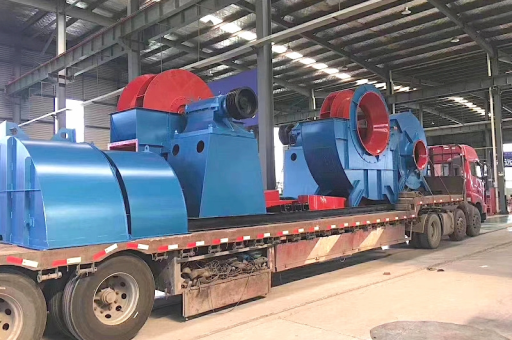
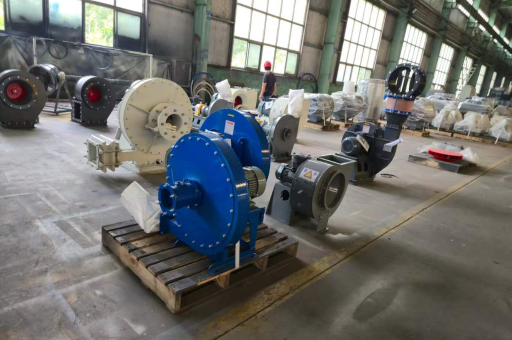
This is a specification for a large-scale industrial exhaust fan, almost certainly used for a baghouse dust collector, a cartridge collector, or a wet scrubber system.
A flow rate of 90,000 m³/h (approximately 53,000 CFM) indicates a very large system, typically found in steel mills, cement plants, large woodworking facilities, or mining operations.
Here is a detailed breakdown of what this specification entails, including the typical motor power, static pressure requirements, and installation considerations.
The Critical Missing Specification: Static Pressure (SP)
The 90,000 m³/h is the flow rate. The most critical factor defining the fan's motor size and cost is the Static Pressure (SP), measured in Pa (Pascals) or mmH₂O (mm Water Gauge).
- Low Pressure (1,500 - 2,500 Pa / 150 - 250 mmH₂O): For simple systems with short ductwork and fabric filters in good condition.
- Motor Power: ~75 kW to 110 kW
- Medium Pressure (2,500 - 4,000 Pa / 250 - 400 mmH₂O): For longer duct runs or standard baghouse operation.
- Motor Power: ~110 kW to 160 kW
- High Pressure (4,000 - 6,000+ Pa / 400 - 600+ mmH₂O): For heavy dust loads (cement, coal), high-efficiency cartridge filters, or very restrictive ductwork.
- Motor Power: ~200 kW to 300+ kW
Fan Type: At this flow rate, almost all fans will be Backward-Curved (BC) or Airfoil (AF) centrifugal fans. They are energy efficient and non-overloading.
Typical Mechanical Specifications
For a robust industrial fan matching this spec, you would typically look for:
- Fan Type: Centrifugal, Double Width Double Inlet (DWDI) to handle the high volume.
- Wheel Diameter: Approximately 1,800 mm to 2,500 mm (6 to 8 feet).
- Motor: 4-Pole (1,450-1,500 RPM) or 6-Pole (960-980 RPM). Driven via V-Belt (for speed flexibility) or Direct Drive (for high reliability).
- Bearings: Heavy-duty spherical roller bearings with grease fittings.
- Construction: Heavy gauge steel housing (6mm to 10mm thick). Shaft seals to prevent dust leakage.
- Drive Guard: OSHA/CEN compliant belt guard.
Installation & Operational Considerations
- Variable Frequency Drive (VFD): Highly Recommended.
A 90,000 m³/h fan is a massive energy consumer. A VFD allows you to match the fan speed to the actual system demand (e.g., running at 80% speed uses 51% of the power). The payback period is often less than 18 months.
- Plinth / Foundation:
This fan will be very heavy (2-5+ tons). It requires a properly designed reinforced concrete foundation to absorb vibration.
- Inlet & Outlet Connections:
- Inlet box: Usually features radial doors to control flow.
- Outlet: Requires a gradual expansion to convert kinetic energy back to static pressure (efficiency gain).
- Environmental Protection:
- Sound Attenuation: A 90,000 m³/h fan at medium pressure generates noise levels well above 90-100 dBA. An inlet silencer and an acoustic enclosure around the motor/drive are standard.
- Isolation Dampers: Motorized shut-off dampers on the inlet are necessary to allow maintenance on the dust collector without shutting down the entire process.
Example Commercial Sizing
Here is a hypothetical datasheet for such a fan:
| Parameter | Value | Unit |
|---|---|---|
| Model | CFD-224-80 (Hypothetical) | - |
| Air Volume | 90,000 | m³/h |
| Static Pressure | 3,500 | Pa |
| Speed | 1,180 | RPM |
| Motor Power | 132 | kW |
| Motor Frame | IE3 / NEMA 447 | - |
| Weight (approx) | 3,800 | kg |
| Noise Level | 98 | dB(A) @ 1m |
Next Steps to Purchase
If you are sourcing this fan, your engineer must provide the Operating Point:
- Flow: 90,000 m³/h (Given)
- Density: Is the air hot (e.g., 120°C from a kiln) or cold? (This changes power requirements).
- Pressure: Total Pressure required at the fan inlet to overcome the filter + ductwork.
Supplier Note: Leading manufacturers for this scale include Howden, Flakt Woods, New York Blower (NYB), Twin City Fan, and ACME Engineering (for North America) or Soler & Palau, Ziehl-Abegg (for Europe/Asia).
Warning: Do not undersize the motor. A fan at 90,000 m³/h can easily require a 250 kW motor at higher pressures. Running a stock motor from a lower pressure system on a high-pressure system will cause immediate motor overload and burnout.