This article's table of contents introduction:
- Core Specifications
- Key Components
- Performance Characteristics (Typical)
- Advantages of Using a VFD on a Centrifugal Fan
- Key Considerations for Installation & Sizing
- Typical Applications for an 18.5kW Fan
- Summary Checklist for Procurement
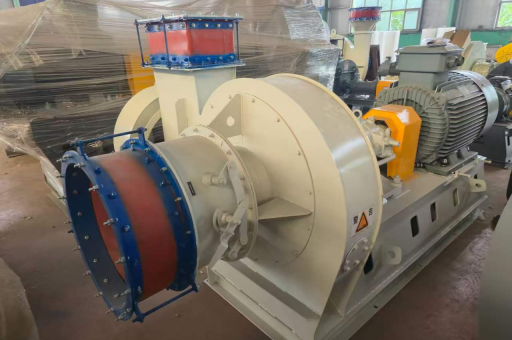
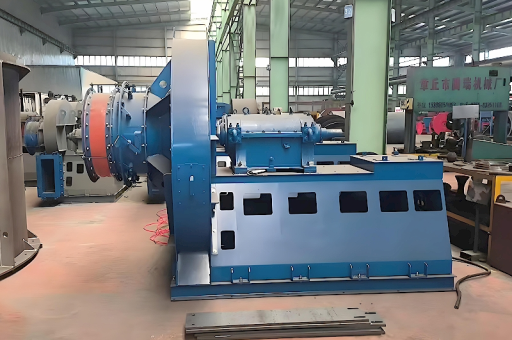
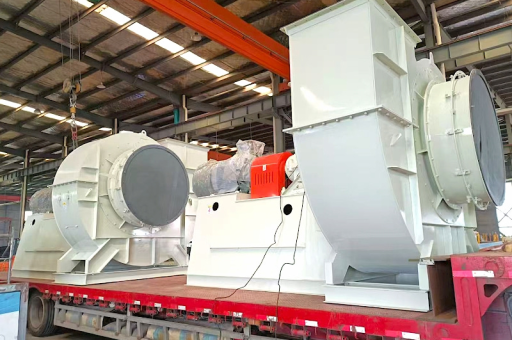
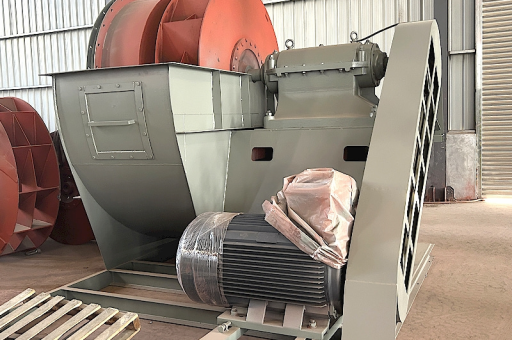
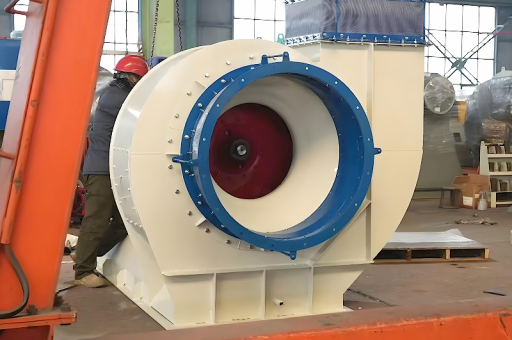
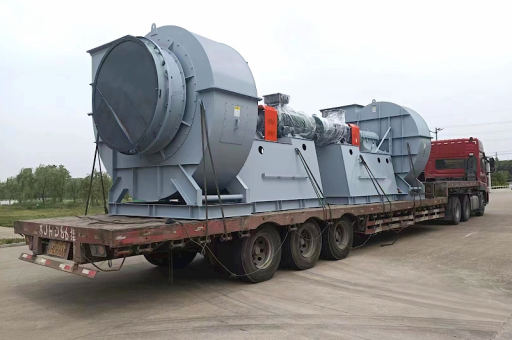
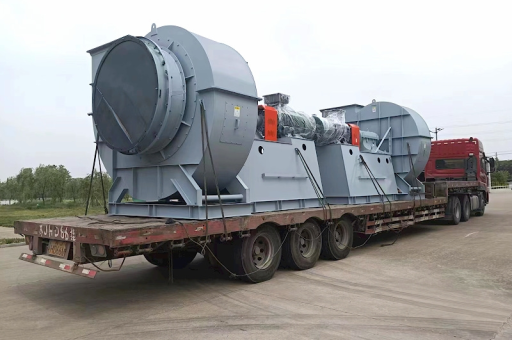
This is a common and important piece of industrial equipment. A 5 kW Variable Frequency Centrifugal Fan is a high-power air movement system used in demanding applications like HVAC, industrial ventilation, dust collection, and process air supply.
Here is a comprehensive breakdown of its specifications, components, and key considerations.
Core Specifications
- Motor Power: 18.5 kW (approx. 25 HP or 24.8 HP)
- Motor Type: Typically a 3-phase induction motor (e.g., IE3, IE4 efficiency class).
- Drive Type: Variable Frequency Drive (VFD) / Inverter.
- Fan Type: Centrifugal (air is drawn into the center of a rotating impeller and discharged radially at 90 degrees).
- Electrical Supply (Typical): 380V / 400V / 460V, 3-phase, 50Hz or 60Hz.
Key Components
-
The Motor (18.5kW):
- Shaft: Must be robust to handle fan inertia.
- Cooling: Often IC411 (self-ventilated with external fan). For VFD use, an independent forced cooling fan (IC416) is sometimes recommended, especially if the fan will run at very low speeds for extended periods (where the motor's own shaft-mounted fan doesn't provide enough cooling).
-
The VFD (Variable Frequency Drive):
- Rating: Must be sized for the motor. A derating factor might apply depending on altitude, ambient temperature, and cable length.
- Key Features Needed: Sensorless Vector Control, DC Injection Braking (for stopping), PID control (for pressure or flow regulation), and communication protocols (Modbus, Profibus, etc.).
- Input Harmonics: For an 18.5kW motor, Input Line Reactors (usually 3-5% impedance) are strongly recommended to protect the VFD and reduce harmonics on the mains supply.
-
The Centrifugal Fan Impeller:
- Backward Curved: Most efficient, non-overloading power curve. Ideal for HVAC and clean air.
- Forward Curved: Lower speed, higher volume at lower pressure, can overload motor if system resistance is low. Common in low-pressure HVAC.
- Radial (Paddle Wheel): For harsh, dusty, or high-temperature applications. Less efficient but very robust.
-
The Casing:
- Material: Steel (painted), Stainless Steel (corrosive environments), Aluminum (lightweight, explosion-proof applications).
- Inlet/Outlet: Round or rectangular flanges.
-
Drive Train:
- Direct Drive: Impeller mounted directly on motor shaft. No belts, no slip, higher efficiency, lower maintenance. Most common with VFDs.
- Belt Drive: Allows for speed adjustment via pulley ratio (less critical with a VFD). Good for high-temperature applications where motor is mounted away from the airstream.
Performance Characteristics (Typical)
- Airflow (Q): Highly variable based on fan design. A typical 18.5kW backward curved fan might move:
- High Pressure / Low Flow: 5,000 m³/h (2,900 CFM) at 4,000 Pa (16" W.G.)
- Low Pressure / High Flow: 30,000 m³/h (17,600 CFM) at 500 Pa (2" W.G.)
- Speed: Typically 1450 RPM (4-pole motor) or 2900 RPM (2-pole motor) on 50Hz. VFDs can vary this from 0 to 110% of base speed.
- Sound Level: At full speed, a large centrifugal fan of this power will be loud (80-95 dB(A) depending on casing and silencers). Look for dBA @ 1m ratings in datasheets.
Advantages of Using a VFD on a Centrifugal Fan
- Energy Savings (Affinity Laws):
- Flow (Q) ∝ Speed (N)
- Pressure (P) ∝ N²
- Power (W) ∝ N³
- Example: Reducing speed by 20% (80% speed) requires only 51% of the power. This is the single biggest benefit.
- Soft Start / Stop: Reduces electrical stress on the grid and mechanical stress on the motor, belt, and bearings.
- Precise Control: Can maintain a constant pressure (e.g., 500 Pa) in a duct system regardless of damper position – much more efficient than throttling.
- Reduced Maintenance: Fewer start/stop cycles, no mechanical throttling devices (dampers).
Key Considerations for Installation & Sizing
- Cable Length: Long cable runs between the VFD and motor can cause voltage spikes and reflected wave issues. May require output reactors or sine wave filters.
- Grounding: Proper, low-impedance grounding for both the VFD and fan is critical for safety and to prevent electrical noise.
- Ambient Conditions: Where is the fan located? High temperature (>40°C), high humidity, dust, or corrosive gases will affect motor & VFD life.
- Protection:
- Motor: PTC thermistors or thermal switches embedded in windings.
- VFD: Overcurrent, overvoltage, over-temperature protection.
- Bearings: Vibration monitoring (for critical applications) and proper lubrication schedule.
- Braking Resistor: Not usually needed for a centrifugal fan (low inertia), unless you require an emergency stop faster than coasting to a stop.
Typical Applications for an 18.5kW Fan
- HVAC: Large building ventilation, air handling units (AHU).
- Industrial: Dust collection systems, welding fume extraction.
- Process: Drying systems, pneumatic conveying (low pressure).
- Wastewater: Aeration blowers (often use regenerative or positive displacement, but large centrifugal is used).
Summary Checklist for Procurement
- [ ] Motor: IE3/IE4, 18.5kW, IP55, with independent VFD cooling fan?
- [ ] VFD: Brand (Siemens, ABB, Danfoss, Schneider, etc.), size (18.5kW or 22kW), IP rating (IP21 indoor, IP54 outdoor).
- [ ] Drive: Direct or Belt? (Direct is better for VFD efficiency).
- [ ] Materials: Airstream temperature, chemical composition (SS304/316).
- [ ] Controls: How will the VFD receive its setpoint? (0-10V, 4-20mA, Modbus)
- [ ] Accessories: Inlet cone, outlet damper, vibration isolators, silencer.
Bottom Line: An 18.5kW VFD centrifugal fan is a high-efficiency, high-control system. The initial investment in the VFD is usually recovered quickly through energy savings (often within 6-18 months) in variable load applications. You need to match the fan curve and motor power to your exact system resistance (pressure drop). Never oversize the fan expecting the VFD to just slow it down – it can lead to premature wear.