** The Ultimate Guide to 1.1kW Variable Frequency Centrifugal Fans: Efficiency, Applications, and Technical Insights
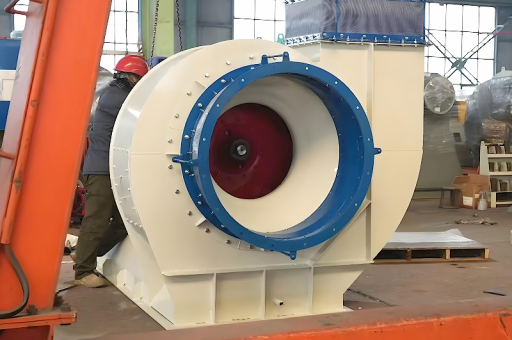
Table of Contents
- Introduction: What Is a 1.1kW Variable Frequency Centrifugal Fan?
- Core Components and Working Principle
- Energy Efficiency and Variable Frequency Drive (VFD) Integration
- Key Applications in Industry and HVAC
- Performance Parameters: Airflow, Static Pressure, and Noise
- Installation Best Practices and Safety Considerations
- Frequently Asked Questions (FAQ)
- Conclusion: Why Choose a 1.1kW VFD Centrifugal Fan?
Introduction: What Is a 1.1kW Variable Frequency Centrifugal Fan?
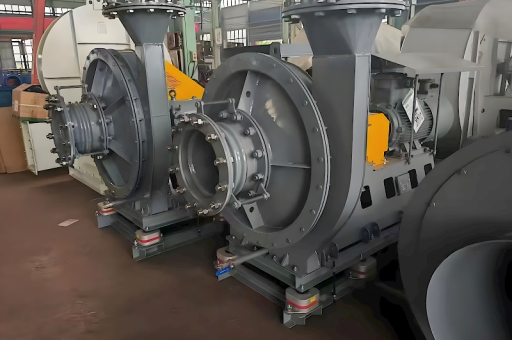
The 1kW variable frequency centrifugal fan represents a leap forward in air movement technology, combining the reliable centrifugal impeller design with intelligent motor speed control. Unlike fixed-speed fans, this unit uses a variable frequency drive (VFD) to adjust its rotational speed—and consequently its airflow and pressure—to match real-time system demands.
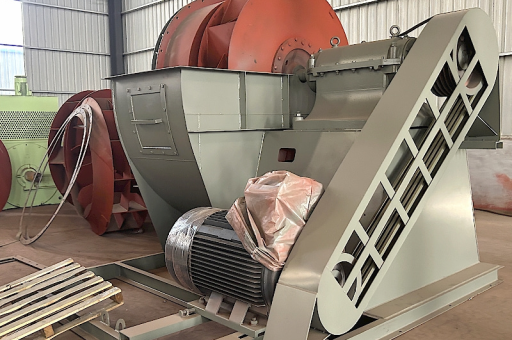
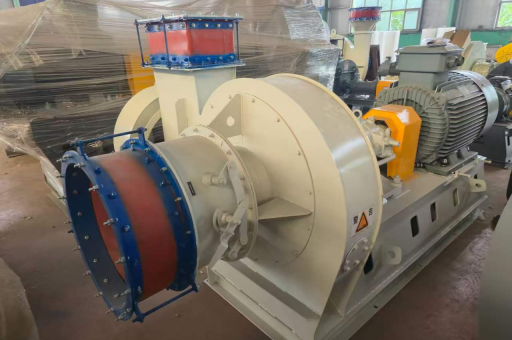
At the heart of this system is a 1.1-kilowatt electric motor, typically a permanent magnet synchronous motor (PMSM) or a three-phase induction motor, paired with a dedicated VFD. The centrifugal fan itself draws air into the center of the impeller and expels it radially, generating higher static pressure than axial fans, which makes it ideal for ducted systems, ventilation in commercial kitchens, cleanrooms, and industrial processes.
A key distinction is that the "variable frequency" feature allows the fan to operate across a wide speed range—usually from 10% to 100% of rated RPM. This transforms the fan from a simple air mover into a precision airflow management tool.
Core Components and Working Principle
A 1.1kW variable frequency centrifugal fan consists of four primary assemblies:
- The Impeller: Typically backward-curved or forward-curved blades made from galvanized steel, aluminum, or reinforced plastic. The backward-curved design offers higher efficiency and lower noise, while forward-curved blades suit lower-speed applications requiring smaller sizes.
- The Motor: A 1.1kW (approximately 1.5 HP) three-phase motor, often designed for inverter duty with Class F or H insulation to withstand the thermal stress of variable speed operation.
- The Variable Frequency Drive (VFD): An electronic controller that converts fixed AC mains power into variable frequency and voltage. By altering the frequency (Hz) supplied to the motor, the VFD changes its synchronous speed.
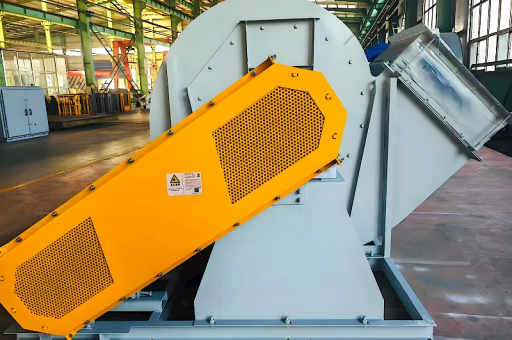
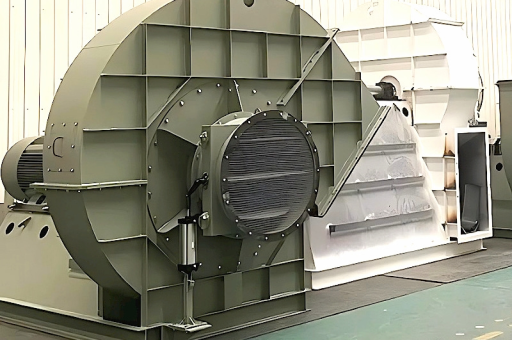
- The Housing: A scroll-shaped volute casing that converts kinetic energy from the impeller into static pressure. Materials range from coated steel for corrosion resistance to stainless steel for hygienic environments.
Working Principle: When the VFD receives a control signal (e.g., 0–10 V DC, 4–20 mA, or Modbus RTU), it adjusts the output frequency. As frequency increases, the motor speed rises proportionally, increasing both airflow (cubic meters per hour) and static pressure (pascals). The relationship follows the fan affinity laws:
- Airflow ∝ Speed
- Pressure ∝ Speed²
- Power ∝ Speed³
This cubic power relationship is why variable speed fans can reduce energy consumption by up to 60% compared to throttling dampers or running at full speed continuously.
Energy Efficiency and Variable Frequency Drive (VFD) Integration
One of the strongest selling points of the 1.1kW variable frequency centrifugal fan is its energy performance. In conventional constant-volume systems, fans run at full speed even when demand is low, wasting power. A VFD-enabled fan can:
- Reduce speed to 50% and consume only 12.5% of full power (due to the cube law).
- Maintain consistent static pressure in duct networks, preventing over-ventilation.
- Eliminate the need for inlet guide vanes, discharge dampers, or bypass ducts, simplifying system design.
According to field data from fan manufacturers, retrofitting a fixed-speed centrifugal fan with a VFD typically reduces annual energy costs by 30–50%. For a 1.1kW fan running 8,000 hours per year, the savings can reach 2,600 kWh, translating to hundreds of dollars annually depending on local electricity rates.
The VFD also offers soft start capabilities, reducing starting current surge—which can be 6–8 times the running current in direct-on-line starts—and minimizing mechanical stress on belts, bearings, and impellers.
Key Applications in Industry and HVAC
The combination of 1.1kW power and variable frequency control makes this fan versatile across many sectors:
- HVAC Systems: Used in variable air volume (VAV) boxes, exhaust systems for laboratories, and demand-controlled ventilation in office buildings. The VFD allows the fan to adjust airflow based on CO₂ sensor readings.
- Commercial Kitchens: For canopy hood exhaust, where grease-laden air requires high static pressure to overcome duct resistance. Variable speed helps match extraction to cooking load, reducing heat loss.
- Dust and Fume Extraction: In woodworking shops, welding stations, or chemical processing, fan speed can be modulated to capture contaminants without excessive energy use.
- Cleanrooms and Pharmaceutical Plants: Precise control over airflow is critical for maintaining positive or negative pressure differentials.
- Agriculture and Greenhouses: Circulation fans equipped with VFDs can adjust ventilation in response to temperature and humidity sensors.
Case in point: a food processing plant installed a 1.1kW variable frequency centrifugal fan in a drying tunnel. By allowing operators to adjust fan speed for different product sizes, they reduced energy consumption by 35% and improved drying uniformity.
Performance Parameters: Airflow, Static Pressure, and Noise
For a typical 1.1kW variable frequency centrifugal fan, the nominal performance at 50–60 Hz falls within these ranges:
- Airflow: 1,200 to 3,500 m³/h (700 to 2,000 CFM), depending on impeller size and blade design.
- Static Pressure: 400 to 1,500 Pa (1.6 to 6.0 inches w.g.). Backward-curved impellers achieve higher pressures at lower noise levels.
- Noise Level: 55 to 75 dB(A) at full speed, dropping to 35–45 dB(A) at 50% speed. The VFD also avoids the abrupt noise changes that occur with damper throttling.
- Speed Range: Typical motor base speed is 1,400–3,000 RPM. The VFD can extend this range to 200–4,000 RPM in some models.
It is critical to consult the manufacturer’s fan curve to select the correct model for your system. Operating a centrifugal fan far from its best efficiency point (BEP) can cause vibration, overheating, and reduced bearing life.
Installation Best Practices and Safety Considerations
To achieve long-term reliable operation of a 1.1kW variable frequency centrifugal fan, adhere to these guidelines:
- Electrical Connection: Ensure the VFD is properly grounded and that the motor cable is shielded (armored) to prevent electromagnetic interference (EMI) with nearby sensors or communication lines.
- VFD Mounting: Install the VFD in a clean, ventilated location away from direct heat sources. Ambient temperature should not exceed 40°C (104°F).
- Aerodynamic Installation: The fan inlet and outlet must have sufficient straight duct length (minimum 2–3 duct diameters) to avoid flow disturbances that reduce performance.
- Vibration Isolation: Use flexible duct connectors and vibration isolators to prevent transmission of mechanical noise into building structures.
- Overload Protection: The VFD internal electronics protect the motor from overcurrent, phase loss, and overvoltage. However, external fuses or circuit breakers should still be installed as per local codes.
Safety Note: Never operate the fan without the inlet or outlet properly guarded. The high-speed impeller can cause serious injury. Additionally, if flammable gases or dusts are present, confirm the fan is rated for the applicable ATEX or UL explosion-proof classification.
Frequently Asked Questions (FAQ)
Q: Can I use a 1.1kW variable frequency centrifugal fan for outdoor applications? A: Yes, but only if both the fan motor and VFD are rated with an appropriate IP (Ingress Protection) rating—IP54 or higher for dust and water resistance. Outdoor VFDs often require a weatherproof enclosure.
Q: What is the difference between a VFD and a simple speed controller for a fan? A: A VFD changes both voltage and frequency, allowing the motor to develop full torque at any speed. Simple electronic speed controllers (like triac controls) can only reduce voltage, which causes torque loss and motor overheating at low speeds.
Q: How do I select the right impeller type? A: For high-static-pressure applications such as long duct runs or dirty air streams, choose a backward-curved impeller. For compact installations with lower pressure requirements and larger airflow, a forward-curved impeller is more economical.
Q: Will a VFD damage my motor if the cable is long? A: Long motor cables (greater than 30–50 meters) can cause reflected voltage spikes that stress the motor winding insulation. Use an output reactor or sine-wave filter between the VFD and motor if the cable length exceeds the manufacturer’s recommendation.
Q: Can I retrofit my existing 1.1kW constant-speed fan with a VFD? A: Possibly, if the existing motor is a three-phase inverter-duty rated unit. Single-phase motors cannot be used with VFDs. Check if the motor nameplate says “Inverter Duty” or “Variable Speed Compatible.”
Q: How do I control the fan speed? A: Common methods include an external potentiometer, a 0–10 V analog signal from a building management system (BMS), or digital communication via Modbus RS485. Some VFDs also offer built-in PID controllers for closed-loop pressure control.
Conclusion: Why Choose a 1.1kW VFD Centrifugal Fan?
The 1kW variable frequency centrifugal fan is an optimal solution for applications requiring high static pressure, energy efficiency, and precise airflow control. Its ability to ramp up or down based on real-time demand makes it suitable for modern HVAC systems, industrial ventilation, and commercial environments where energy costs and comfort are priorities.
By integrating a VFD, users not only achieve significant power savings—often reducing consumption by half or more compared to fixed-speed fan operation—but also gain longer equipment life through reduced mechanical stress. As building codes and sustainability standards tighten globally, variable speed fans are becoming a baseline requirement rather than an optional upgrade.
For engineers, facility managers, and homeowners who need reliable, adjustable, and efficient air movement, this fan represents a well-proven technology that balances initial investment with long-term operational savings.