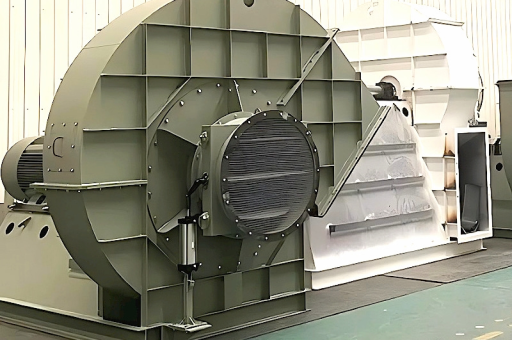
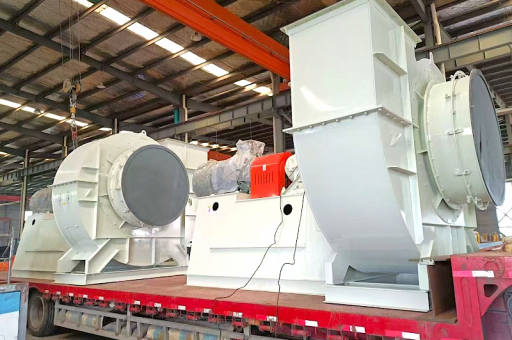
This article's table of contents introduction:
- What is it?
- Why is Stainless Steel required? (The "Why" is the most important part)
- Key Materials Used
- Key Design Features & Challenges
- Typical Applications
- In short:
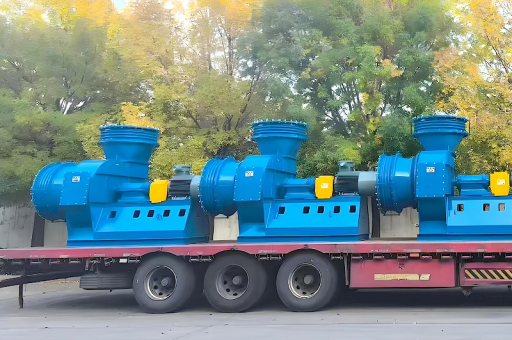
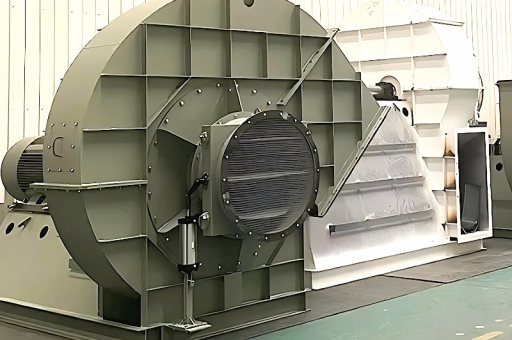
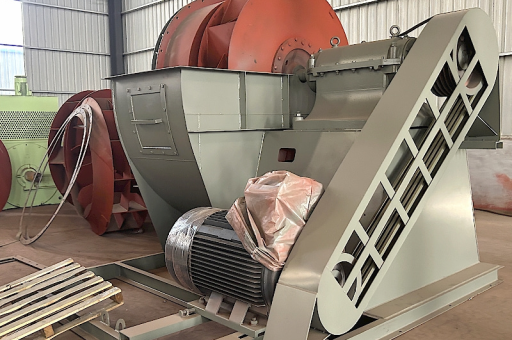
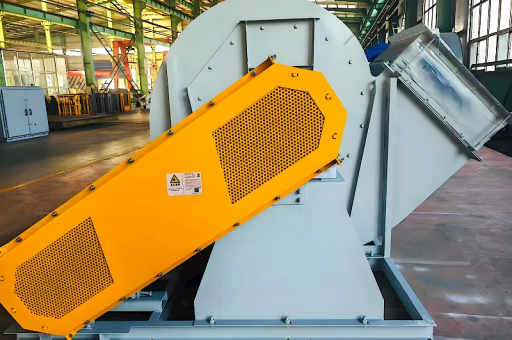
This is a specialized term related to industrial process equipment, specifically in Flue Gas Desulfurization (FGD) systems used in power plants and steel mills.
Here is a detailed breakdown of what a Stainless Steel Desulfurization Induced Draft Fan is, its purpose, key features, and why the materials matter.
What is it?
An Induced Draft (ID) Fan is the large fan located at the "exit" end of a boiler or industrial furnace system. Its primary job is to pull (induce) flue gases through the entire system (boiler, economizer, electrostatic precipitator, and desulfurization unit) and then expel them out of the chimney.
A Desulfurization Induced Draft Fan is specifically the ID fan located after the FGD system (typically a Wet Limestone Scrubber). Because the gas has already been scrubbed, it is saturated with water vapor and contains highly corrosive acids. Therefore, this fan must be made of Stainless Steel (or a high-grade duplex stainless steel) to survive the harsh environment.
Why is Stainless Steel required? (The "Why" is the most important part)
The flue gas exiting a wet FGD system is at its acid dew point. It is:
- Saturated with Water Vapor: Humidity is 100%.
- Contains Residual Acids: Despite scrubbing, trace amounts of sulfuric acid ($H_2SO_4$), sulfurous acid ($H_2SO_3$), and hydrochloric acid (HCl) are present.
- Contains Solid Particulates: Gypsum slurry carryover (calcium sulfate) can deposit on the blades.
Standard carbon steel would corrode rapidly in this environment (often rusting through in weeks or months). Stainless steel provides the necessary corrosion resistance and erosion resistance.
Key Materials Used
The exact grade of stainless steel is critical. Common choices include:
- SS 316L (1.4404): The "baseline" standard. Contains Molybdenum for better resistance to chlorides and sulfuric acid.
- SS 317L (1.4438): Higher Molybdenum content than 316L. Better resistance in higher chloride environments.
- Duplex Stainless Steels (e.g., 2205 / 1.4462, 2507 / 1.4410): The "premium" choice. They offer roughly twice the yield strength of 316L, allowing for thinner, lighter fan wheels, plus exceptional resistance to stress corrosion cracking (SCC) and pitting caused by chloride ions ($Cl^-$).
Key Design Features & Challenges
- High Pressure & Volume: These fans must move massive volumes of gas (often millions of cubic feet per minute) at high static pressure to overcome the pressure drop caused by the scrubber.
- Gypsum Build-up (Fouling): Wet, sticky gypsum particles can build up on the fan blades, causing severe imbalance and vibration.
- Solution: Fans often have hollow, backward-curved blades or spraywash systems that use high-pressure water jets to keep the blades clean while the fan is running.
- Danger of Blade Erosion: If the gas flow carries too much slurry (liquid droplets with solid gypsum), it can erode the leading edges of the blades.
- Solution: Leading edges are often thick, hardened, or fitted with wear-resistant coatings or weld overlay.
- Transonic / High Tip Speed: To achieve the necessary pressure rise in a single stage, these fans often run at very high speeds (e.g., 1000-1500 RPM for a large fan), with blade tip speeds approaching sonic limits. This creates massive stresses, which the high-strength duplex steels are designed to handle.
Typical Applications
- Coal-fired Power Plants: The most common application.
- Steel Mills (Sinter Plants): Sinter plants produce $SO_2$ emissions that require FGD.
- Waste-to-Energy Plants: Incineration of waste produces highly acidic flue gases.
- Chemical Industry: Any large-scale process burning high-sulfur fuel.
In short:
The Stainless Steel Desulfurization Induced Draft Fan is the final, large, critical piece of machinery that pushes scrubbed, acidic, wet, and heavy air up the chimney. Its construction from specialized stainless steel is not optional—it is the only way to achieve the long service life (15-20+ years) required in a plant's continuous operation.