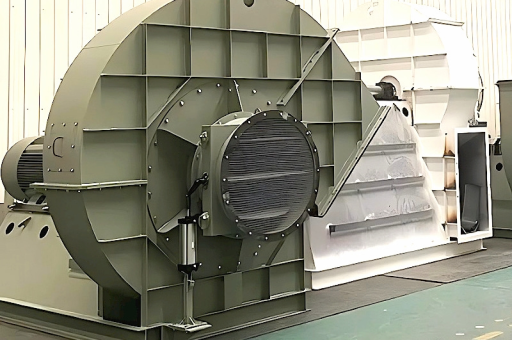
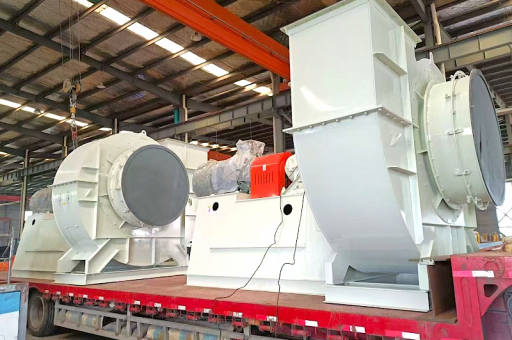
This article's table of contents introduction:
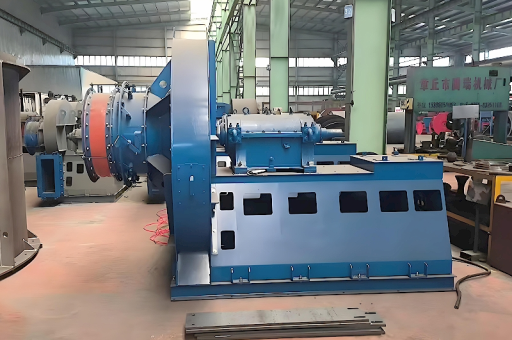
- Table of Contents
- Introduction: Defining the Challenge
- What is a Non-Condensable Gas Conveying Centrifugal Fan?
- Key Technical Specifications & Design Adaptations
- Primary Applications Across Industries
- Why Standard Fans Fail in NCG Service
- Material Selection & Corrosion Resistance
- Energy Efficiency & Operational Savings
- Q&A: Expert Answers to Common Industry Questions
- Conclusion: Future Trends in NCG Fan Technology
** The Critical Role of Non-Condensable Gas Conveying Centrifugal Fans in Industrial Process Efficiency
Table of Contents
- Introduction: Defining the Challenge
- What is a Non-Condensable Gas Conveying Centrifugal Fan?
- Key Technical Specifications & Design Adaptations
- Primary Applications Across Industries
- Why Standard Fans Fail in NCG Service
- Material Selection & Corrosion Resistance
- Energy Efficiency & Operational Savings
- Q&A: Expert Answers to Common Industry Questions
- Conclusion: Future Trends in NCG Fan Technology
Introduction: Defining the Challenge
In the vast ecosystem of industrial fluid handling, few tasks are as demanding as the conveyance of non-condensable gases (NCGs). These gases—typically a mixture of air, water vapor, nitrogen, carbon dioxide, and trace volatile organic compounds (VOCs)—are present in processes ranging from Kraft pulp mill recovery cycles to geothermal power plants and chemical reactor venting. Unlike pure steam or clean air, NCGs are often hot, corrosive, laden with particulates, and prone to condensation. The specialized equipment required to move these challenging streams is the Non-condensable gas conveying centrifugal fan.
This article provides a comprehensive, SEO-optimized guide to these fans. We will explore their engineering nuances, industrial necessity, and how they differ from standard centrifugal fans. For facility managers, process engineers, and procurement specialists, understanding this equipment is vital for minimizing downtime and maximizing process yield.
What is a Non-Condensable Gas Conveying Centrifugal Fan?
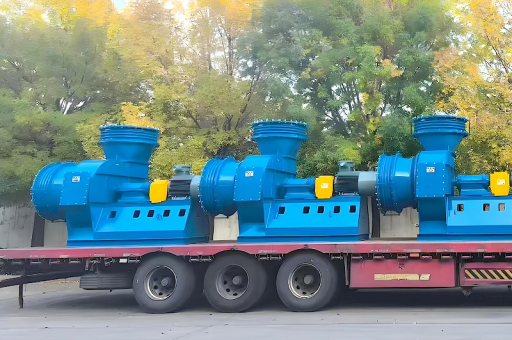
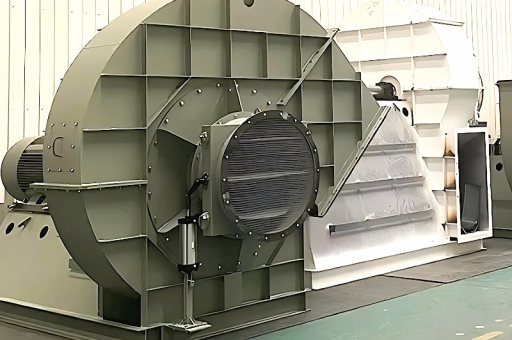
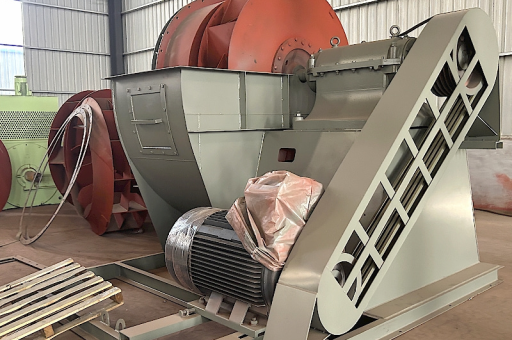
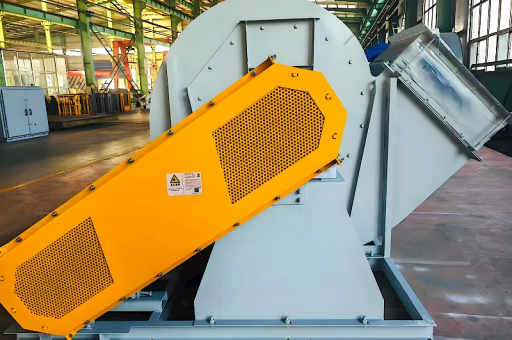
A non-condensable gas conveying centrifugal fan is a dynamic air-moving device engineered specifically to handle gas mixtures that will not readily condense into a liquid under normal operating conditions. It utilizes a rotating impeller to increase the velocity and pressure of the gas stream.
The "Centrifugal" Action: Gas enters the impeller axially (parallel to the shaft) and is thrown radially outward by centrifugal force. This action converts kinetic energy into static pressure.
The "Non-Condensable" Distinction: The term "non-condensable" is critical because it defines the gas's thermodynamic behavior. In a heat exchanger or condenser, NCGs do not liquefy. If a standard fan is used, these gases can accumulate, creating a "gas blanket" that insulates heat transfer surfaces, drastically reducing thermal efficiency. The NCG fan’s primary job is to remove this blanket.
Key Technical Specifications & Design Adaptations
To handle the aggressive nature of NCGs, these fans deviate significantly from standard ventilation fans. Key specifications include:
- High Static Pressure Capability: NCG systems often require overcoming high resistance from ductwork, scrubbers, and condensers. Fans are typically rated for higher pressure (5–50+ kPa).
- Temperature Range: Standard operation often involves inlet temperatures of 60°C to 120°C (140°F–250°F), with some designs rated for up to 400°C (750°F).
- Wheel Design: The impeller is crucial. Aluminum or stainless steel radial blades are common for strength and corrosion resistance. Open or semi-open impeller designs are preferred over closed to prevent material buildup.
- Shaft Sealing: A critical upgrade. Standard packing seals often fail. Specialized mechanical seals or labyrinth seals with purge air systems prevent gas leakage to the atmosphere.
- Casing: Heavy-gauge steel with welded construction. Inlet and outlet flanges are designed to withstand thermal expansion.
Primary Applications Across Industries
The need for specialized NCG fans spans multiple heavy industries:
-
Kraft Pulp & Paper Mills (The Dominant Use Case):
- Process: In the recovery boiler and lime kiln, NCGs are collected from evaporators, blow tanks, and other sources.
- Role: The fan pulls NCGs (containing TRS compounds like hydrogen sulfide) from collection headers, routing them to a non-condensable gas (NCG) incinerator or boiler for destruction. This is a critical environmental and odor-control measure.
- Challenge: The gas is saturated with moisture, hot (60–80°C), and contains corrosive sulfur compounds. The fan must handle intermittent slugging of liquid (condensate) without damaging the impeller.
-
Geothermal Power Plants:
- Process: Geothermal steam contains NCGs (CO2, H2S, methane, ammonia) which reduce the efficiency of turbines and condensers.
- Role: These fans (often called gas extractors) remove NCGs from the main condenser to maintain a high vacuum, maximizing power output from the steam.
-
Chemical & Petrochemical Processing:
- Role: Venting of reactors and distillation columns. NCG fans remove inert gases like nitrogen and light hydrocarbons that accumulate in overhead systems.
-
Wastewater Treatment (Biogas):
- Role: Handling digester gas—a mixture of methane (CH4) and CO2. The fan must be spark-resistant and explosion-proof.
Why Standard Fans Fail in NCG Service
The failure modes of a standard centrifugal fan in NCG service are costly. Common failures include:
- Corrosion: Standard carbon steel fails rapidly in the presence of moisture and H2S (forming sulfuric acid).
- Erosion: Particulates in the gas stream wear down impeller blades, causing imbalance and vibration.
- Bearing Failure: Heat conducted through the shaft destroys bearing grease.
- Condensate Buildup: Liquid slugs can break standard aluminum impellers.
- Seal Leakage: Toxic gases leak out, creating a safety hazard.
Case in point: A pulp mill in Finland replaced a "standard" fan every 3 months. Switching to a non-condensable gas conveying centrifugal fan with a 316L stainless steel wheel and a double mechanical seal extended service life to 24 months.
Material Selection & Corrosion Resistance
Material choice is the single most important design factor. The fan's wetted parts (impeller, casing, shaft) must resist the specific chemistry of the gas.
- Carbon Steel: Cost-effective but only suitable for dry, non-corrosive gases.
- Stainless Steel (304/316L): The standard for wet NCGs. 316L is preferred for its resistance to chloride stress corrosion cracking.
- Duplex Stainless Steel (2205): High strength and superior resistance to chloride and sulfuric acid. Ideal for geothermal and pulp mill applications.
- Corrosion-Resistant Coatings: Epoxy or PTFE linings offer an alternative but can chip under erosion.
- Aluminum: Lightweight and corrosion-resistant in air but rapidly attacked by sulfur compounds.
Expert Tip: For your specific application, request a gas analysis (temperature, dew point, chemical composition). This determines if 304 SS is sufficient or if you need Duplex or Hastelloy.
Energy Efficiency & Operational Savings
Modern variable speed drives (VFDs) on NCG fans offer substantial savings:
- Reduced Energy Consumption: VFDs allow the fan to ramp up or down based on gas generation rates, rather than running at full speed with a mechanical damper.
- Reduced Mechanical Stress: Soft start eliminates electrical spikes and mechanical shock on the impeller.
- Process Stability: Precise speed control maintains the exact vacuum level in the condenser or collection header.
A typical 50 HP fan running continuously at full speed can cost $30,000–$50,000 per year in electricity (at $0.10/kWh). A VFD can cut that by 30–50%.
Q&A: Expert Answers to Common Industry Questions
Q1: Can I use a standard air-moving fan for NCG service?
A: No, it is strongly discouraged. Standard fans lack corrosion-resistant materials, high-temperature bearings, and proper shaft seals. Using one in NCG service creates a fire/explosion risk (toxic gas leakage) and will lead to catastrophic failure within days or weeks. Always use a non-condensable gas conveying centrifugal fan rated for your specific process chemistry.
Q2: What is the difference between a NCG fan and a blower?
A: The terms are often used interchangeably, but technically a fan operates at a lower pressure ratio (typically <1.3:1). A blower operates at 1.3:1 to 2.5:1. For pulp mill NCG systems, "fan" is standard terminology, though the machine often functions as a blower.
Q3: What causes a NCG fan to vibrate?
A: Common causes include:
- Imbalance: Due to erosion or particulate buildup.
- Shaft Misalignment: Due to thermal expansion.
- Resonance: Operating at a critical speed near a natural frequency.
- Condensate Accumulation: Liquid trapped in the impeller.
Q4: How do I prevent condensate from damaging the fan?
A: Install a drain port at the lowest point of the fan casing. Use a moisture separator or knockout pot upstream of the fan. Equip the fan with a condensate drain line. Specify a shaft slinger to protect the bearings from moisture ingress.
Q5: What is the typical lifespan of a NCG fan?
A: 10–20 years under proper operating conditions, with regular maintenance (bearing replacement every 2–5 years, impeller inspection annually). Poorly specified fans may last only 6–12 months.
Q6: Do I need an explosion-proof motor?
A: Yes, if the NCG stream contains flammable gases. In pulp mills, NCGs contain methanol, terpenes, and other VOCs creating an explosive mixture. The fan motor must be rated for the appropriate Class/Division (e.g., Class I, Div 2). The fan itself should be constructed with spark-resistant materials.
Conclusion: Future Trends in NCG Fan Technology
The industry is moving toward smarter, more resilient fan systems:
- Condition Monitoring: Integrated vibration sensors and bearing temperature detectors feeding data to the plant's CMMS.
- Digital Twins: Virtual models predicting fan performance and failure points based on real-time gas analysis.
- Improved Materials: Widespread adoption of high-nickel alloys and ceramic coatings for extreme corrosion resistance.
- Modular Design: Pre-engineered fan packages (fan + motor + VFD + seal system) for faster deployment and standardized service.
Choosing the correct non-condensable gas conveying centrifugal fan is a long-term investment in safety, environmental compliance, and process efficiency. Whether you are retrofitting an existing system or designing a new plant, consult with a manufacturer who specializes in custom-engineered fan solutions for demanding gas streams. A properly selected fan will not only move gas—it will protect your people, budget, and reputation.