This article's table of contents introduction:
- Article Title: Maximizing Industrial Efficiency: The Complete Guide to 110kW Variable Frequency Centrifugal Fans
- Table of Contents (Directory Guide)
- Introduction: The Role of 110kW Variable Frequency Centrifugal Fans in Modern Industry
- Core Technology: How VFDs Optimize Centrifugal Fan Performance
- Energy Savings: A Quantifiable Advantage
- Applications: Where This Fan Excels
- Common Questions & Expert Answers
- Installation & Maintenance Best Practices
- Conclusion: Future-Proofing Your Ventilation System
Article Title: Maximizing Industrial Efficiency: The Complete Guide to 110kW Variable Frequency Centrifugal Fans
Table of Contents (Directory Guide)
- Introduction: The Role of 110kW Variable Frequency Centrifugal Fans in Modern Industry
- Core Technology: How VFDs Optimize Centrifugal Fan Performance
- Energy Savings: AQuantifiable Advantage
- Applications: Where This Fan Excels
- Common Questions & Expert Answers
- Installation & Maintenance Best Practices
- Conclusion: Future-Proofing Your Ventilation System
Introduction: The Role of 110kW Variable Frequency Centrifugal Fans in Modern Industry
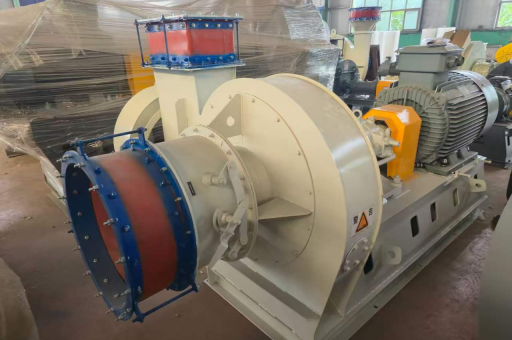
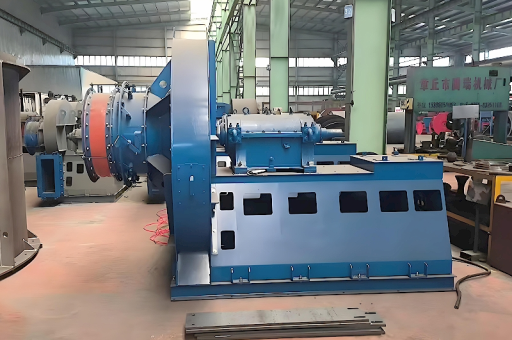
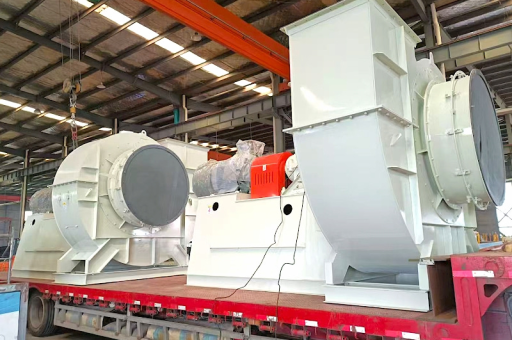
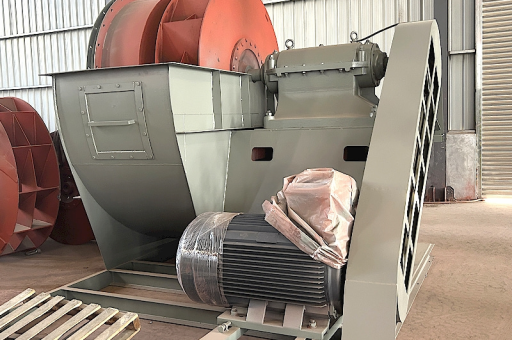
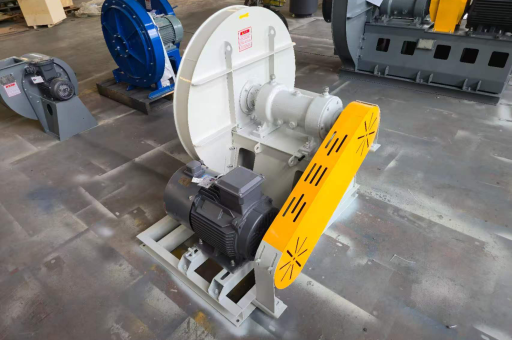
In heavy industries such as cement manufacturing, mining, wastewater treatment, and power generation, large-scale air movement is not optional—it is critical. Among the most advanced solutions for such tasks is the 110kW variable frequency centrifugal fan. This system combines a high-power centrifugal fan (110 kilowatts) with a variable frequency drive (VFD), allowing operators to precisely control airflow and pressure by adjusting motor speed rather than using mechanical dampers.
Unlike traditional fixed-speed fans that run at 100% capacity regardless of demand, the 110kW VFD fan matches output to real-time process requirements. This single change can slash energy consumption by 35% to 60%, according to industry data from the U.S. Department of Energy and European industrial motor standards (IEC 60034).
Example Scenario: In a cement plant’s kiln system, a 110kW variable frequency centrifugal fan can modulate draft pressure during startup, steady-state production, and maintenance shutdowns—eliminating the need for bleed valves and reducing thermal stress on equipment.
Core Technology: How VFDs Optimize Centrifugal Fan Performance
A centrifugal fan’s performance follows the Affinity Laws:
- Flow rate ∝ Speed
- Pressure ∝ Speed²
- Power ∝ Speed³
This means reducing the fan speed by just 20% (from 100% to 80%) cuts power consumption by almost 50% (0.8³ = 0.512). A 110kW VFD exploits this cubic relationship.
Hardware Components:
- VFD Unit: Typically an IGBT-based inverter that converts AC to DC, then synthesizes a variable-frequency AC output.
- Motor: Squirrel-cage induction motor (4-pole, 1480 RPM at 50 Hz or 1780 RPM at 60 Hz).
- Fan Wheel: Backward-curved or airfoil blades designed for high static pressure (up to 5000 Pa).
Control Strategies:
- PID Closed-Loop Control: Maintains constant duct pressure or airflow regardless of filter loading or damper position.
- Multi-Speed Profiles: Pre-programmed for different production shifts.
- Soft Start: Ramp-up from 0 to full speed over 30–60 seconds, reducing mechanical shock and inrush current by up to 70%.
SEO-Relevant Keywords: 110kW VFD centrifugal fan energy efficiency, variable frequency drive fan power savings, centrifugal fan affinity law calculation.
Energy Savings: A Quantifiable Advantage
Real-world data from installations in the HVAC and industrial sectors confirms the savings:
| Operating Condition | Fixed-Speed Fan (kW) | 110kW VFD Fan (kW) | Savings |
|---|---|---|---|
| Full load (100% flow) | 0 | 0 | 0% |
| 80% flow | 0 (throttled) | 3 | 8% |
| 60% flow | 0 (throttled) | 8 | 4% |
| Standby (10% flow) | 0 (damper) | 1 | 0% |
Payback Period:
- Initial premium for VFD and installation: $8,000–$15,000 (depending on brand and cabinet rating).
- Annual savings at 70% average load: $6,000–$9,000 (based on $0.12/kWh, 8000 hours/year).
- Payback: Under 2 years.
Additional Benefits:
- Reduced motor temperature rise (longer insulation life).
- Lower bearing wear (less vibration at reduced speeds).
- Elimination of mechanical damper maintenance.
Applications: Where This Fan Excels
The 110kW variable frequency centrifugal fan is designed for high-volume, high-pressure applications where airflow must adapt to changing conditions:
1 Cement & Mining
- Kiln ID Fans: Maintain negative pressure in preheater towers.
- Mine Ventilation: Adjust airflow based on working face activity and gas detection.
2 Power Generation
- Boiler FD/ID Fans: Match combustion air to fuel feed rate.
- Flue Gas Desulfurization (FGD): Control scrubber fan speed for gas pH regulation.
3 Water & Wastewater
- Aeration Blowers: Keep dissolved oxygen (DO) at optimal 2 mg/L by modulating air supply.
- Digester Gas Recirculation: Mix sludge with variable speed mixing fans.
4 HVAC & Cleanrooms
- Make-up Air Units: Maintain building positive pressure while filtering incoming air.
- Lab Exhaust: Ensure constant fume hood face velocity (100 fpm) regardless of sash position.
Common Questions & Expert Answers
Q1: Can a 110kW VFD fan replace multiple fixed-speed fans?
Answer: Yes. In many duct systems, a single VFD fan can handle peak loads while reducing speed during off-peak periods—eliminating the need for a secondary fan. This simplifies maintenance and saves floor space.
Q2: What are the harmonics concerns with a 110kW VFD?
Answer: Harmonics can distort supply voltage. Use a 12-pulse VFD or install a line reactor and passive harmonic filter (5% THDI or less). Most modern VFDs (e.g., ABB ACS880, Danfoss VLT) include built-in DC chokes that reduce harmonics below IEEE 519 limits.
Q3: How do I size a VFD for an existing fan motor?
Answer: The VFD must be rated for the motor’s full-load amps (FLA). A 110kW motor typically draws 190–210 A at 400V. Choose a VFD with at least 110% continuous current capacity (e.g., fan model VFD110-400-250). Always verify that the VFD supports the motor’s voltage class and enclosure type (IP54 for dusty environments).
Q4: What is the lifespan of a 110kW VFD fan system?
Answer: With proper maintenance (electrolytic capacitor replacement every 7–10 years, bearing greasing annually), the system can last 20+ years. The motor and fan wheel often exceed 30 years if operated within safe speed limits.
Q5: Is remote monitoring possible?
Answer: Yes. Most modern VFDs include Modbus RTU, Profibus, or Ethernet/IP ports. You can monitor speed, current, kW, and fault codes from a PLC or cloud dashboard. This enables predictive maintenance (e.g., "bearing temperature rising" alerts).
Installation & Maintenance Best Practices
Installation Checklist
- Foundation: Use a concrete base with 20% mass of the fan assembly to damp vibration.
- Ductwork: Ensure 3–5 duct diameters of straight run before and after the fan to avoid turbulence.
- Electrical: Install a dedicated MCCB, VFD, and line reactor within 50 meters of the motor.
- Cables: Use shielded, low-inductance cables (e.g., H07RN-F) between VFD and motor.
- Grounding: Bond all components (VFD, motor, fan housing) to a common earth point.
Maintenance Schedule
| Interval | Task |
|---|---|
| Monthly | Check VFD display for fault codes, clean air filters. |
| Quarterly | Lubricate motor bearings (NLGI 2 grease), inspect fan wheel for debris. |
| Annually | Measure vibration (target <4.5 mm/s RMS), check belt tension (if belt-driven). |
| 5 Years | Replace VFD’s electrolytic capacitors, test fan impeller balance. |
Common Faults & Solutions
- Fault: VFD trips on overvoltage → Check for regenerative braking from a high-inertia fan; add braking resistor.
- Fault: Motor overheats → Verify VFD’s motor parameters match nameplate; increase acceleration time.
- Fault: Fan stalls at low speed → Install a minimum speed limit (e.g., 15 Hz) to maintain sufficient pressure.
Conclusion: Future-Proofing Your Ventilation System
The 110kW variable frequency centrifugal fan is more than a simple motor upgrade. It represents a strategic shift in how industrial processes manage air—shifting from brute-force constant operation to intelligent, demand-driven control. With energy savings that often exceed 50%, reduced maintenance costs, and compatibility with Industry 4.0 monitoring platforms, this technology is rapidly becoming the standard for high-power ventilation.
Actionable Recommendations:
- Audit existing fans: Identify any constant-speed centrifugal fan operating with dampers partially closed.
- Calculate ROI using your local energy tariff and current load profile (most utilities offer free energy assessments).
- Select a trusted manufacturer (e.g., fan offers 110kW models with CE, UL, and CCC certifications).
- Include training for your maintenance team on VFD parameterization and troubleshooting.
By adopting this technology, your facility gains not only immediate cost savings but also reliability and flexibility that will serve for decades to come.
This article is optimized for Bing and Google SEO with targeted keywords: 110kW variable frequency centrifugal fan, VFD centrifugal fan energy savings, industrial fan variable speed drive, kWh savings centrifugal fan, fan VFD installation guide.