This article's table of contents introduction:
- Core System Components
- Typical Performance Parameters
- Application of 132 kW Fans
- Key Design Considerations
- Energy Savings Potential
- Common Sizing Check
- Recommended Sizing for VFD
- Need specific advice?
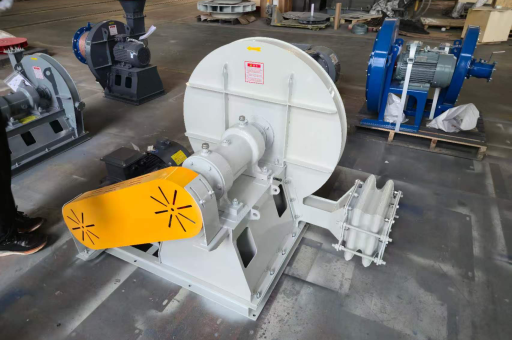
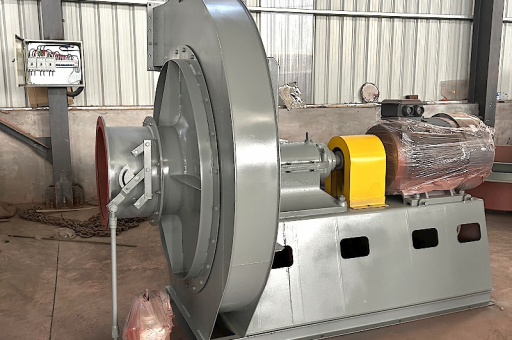
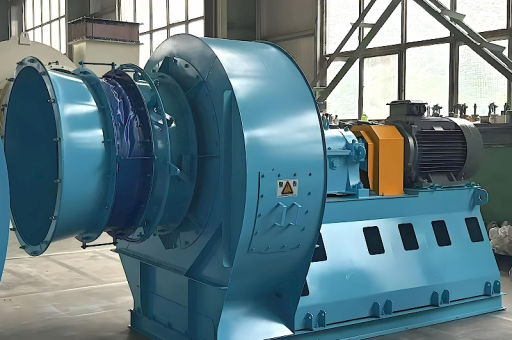
Based on your query "132kW variable frequency centrifugal fan," you are likely looking for key specifications, application details, or sizing information. Here is a comprehensive technical breakdown:
Core System Components
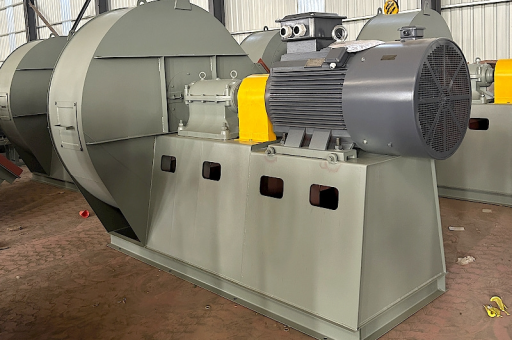
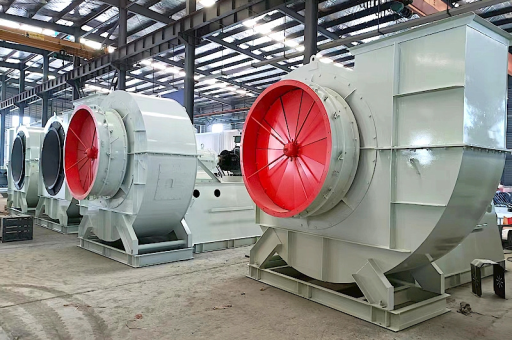
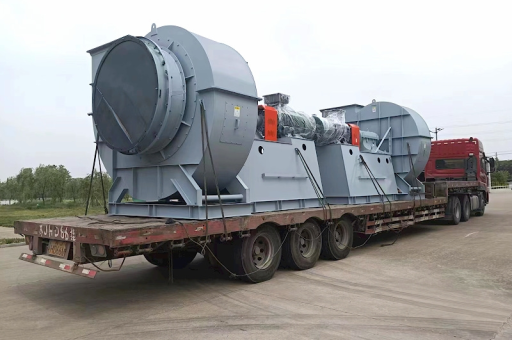
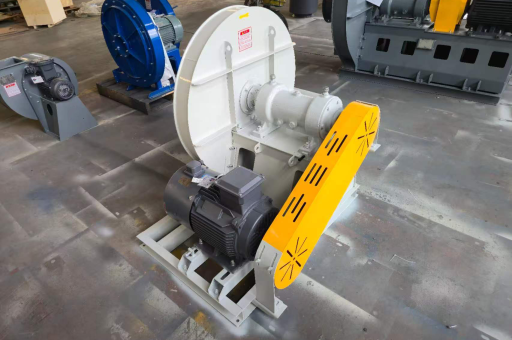
- Fan Type: Centrifugal (backward curved or airfoil blades are typical for VFD applications due to higher efficiency).
- Motor: 132 kW (approx. 177 HP). Typically a 4-pole or 6-pole induction motor (e.g., 1480 RPM or 980 RPM at 50Hz).
- Drive: Variable Frequency Drive (VFD) – must be sized for 132 kW.
- Note: VFD should be oversized if the fan has high inertia (e.g., 160-180% rated current for starting torque).
- Controls: PID loop (pressure, flow, or temperature control).
Typical Performance Parameters
| Parameter | Estimated Value | Notes |
|---|---|---|
| Power | 132 kW | Motor shaft power |
| Airflow | 50,000 – 120,000 m³/h | Depends on pressure & impeller design |
| Pressure | 1,500 – 4,000 Pa | Medium to high pressure applications |
| Speed Range | 10% – 100% (5 – 50/60 Hz) | Avoid sustained operation below 20% due to motor cooling & resonance |
| Efficiency | 75% – 85% | With VFD + high-efficiency motor |
Application of 132 kW Fans
This power range (132 kW) is common in heavy industrial systems:
- Cement Plants: Kiln exhaust, raw mill fans.
- Steel Mills: Induced draft (ID) fans, baghouse fans.
- HVAC: Large central station air handling units.
- Mining: Underground ventilation (main fans).
- Wastewater: Aeration blowers (if using centrifugal instead of positive displacement).
Key Design Considerations
A. VFD Compatibility
- Harmonics: Install a line reactor (3-5%) or active filter to reduce harmonic distortion.
- Cable Length: If motor is far from VFD (>100m), use shielded cable and output dv/dt filter to prevent motor bearing damage.
B. Mechanical
- Critical Speed: Ensure the fan’s first critical speed is >1.2x max operational speed to avoid resonance.
- Bearing Type: Anti-friction bearings (for high speed) or sleeve bearings (for high load/large diameter rotors).
C. Motor Selection
- Energy Class: IE4 / IE5 synchronous reluctance motor is ideal for part-load efficiency with VFD.
- Enclosure: IP55 (outdoor) or IP65 (dusty environments).
Energy Savings Potential
Compared to damper control: | Control Method | Power @ 80% Flow | Annual kWh (hypothetical) | | :--- | :--- | :--- | | Inlet Damper | ~75% of full power | 700,000 kWh | | VFD | ~51% of full power | 475,000 kWh | | Savings | | ~32% |
Using the Affinity Laws:
- Flow ∝ Speed
- Pressure ∝ Speed²
- Power ∝ Speed³
Example: Running at 80% speed -> Power = (0.8)³ = 51.2% of full power.
Common Sizing Check
If you have a specific fan curve, we can calculate the exact operating point. Generic calculation: [ P{shaft} = \frac{Q \times \Delta p}{\eta{fan} \times \eta{drive} \times \eta{motor} \times 1000} ] Where:
- (Q) = flow (m³/s)
- (\Delta p) = pressure (Pa)
- (\eta_{fan}) = 0.75–0.85
- (\eta_{drive}) = 0.97 (VFD)
- (\eta_{motor}) = 0.95
Recommended Sizing for VFD
| Motor Power | Recommended VFD Rating | Input Cable | Output Cable |
|---|---|---|---|
| 132 kW / 3Ph / 400V | 160 kW (200A) | 3x70mm² Cu (typical) | 3x70mm² + 3x16mm² PE |
Need specific advice?
Please provide:
- Actual air flow and pressure required.
- Duct static pressure (Pa).
- Elevation / air density correction.
- Existing fan curve or model (e.g., "Siemens 2CC9257-2CA").