This article's table of contents introduction:
- Table of Contents
- Introduction: The Shift Toward Energy-Efficient Air Movement
- What Makes the 185kW Variable Frequency Centrifugal Fan Unique?
- Core Technical Specifications and Design Principles
- How Variable Frequency Drive (VFD) Integration Enhances Performance
- Primary Application Scenarios: Mining, HVAC, Power Generation
- Comparative Analysis: Fixed-Speed vs. Variable Frequency Centrifugal Fans
- Installation Considerations and Maintenance Best Practices
- FAQs: Common Questions About 185kW Variable Frequency Centrifugal Fans
- Conclusion: Future-Proofing Ventilation with Intelligent Fan Systems
Article Title:
Optimizing Industrial Ventilation: The 185kW Variable Frequency Centrifugal Fan in High-Demand Applications
Table of Contents
- Introduction: The Shift Toward Energy-Efficient Air Movement
- What Makes the 185kW Variable Frequency Centrifugal Fan Unique?
- Core Technical Specifications and Design Principles
- How Variable Frequency Drive (VFD) Integration Enhances Performance
- Primary Application Scenarios: Mining, HVAC, Power Generation
- Comparative Analysis: Fixed-Speed vs. Variable Frequency Centrifugal Fans
- Installation Considerations and Maintenance Best Practices
- FAQs: Common Questions About 185kW Variable Frequency Centrifugal Fans
- Conclusion: Future-Proofing Ventilation with Intelligent Fan Systems
Introduction: The Shift Toward Energy-Efficient Air Movement
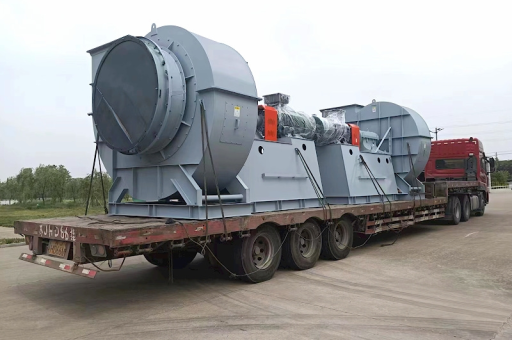
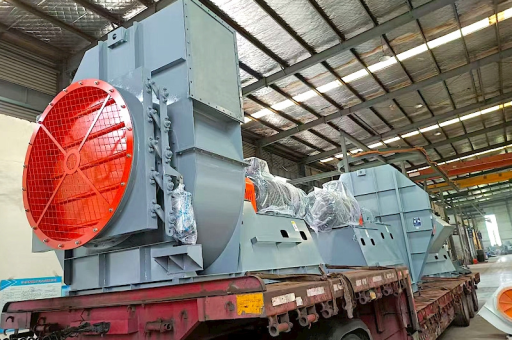
In modern industrial environments, air handling is no longer just about moving volume—it is about precision, energy management, and long-term operational cost control. The 185kW Variable Frequency Centrifugal Fan represents a pivotal solution for facilities that demand high static pressure, large airflow capacity (often exceeding 150,000 m³/h), and the ability to modulate performance without mechanical throttling.
Traditional fixed-speed fans operate at full capacity regardless of actual demand, wasting energy and causing mechanical stress. By integrating a variable frequency drive (VFD), the 185kW centrifugal fan adjusts its motor speed to match real-time system requirements, significantly reducing energy consumption by 30% to 50% in partial-load conditions. This makes the fan an ideal choice for applications like mine ventilation, tunnel exhaust, power plant cooling, and large-scale HVAC systems.
What Makes the 185kW Variable Frequency Centrifugal Fan Unique?
The defining feature of this fan is its power class combined with speed control intelligence. Unlike smaller variable frequency fans used in light commercial settings, the 185kW variant must handle extreme aerodynamic loads while maintaining stable operation across a wide frequency range (typically 10 Hz to 60 Hz).
Key differentiators include:
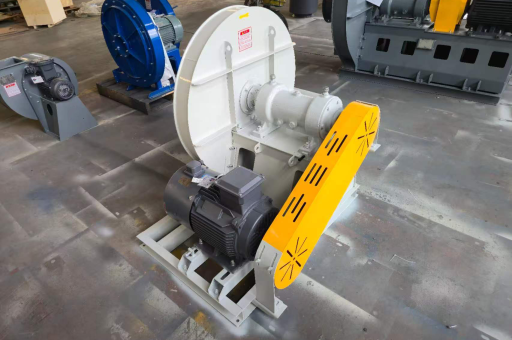
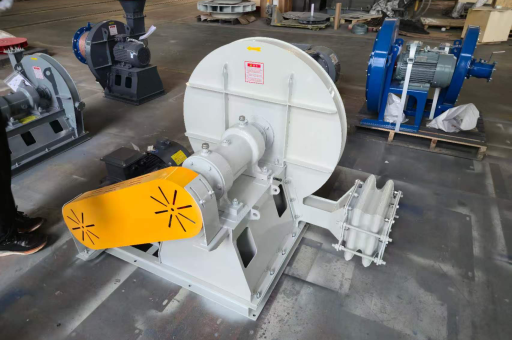
- High-efficiency impeller design – often backward-curved or airfoil blades, optimized via computational fluid dynamics (CFD) for reduced turbulence and noise.
- Robust bearing and shaft system – engineered to withstand continuous duty cycles at variable rotational speeds.
- Integrated VFD compatibility – supports direct communication with building management systems (BMS) or programmable logic controllers (PLC).
- Soft-start and soft-stop capability – eliminates electrical inrush current and reduces mechanical shock on start-up.
Core Technical Specifications and Design Principles
A typical 185kW variable frequency centrifugal fan is built around the following parameters:
| Specification | Typical Value |
|---|---|
| Rated Power | 185 kW (250 HP) |
| Voltage | 380V–690V, 3-phase |
| Frequency Range | 10–60 Hz (VFD controlled) |
| Max Airflow | 150,000–250,000 m³/h (dependent on pressure) |
| Static Pressure | 3,000–7,000 Pa |
| Noise Level | 75–90 dB(A) at full speed (with silencer options) |
| Impeller Diameter | 1,200–1,800 mm |
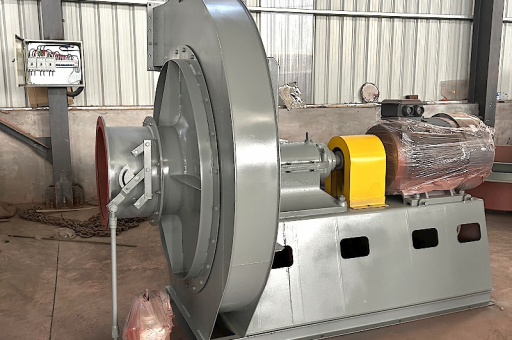
Design principles prioritize aerodynamic efficiency and structural integrity. The housing is typically fabricated from heavy-gauge steel or stainless steel for corrosive environments, while the impeller undergoes dynamic balancing to G2.5 or better per ISO 1940.
How Variable Frequency Drive (VFD) Integration Enhances Performance
A VFD controls the fan motor’s rotational speed by adjusting the input frequency. The 185kW variable frequency centrifugal fan leverages this technology in three critical ways:
- Energy savings via affinity laws: Fan power is proportional to the cube of speed. Reducing speed by 20% cuts power consumption by nearly 50%.
- Precise pressure and flow control: Sensors feed back duct static pressure or air velocity to the VFD, allowing the fan to self-regulate without damper throttling.
- Reduced electrical stress: The VFD provides ramp-up and ramp-down profiles, which protect the motor and fan bearings from sudden torque spikes.
Additionally, modern VFDs include harmonic filters to comply with IEEE 519 standards, ensuring that the fan does not cause electrical interference in sensitive industrial environments.
Primary Application Scenarios: Mining, HVAC, Power Generation
Mining and Tunnel Ventilation
In underground operations, the 185kW variable frequency centrifugal fan is essential for delivering fresh air along long drifts. VFD control allows operators to adjust airflow based on real-time gas or dust monitoring, reducing over-ventilation and energy waste.
Large-scale HVAC Systems
For commercial complexes, convention centers, or hospitals, the fan provides the backbone of air delivery in primary air handling units (AHUs). Variable frequency operation ensures comfort while minimizing the building’s carbon footprint.
Power Plant and Industrial Process Cooling
Thermal power stations use these fans for forced draft or induced draft applications. Speed modulation allows the fan to track boiler load changes precisely, improving combustion efficiency and reducing NOx emissions.
Comparative Analysis: Fixed-Speed vs. Variable Frequency Centrifugal Fans
| Aspect | Fixed-Speed Fan | 185kW Variable Frequency Fan |
|---|---|---|
| Start-Up | High inrush current | Soft start, minimal stress |
| Energy Usage | Full power at all times | Proportional to demand |
| Flow Control | Dampers or vanes (inefficient) | Speed modulation (efficient) |
| Maintenance | Higher wear from constant speed | Reduced wear from variable operation |
| Noise | Constant, high at full load | Adjustable, quieter at partial load |
| First Cost | Lower | Higher, but ROI < 2 years typically |
The initial investment in a 185kW variable frequency centrifugal fan is recouped through lower electricity bills, reduced maintenance costs, and extended equipment lifespan.
Installation Considerations and Maintenance Best Practices
For optimal performance, installers must consider:
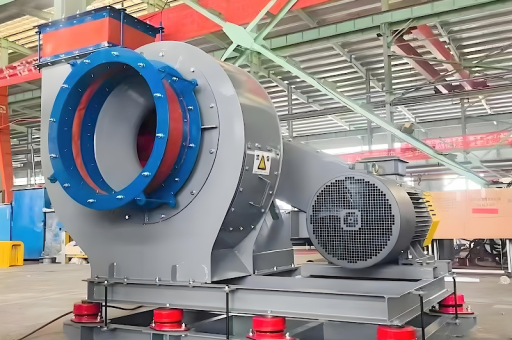
- Foundation vibration isolation – Use spring isolators or inertia bases to prevent structural resonance.
- Ductwork alignment – Avoid sharp elbows close to the fan inlet to prevent pre-swirl and performance loss.
- VFD location – Install the drive in a climate-controlled area or use a derated drive for hot environments.
Routine maintenance should include:
- Monthly vibration analysis – Monitor bearing health and impeller balance.
- Quarterly VFD diagnostics – Check capacitor banks, cooling fans, and IGBT modules.
- Annual impeller cleaning – Remove build-up from dust or corrosive residues to maintain aerodynamic efficiency.
FAQs: Common Questions About 185kW Variable Frequency Centrifugal Fans
Q1: Can a 185kW variable frequency centrifugal fan run continuously at low speed (e.g., 15 Hz)?
Yes, but ensure the motor’s cooling at low speed is adequate. Many modern motors have separate forced ventilation or inverter-duty ratings to handle continuous low-speed operation without overheating.
Q2: What is the typical payback period for converting from a fixed-speed to a variable frequency fan?
Depending on electricity costs and duty cycle, most facilities see a payback within 12 to 24 months. Energy savings of 30%–50% are common.
Q3: Are there special electrical requirements for the VFD?
Yes. A dedicated power feeder with proper harmonic filtering and braking resistor (for rapid deceleration) is recommended. Always follow the VFD manufacturer’s guidelines for cable length and shielding.
Q4: Can this fan handle explosive or corrosive gases?
With modifications—such as a spark-proof impeller (aluminum or bronze), ATEX-rated motor, and corrosion-resistant coating—the fan can be configured for hazardous environments.
Q5: What is the maximum air temperature the fan can handle?
Standard models operate up to 80°C. For higher temperatures (up to 200°C or more), use high-temperature shaft seals, bearing cooling, and special insulation materials.
Conclusion: Future-Proofing Ventilation with Intelligent Fan Systems
The 185kW Variable Frequency Centrifugal Fan is more than a high-power air mover—it is an intelligent component of modern industrial ventilation strategy. By combining the brute air-moving capability of a large centrifugal wheel with the precision of electronic speed control, this fan delivers measurable reductions in energy consumption, maintenance costs, and environmental impact.
Industries that adopt this technology are better positioned to meet tightening energy regulations and sustainability goals, without sacrificing the reliability required in critical processes. Whether in a deep mine, a data center cooling system, or a steel plant, the 185kW variable frequency centrifugal fan proves that high performance and high efficiency can coexist.
For detailed sizing or configuration assistance, consult an authorized fan manufacturer or systems integrator.