This article's table of contents introduction:
- Table of Contents
- 1. Introduction: What Is a 30kW Backward-Curved Centrifugal Fan?
- 2. Design Principle: Why Backward-Curved Blades Matter
- 3. Performance Characteristics of a 30kW Fan
- 4. Key Applications Across Heavy Industries
- 5. Energy Efficiency & Long-Term Cost Analysis
- 6. Installation & Maintenance Best Practices
- 7. Frequently Asked Questions (FAQ)
- 8. Conclusion: Choosing the Right Fan for Your System
** The Ultimate Guide to 30kW Backward-Curved Centrifugal Fans: Efficiency, Design, and Industrial Applications
Table of Contents
- Introduction: What Is a 30kW Backward-Curved Centrifugal Fan?
- Design Principle: Why Backward-Curved Blades Matter
- Performance Characteristics of a 30kW Fan
- Key Applications Across Heavy Industries
- Energy Efficiency & Long-Term Cost Analysis
- Installation & Maintenance Best Practices
- Frequently Asked Questions (FAQ)
- Conclusion: Choosing the Right Fan for Your System
Introduction: What Is a 30kW Backward-Curved Centrifugal Fan?
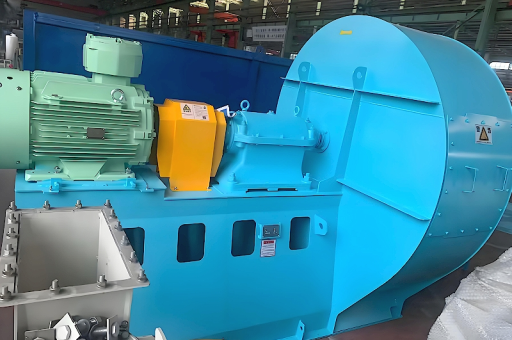
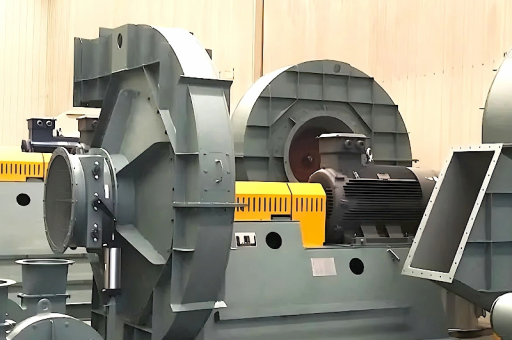
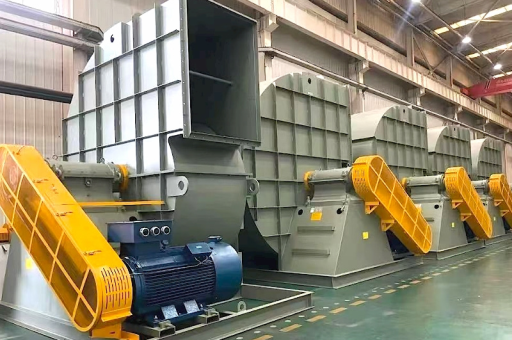
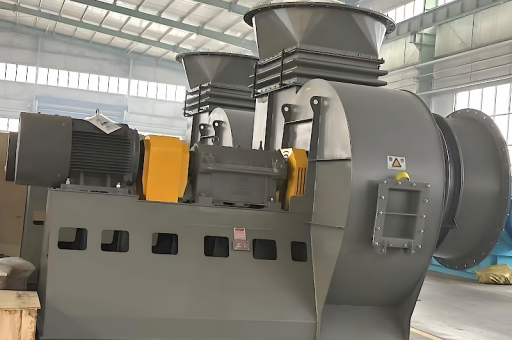
A 30kW backward-curved centrifugal fan is a high-performance industrial air-moving device designed for applications requiring high airflow volumes at moderate to high static pressures. The term “30kW” refers to the motor power rating, indicating the fan’s ability to handle demanding ventilation, dust collection, or material handling tasks.
Unlike forward-curved fans, backward-curved centrifugal fans are known for their non-overloading power characteristics. This means the power consumption reaches a peak and then levels off, preventing motor burnout even if the system pressure fluctuates. This makes the 30kW variant a reliable workhorse in cement plants, power generation, mining, and HVAC systems for large commercial buildings.
Design Principle: Why Backward-Curved Blades Matter
The core advantage of a backward-curved blade design lies in its aerodynamic efficiency. The blades curve away from the direction of rotation, allowing air to enter the impeller radially and exit with minimal turbulence. Compared to forward-curved or radial-blade fans, backward-curved designs typically achieve efficiency ratings of 80% to 85% or higher.
Key design features include:
- Airfoil-shaped blades – reduce drag and noise.
- Non-overloading power curve – the motor draws maximum power at a specific operating point and drops as flow increases, protecting the drive train.
- High-speed capability – allowing a 30kW motor to generate airflow up to 50,000 m³/h (approximately 29,400 CFM) under optimal conditions.
Q: How does a backward-curved fan differ from a forward-curved fan in real-world performance? A: A backward-curved fan operates at higher speeds and generates less noise under load. It can handle dirty or particulate-laden air better, because the blade shape resists material buildup. In contrast, a forward-curved fan draws more power as static pressure drops, risking motor overload.
Performance Characteristics of a 30kW Fan
A 30kW backward-curved centrifugal fan typically operates within these parameters:
| Parameter | Typical Range |
|---|---|
| Motor Power | 30 kW (40 HP) |
| Max Airflow | 30,000 – 55,000 m³/h |
| Static Pressure | 1,500 – 4,000 Pa |
| Maximum Efficiency | 80% – 87% |
| Noise Level | 75 – 90 dB(A) at 1m |
These fans are often fitted with variable frequency drives (VFDs) to modulate airflow and pressure precisely. This increases system flexibility while reducing energy waste.
Q: Can a 30kW fan be operated at part load without efficiency loss? A: Yes, when paired with a VFD. Backward-curved fans maintain high efficiency across a wide operating range. However, running the fan at a very low RPM for extended periods may cause bearing lubrication issues, so always consult the manufacturer’s minimum speed recommendation.
Key Applications Across Heavy Industries
Due to its robust construction and non-overloading nature, the 30kW backward-curved centrifugal fan is found in:
- Cement & Mining – For dust extraction and pneumatic conveying of raw materials. The blade shape prevents clogging from fine particles.
- Power Plants – Induced draft and forced draft applications where high static pressure is required.
- Wastewater Treatment – Aeration tanks and odor control systems.
- HVAC Systems – Large commercial buildings, data centers, and industrial clean rooms.
- Chemical Processing – Moving corrosive fumes (with appropriate material, such as stainless steel or FRP).
Energy Efficiency & Long-Term Cost Analysis
One of the strongest selling points of the 30kW backward-curved centrifugal fan is its total cost of ownership (TCO). Although the initial purchase price may be 10%–20% higher than a forward-curved equivalent, the operating savings are substantial.
Example energy savings calculation:
- A standard forward-curved fan (70% efficiency) running 8,760 hours/year at 30kW consumes 262,800 kWh.
- A backward-curved fan (85% efficiency) for the same duty consumes approximately 216,000 kWh.
- At an industrial electricity rate of $0.10/kWh, the annual saving is $4,680.
Over a 10-year lifespan, the savings exceed the initial price difference, making it a wise investment.
Q: Does a backward-curved fan require expensive accessories to achieve this efficiency? A: Not necessarily. While a VFD is recommended for variable loads, the fan can run at full speed with a direct-drive motor and maintain 85%+ efficiency. Inlet guide vanes are another option to adjust performance without a VFD.
Installation & Maintenance Best Practices
To ensure maximum reliability and longevity of a 30kW backward-curved centrifugal fan, follow these guidelines:
- Foundation & Alignment – Use a rigid steel base with vibration isolators. Check shaft alignment within 0.05 mm after installation.
- Inlet/Outlet Ducting – Provide straight duct sections of at least 2.5D (duct diameter) at the inlet and 1.5D at the outlet to prevent turbulence and efficiency loss.
- Bearing Maintenance – Grease bearings every 3–6 months (or per manufacturer schedule). Use high-temperature lithium-based grease.
- Impeller Inspection – Clean the backward-curved blades annually. Even though they resist dust buildup, a buildup of sticky materials (e.g., resin or paint overspray) can unbalance the rotor.
Q: How do I know when the fan needs an overhaul? A: Key signs include: increased vibration (above 7 mm/s RMS), abnormal noise (especially from bearings), reduced airflow despite constant RPM, and visible blade wear or corrosion. Schedule a comprehensive teardown inspection every 5–7 years.
Frequently Asked Questions (FAQ)
Q: Is a 30kW backward-curved fan suitable for clean room applications?
A: Yes, with HEPA filters on the discharge side. The fan offers low turbulence and stable pressure output, critical for clean rooms.
Q: Can I replace an existing forward-curved fan with a backward-curved unit of the same power?
A: Usually yes, but you must verify the duty point. A backward-curved fan at 30 kW will deliver higher static pressure but may move less air if the duct system resistance is low. Always rematch the fan curve to system resistance.
Q: What is the maximum temperature a standard 30kW backward-curved fan can handle?
A: Standard construction handles up to 80°C (176°F). With high-temperature seals and bearings, performance can extend to 300°C (572°F).
Q: Does the fan require a special starter?
A: Given the 30kW motor size, a soft starter or VFD is recommended to limit inrush current. A direct-on-line starter is acceptable if the electrical supply is robust, but it may cause voltage dips.
Conclusion: Choosing the Right Fan for Your System
The 30kW backward-curved centrifugal fan is a top-tier choice for industrial operators seeking high efficiency, reliability, and long service life. Its non-overloading characteristic eliminates the risk of motor burnout, and the aerodynamic blade design minimizes energy waste. Whether for dust collection in a cement plant or air movement in a data center, this fan delivers consistent performance.
When specifying a 30kW fan, always provide your exact airflow and static pressure requirements to the manufacturer. Request a fan curve, and consider adding a VFD for future flexibility. For more detailed specifications or to request a custom quote, visit the official product page at fan (replace this placeholder with your actual manufacturer’s resource).
Final Recommendation: If you need a balance between high pressure, large airflow, and low noise—and you want to keep energy bills under control—the 30kW backward-curved centrifugal fan is the right investment for your facility.