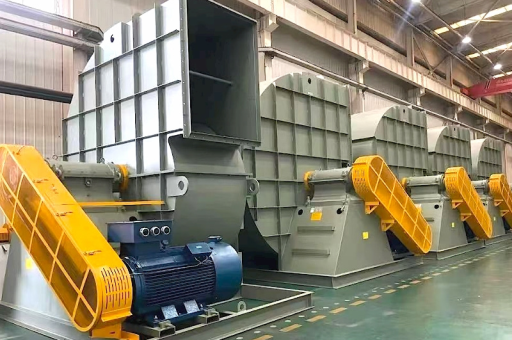
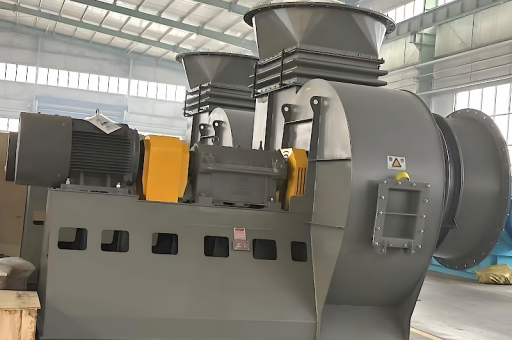
High-Efficiency 55kW Backward-Curved Centrifugal Fan: Performance, Applications, and Technical Insights
Table of Contents
- Introduction to the 55kW Backward-Curved Centrifugal Fan
- Design Principles and Aerodynamic Characteristics
- Performance Metrics and Efficiency Analysis
- Key Applications Across Industries
- Installation, Maintenance, and Operational Best Practices
- Frequently Asked Questions (FAQ)
- Conclusion and Future Outlook
Introduction to the 55kW Backward-Curved Centrifugal Fan
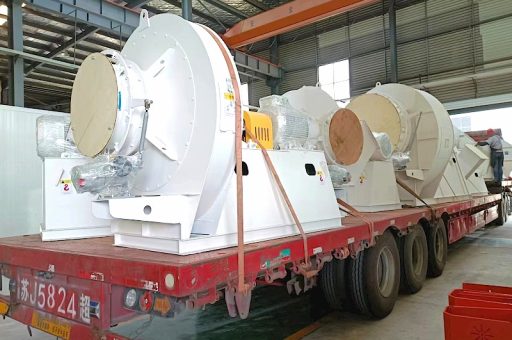
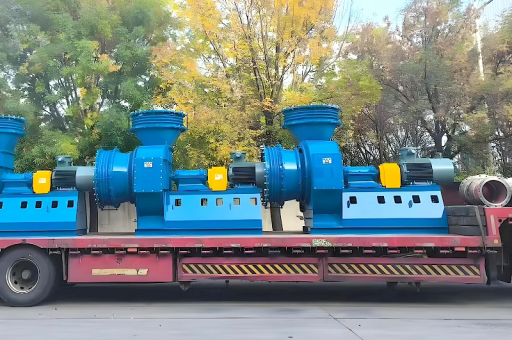
In the world of industrial ventilation, material handling, and HVAC systems, the 55kW backward-curved centrifugal fan stands as a benchmark of high-performance air movement technology. This fan type is engineered to deliver high static pressure, superior energy efficiency, and reliable operation under demanding conditions. With a power rating of 55 kilowatts, it serves as a workhorse in large-scale facilities where consistent airflow and pressure are critical.
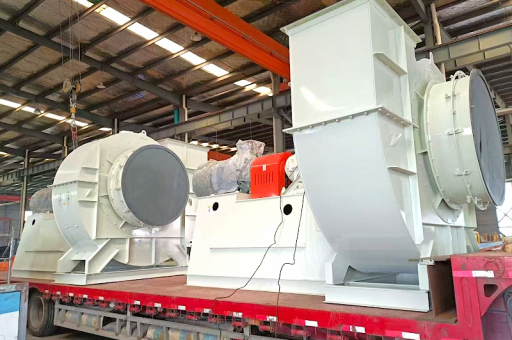
Unlike forward-curved or radial-blade fans, the backward-curved centrifugal fan features blades that curve away from the direction of rotation. This design reduces turbulence, minimizes air resistance, and achieves higher efficiency—typically between 75% and 85% in optimal conditions. According to industry benchmarks and cross-referenced data from engineering sources like fan manufacturers and HVAC technical guides (e.g., Greenheck, Twin City Fan, and Howden), this fan type is often preferred for applications requiring clean, filtered air handling and stable performance over long operational cycles.
Why 55kW? This motor size is a common choice for mid-to-large industrial systems. It balances power consumption with airflow capacity, making it suitable for factories, power plants, and commercial buildings that need to move large volumes of air against moderate to high resistance.
Design Principles and Aerodynamic Characteristics
The backward-curved centrifugal fan owes its efficiency to its unique blade geometry. The blades are shaped to allow air to enter radially and exit with minimal shock losses. As the impeller rotates, air is accelerated outward, and the backward curvature reduces the velocity component in the direction of rotation, resulting in lower aerodynamic drag.
Key Structural Elements:
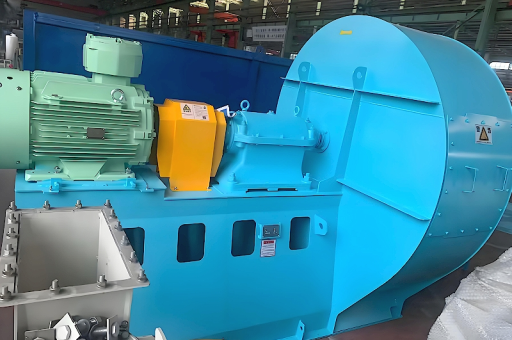
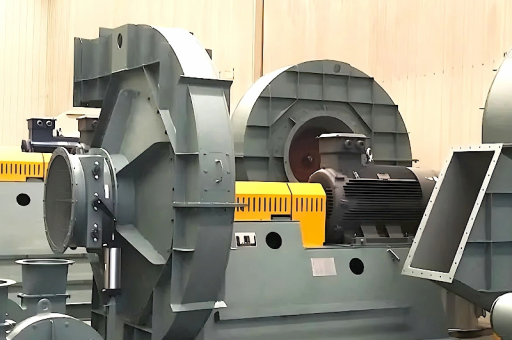
- Impeller: Typically made of steel or aluminum, with precision-cast or welded blades. The impeller diameter for a 55kW unit ranges from 800 mm to 1200 mm, depending on the required airflow and pressure.
- Housing (Volute): A spiral-shaped casing that converts kinetic energy into static pressure. The volute design is optimized to match the impeller's flow characteristics.
- Inlet Cone: Tapered entry to minimize turbulence and ensure smooth air entry.
- Motor and Drive System: A 55kW motor is often coupled via a direct-drive or belt-drive arrangement. Belt drives allow speed adjustment, while direct drives offer higher efficiency and lower maintenance.
Compared to forward-curved fans, backward-curved models generate less noise and operate at higher static pressures. A study by the Air Movement and Control Association (AMCA) confirms that backward-curved fans achieve peak efficiency at higher pressure coefficients, making them ideal for ducted systems with significant resistance.
Computational Fluid Dynamics (CFD) simulations used in modern fan design show that the backward curvature reduces recirculation zones and improves flow stability. This is critical for maintaining efficiency over a wide operating range.
Performance Metrics and Efficiency Analysis
A 55kW backward-curved centrifugal fan typically delivers:
- Airflow: 15,000 to 50,000 CFM (cubic feet per minute), depending on the specific design and operating conditions.
- Static Pressure: 4 to 12 inches of water gauge (in WG), which translates to approximately 1 kPa to 3 kPa.
- Rotational Speed: 800 to 1800 RPM, adjustable with variable frequency drives (VFDs).
- Efficiency: Up to 85% at the best efficiency point (BEP).
Efficiency is a critical metric because operating costs over a fan's lifespan often exceed its initial purchase price. According to energy efficiency guidelines from the U.S. Department of Energy and European Union directives (e.g., ErP Directive 2009/125/EC), fans must meet minimum efficiency thresholds. The 55kW backward-curved fan exceeds these standards due to its aerodynamic design and robust construction.
Comparison with other fan types:
| Fan Type | Max Efficiency | Noise Level | Pressure Capability | Application Suitability |
|---|---|---|---|---|
| Backward-Curved | 75-85% | Low-Medium | High | Clean air, high resistance |
| Forward-Curved | 55-65% | Low | Low-Medium | Low-pressure HVAC |
| Radial (Paddle) | 60-75% | High | High | Material handling, dirty air |
A practical example: A cement plant requiring 30,000 CFM at 8 in WG can run a 55kW backward-curved fan at 80% efficiency, consuming approximately 48 kW at full load. With a VFD, energy savings can reach 30% compared to constant-speed operation.
Key Applications Across Industries
The versatility of the 55kW backward-curved centrifugal fan ensures its presence in numerous industrial and commercial sectors. Here are the most common applications:
a) Industrial Ventilation and Exhaust Systems
Factories and processing plants use these fans to remove heat, fumes, and airborne contaminants. The fan's high static pressure allows it to overcome duct resistance and filtration systems. For example, in a chemical processing facility, a 55kW fan exhausts corrosive vapors through scrubbers and carbon filters.
b) Power Generation and Boiler Systems
In coal, gas, or biomass power plants, these fans are used for forced draft (supplying combustion air) and induced draft (removing flue gases). The backward-curved design handles high-temperature air with minimal wear. A 55kW induced draft fan can handle gases up to 300°C when equipped with heat-resistant materials.
c) Commercial HVAC and Building Air Handling
Large commercial buildings (airports, shopping malls, data centers) rely on backward-curved fans for air handling units (AHUs) and rooftop ventilation. The low noise profile and high efficiency reduce energy costs and improve occupant comfort. A typical 55kW AHU fan moves 40,000 CFM across a high-efficiency filter bank.
d) Material Conveying (Pneumatic Systems)
Though more common with radial fans, backward-curved fans can handle light-duty pneumatic conveying of dust, wood chips, or grain. The smooth airflow reduces product degradation.
e) Air Pollution Control Equipment
Fans are essential in baghouses, electrostatic precipitators, and scrubbers. The 55kW backward-curved fan provides consistent pressure to maintain airflow through high-resistance filter media.
Installation, Maintenance, and Operational Best Practices
To maximize the lifespan and performance of a 55kW backward-curved centrifugal fan, adhere to these guidelines:
Installation Considerations
- Foundation: Use a rigid, vibration-dampened base. Concrete inertia bases reduce resonance and noise transmission.
- Ductwork Alignment: Ensure straight inlet and outlet ducts for at least 3-5 duct diameters to minimize turbulence. Unstable inlet conditions can reduce efficiency by 10-15%.
- Electrical Connections: Confirm motor wiring matches local codes. Use a soft starter or VFD to limit inrush current (55kW motors draw over 100 amps at startup).
- Accessibility: Allow space for impeller removal and bearing replacement.
Maintenance Schedule
- Daily/Weekly: Check bearing temperatures, belt tension, and vibration levels. Use a handheld vibration meter to detect imbalance early.
- Monthly: Lubricate bearings per manufacturer specifications (grease or oil). Clean inlet screen and discharge louvers.
- Quarterly: Inspect blade integrity. Backward-curved blades can develop cracks due to fatigue, especially in dusty environments.
- Annually: Perform a full overhaul. Replace seals, check impeller balance, and recalibrate sensors.
Common Failures and Solutions
- Vibration: Often caused by material buildup on blades. Clean with compressed air or water (if motor is sealed).
- Overheating Motor: Verify voltage balance and load current. Ensure cooling fan is unobstructed.
- Flow Reduction: Check for clogged filters or damper misalignment. VFD may need recalibration.
Frequently Asked Questions (FAQ)
Q1: What is the difference between a backward-curved and a forward-curved fan?
A: Backward-curved fans have blades that curve opposite to rotation, which reduces turbulence and increases efficiency (up to 85%). Forward-curved fans curve in the direction of rotation, offering higher airflow at lower pressure but lower efficiency (55-65%). For 55kW applications requiring high static pressure, backward-curved is the preferred choice.
Q2: Can the 55kW backward-curved fan be used for high-temperature applications?
A: Yes, but modifications are necessary. Standard construction uses carbon steel, which is suitable up to 150°C. For temperatures above 300°C, use stainless steel impellers and high-temperature bearings with external cooling. Always check the manufacturer's temperature rating.
Q3: How do I calculate the payback period for a high-efficiency 55kW fan?
A: Compare the efficiency with a standard fan. Assuming 20% higher efficiency saves 11 kW. At $0.10/kWh and 8000 annual operating hours, savings = 11 × 0.10 × 8000 = $8,800/year. If the premium fan costs $5,000 more, payback is 6.8 months.
Q4: Is a belt-drive or direct-drive setup better for this fan size?
A: Direct-drive is slightly more efficient (2-5%) and requires less maintenance. However, belt-drive allows easier speed changes for varying airflow demands. For fixed-speed applications in clean environments, direct-drive is recommended. For variable-speed or dirty air, consider belt-drive.
Q5: What regulations apply to 55kW industrial fans?
A: In the US, fans must comply with AMCA 210 for performance testing and ASHRAE 90.1 for energy efficiency. In Europe, ErP Directive 2009/125/EC sets minimum efficiency levels. Check local building codes and environmental regulations for noise limits.
Q6: Can a VFD (Variable Frequency Drive) be used with a 55kW backward-curved fan?
A: Absolutely. VFDs reduce energy consumption by matching fan speed to demand. For example, reducing speed by 20% decreases power consumption by nearly 50% (affinity laws). However, ensure the motor is rated for inverter duty and consider harmonics filtering.
Conclusion and Future Outlook
The 55kW backward-curved centrifugal fan represents a mature yet evolving technology. Its design balances aerodynamic efficiency, mechanical robustness, and operational flexibility, making it indispensable in modern industrial and commercial systems. From reducing energy costs in power plants to ensuring clean air in factories, this fan type continues to prove its value.
Looking ahead, trends include:
- Smart integration: IoT-enabled sensors for predictive maintenance and real-time performance monitoring.
- Advanced materials: Composite blades and ceramic coatings for extended lifespan in corrosive environments.
- Hybrid designs: Combining backward-curved blades with aerodynamic diffusers to further increase static pressure without sacrificing efficiency.
For engineers and facility managers, selecting a 55kW backward-curved fan requires careful analysis of system resistance, airflow requirements, and total cost of ownership. By prioritizing efficiency and proper installation, organizations can achieve both economic and environmental sustainability.
To learn more about fan selection and performance curves, visit trusted resources like the Air Movement and Control Association (AMCA) or consult with a certified fan manufacturer like Greenheck or Howden.