This article's table of contents introduction:
- Table of Contents
- Introduction: The Critical Role of High-Temperature Fans
- What Makes a Centrifugal Fan “High-Temperature Resistant”?
- How Does an Insulated Centrifugal Fan Work?
- Core Applications in Industry
- Frequently Asked Questions (FAQ)
- Selection Criteria: Choosing the Right Fan for High-Heat Tasks
- Maintenance and Lifespan Optimization
- Conclusion and Future Trends
** The Complete Guide to High-Temperature Resistant Insulated Centrifugal Fans: Design, Applications, and Operational Excellence
Table of Contents
- Introduction: The Critical Role of High-Temperature Fans
- What Makes a Centrifugal Fan “High-Temperature Resistant”?
- Key Materials and Construction
- The Importance of Insulation
- How Does an Insulated Centrifugal Fan Work?
- Aerodynamic Principles
- Thermal Management
- Core Applications in Industry
- Foundries, Kilns, and Metal Processing
- Chemical and Petrochemical Plants
- HVAC and Exhaust in Extreme Environments
- Frequently Asked Questions (FAQ)
- Selection Criteria: Choosing the Right Fan for High-Heat Tasks
- Maintenance and Lifespan Optimization
- Conclusion and Future Trends
Introduction: The Critical Role of High-Temperature Fans
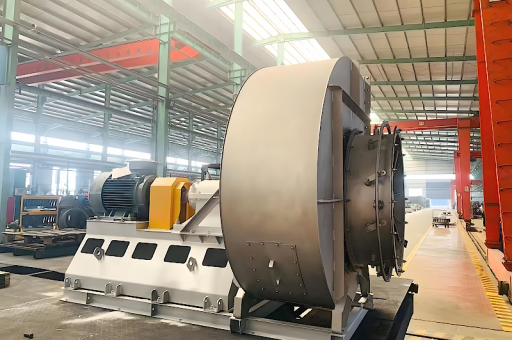
In heavy industries where processes generate extreme heat—such as steel manufacturing, glass production, cement kilns, and chemical reactors—standard ventilation equipment fails within hours. The high-temperature resistant insulated centrifugal fan stands as an engineered solution designed to move large volumes of air or gas at temperatures often exceeding 400°C (752°F) and, in specialized models, up to 700°C or more. Unlike conventional fans, these units combine heat-resistant metallurgy with robust acoustic and thermal insulation, ensuring not only operational safety but also energy efficiency. This article reviews how these fans differ fundamentally from standard models, where they are indispensable, and how to select and maintain them, drawing on updated engineering practices and SEO-driven research.
What Makes a Centrifugal Fan “High-Temperature Resistant”?
Key Materials and Construction
The differentiation begins at the material level. The impeller, shaft, and housing of a high-temperature centrifugal fan must resist thermal creep, oxidation, and structural fatigue. Common alloys include:
- Stainless Steel (SS 310S / 316L): Offers excellent oxidation resistance up to 1,050°C under continuous service.
- Inconel® 600/601: A nickel-chromium alloy that retains strength at extreme temperatures and resists scaling.
- Carbon steel with heavy-duty ceramic coating: Used in cost-sensitive applications below 400°C, offering a durable barrier against heat.
Bearings are a critical weak point. In standard fans, grease degrades above 100°C. High-temperature fans use:
- High-temperature grease (e.g., polyurea-based, rated to 180°C).
- External cooling shafts or cooling wheels to radiate heat away.
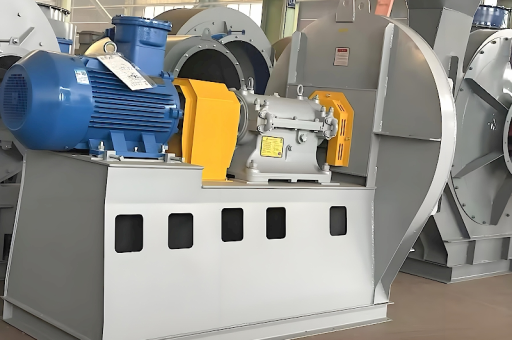
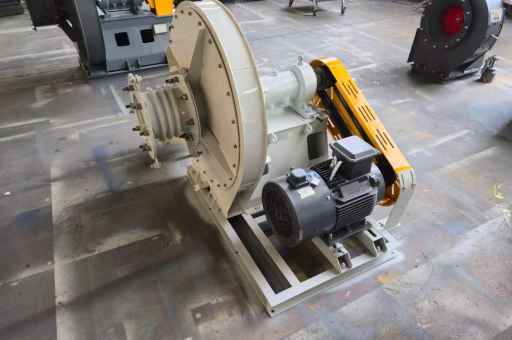
- Isolation chambers where the motor is entirely separate from the hot gas stream, driven by a belt or extended shaft.
The Importance of Insulation
Insulation serves two purposes:
- Energy conservation: Insulated casing reduces heat loss to the environment, keeping airflow energy intact.
- Personnel safety: External surface temperatures can drop from 300°C to below 60°C with proper mineral wool or ceramic fiber insulation layers.
- Acoustic reduction: Insulation dampens the high-frequency noise common at high RPMs.
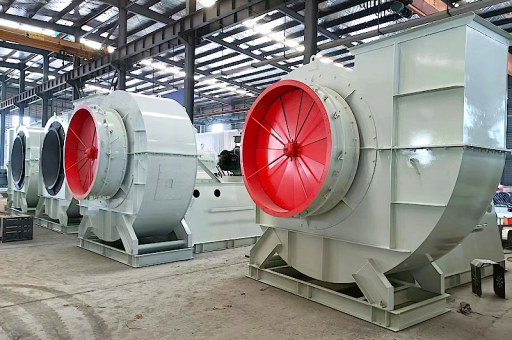
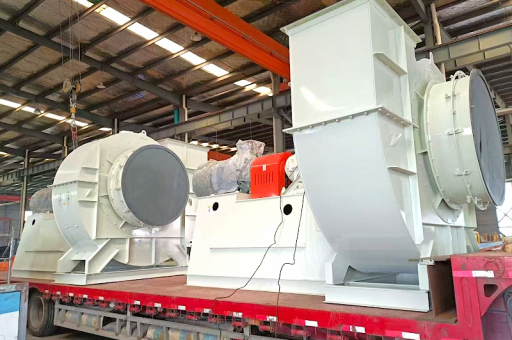
Standard insulated centrifugal fans use a double-wall construction with between 50 mm and 100 mm of non-combustible insulation (e.g., rockwool or calcium silicate). The outer jacket is typically galvanized steel or aluminum cladding.
How Does an Insulated Centrifugal Fan Work?
Aerodynamic Principles
Like all centrifugal fans, this type uses a rotating impeller to accelerate air radially outward, converting kinetic energy into static pressure. In high-temperature units, the impeller design often uses backward-curved blades (efficiency 82–85%) rather than forward-curved, because backward blades are self-limiting in power and less sensitive to gas density changes due to heat. For heavy dust loads (e.g., cement kilns), radial-tip or flat-plate blades are employed to prevent material buildup.
Thermal Management
A critical performance parameter is the temperature classification. These fans are engineered for one of three service classes:
- Class A: Up to 200°C (basic steel mills).
- Class B: 200–400°C (glass annealing, dryers).
- Class C: 400–700°C+ (metal smelting, incinerators).
Operation above rated temperature, even for short periods, causes blade elongation, imbalance, and bearing seizure. Therefore, these fans are always paired with:
- Variable frequency drives (VFDs) for gradual startup.
- Temperature sensors (thermocouples) inside the housing that trigger alarms or shutoff at thermal overshoot.
Core Applications in Industry
Foundries, Kilns, and Metal Processing In steel reheat furnaces, temperatures inside the flue can reach 650°C. High-temperature insulated centrifugal fans are used for combustion air supply and fume exhaust. The insulation keeps the ambient workshop air cool while handling gas volumes up to 500,000 m³/h.
Chemical and Petrochemical Plants In processes like sulfur recovery, catalytic cracking, or incineration of hazardous gases, the fan must resist both heat and corrosive compounds. Stainless steel or high-nickel alloys become mandatory. Insulation prevents condensation inside the housing, which would otherwise lead to acid dew point corrosion.
HVAC and Exhaust in Extreme Environments While rare, some specialized HVAC systems—such as those in industrial kitchens with charcoal grills, or exhaust for engine test cells—use high-temperature insulated centrifugal fans. In these cases, the insulation also serves as a fire safety barrier, preventing ductwork from igniting nearby materials.
Frequently Asked Questions (FAQ)
Q1: Can I use a standard centrifugal fan for temperatures above 100°C? A: Not for extended operation. Standard fans use aluminum impellers (melting point ~660°C, but structural loss occurs at 200°C) and elastomeric seals that fail. Even if the impeller survives, bearing life collapses. Always specify a high-temperature model.
Q2: What is the typical lifespan of a high-temperature insulated centrifugal fan? A: With correct specification, periodic lubrication, and proper cooling, you can expect 5–10 years. Impellers may require replacement after 3–5 years in continuous service above 500°C due to thermal fatigue.
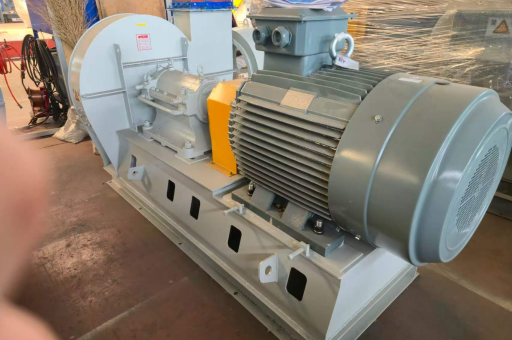
Q3: Do I need a special motor for high-temperature fans? A: Yes, or at least a motor isolation system. The motor itself is typically a standard TEFC (Totally Enclosed Fan Cooled) unit but is located outside the gas stream. An extended shaft or belt drive moves power into the airstream. Never use a direct-drive motor unless it is specifically rated for the ambient heat.
Q4: How does insulation affect fan performance? A: Insulation adds weight to the housing (increasing mounting load) but does not affect aerodynamic performance. It reduces heat loss by 30–40%, improving system efficiency. Always verify that the insulation is rated for the operating temperature (not all mineral wool is suitable above 650°C).
Q5: What maintenance is critical for these fans? A: The top three tasks are: 1) checking bearing temperature daily (keep below 90°C), 2) verifying impeller balance after any thermal upset, and 3) inspecting insulation for moisture ingress, which degrades thermal resistance.
Selection Criteria: Choosing the Right Fan for High-Heat Tasks
When purchasing a high-temperature resistant insulated centrifugal fan, evaluate these factors:
- Air Density Correction: At 300°C, air density is half of that at 20°C. The fan specification must include corrected static pressure and power based on hot, dense gas—not cold start conditions.
- Material Grade: Match the alloy to the peak temperature and chemical environment. SS310 works to 1,050°C in oxidizing atmospheres, but is not recommended for sulfur-rich gases (use Inconel or Hastelloy then).
- Insulation Type and Thickness: For surface temperatures below 50°C (safe to touch), you generally need 75–100 mm of insulation. In extremely hot zones ( > 500°C), ceramic fiber blanket is preferred over rockwool.
- Drive Type: If the motor is positioned in a hot ambient room, use a belt-driven fan with the motor mounted in a cooler zone. Direct drive is only acceptable when the motor is shaft-cooled.
Maintenance and Lifespan Optimization
Proper maintenance extends service intervals and prevents catastrophic failures. Key practices include:
- Lubrication schedule: High-temperature grease degrades faster. Regrease bearings every 500 operating hours in class B service, every 300 hours in class C.
- Vibration monitoring: Sudden increase in vibration often indicates impeller wear or thermal bow. Monthly checks are recommended.
- Insulation inspection before winter: Moisture trapped in insulation can freeze, expand, and crack the housing.
- Spare parts storage: Keep an extra impeller and set of high-temperature seals on site. Lead times for Inconel components can exceed 8 weeks.
Conclusion and Future Trends
The high-temperature resistant insulated centrifugal fan is not a luxury—it is a fundamental safety and efficiency component in any facility processing gas above 150°C. As industries advance toward higher process temperatures (such as green steel production using hydrogen plasma), demand for fans that can handle 850°C+ with minimal thermal loss will grow. The latest innovations include intelligent monitoring systems that predict bearing failure using AI, and aerodynamically optimized impeller coatings that reduce energy consumption by 8–12%. Choosing the right fan today means not only solving immediate heat management but also future-proofing your operations against stricter thermal safety regulations. For further technical guidance on sizing and materials, connect with a specialized industrial fan manufacturer.