This article's table of contents introduction:
- Table of Contents
- Introduction: What Is a High-Pressure Centrifugal Induced Draft Fan Blower?
- Core Technical Specifications: Decoding 11000Pa and 1700m³/h
- How Does This Fan Blower Work? A Step-by-Step Airflow Mechanism
- Key Applications: Where Is the 11000Pa 1700m³/h Fan Blower Used?
- Comparison with Standard Fans: Why Choose High-Pressure Induced Draft?
- Installation and Maintenance Best Practices
- Frequently Asked Questions (FAQ)
- Conclusion: Optimizing Industrial Airflow with Precision Engineering
Article Title:
Understanding the 11000Pa 1700m³/h High-Pressure Centrifugal Induced Draft Fan Blower: Performance, Applications, and Technical Insights
Table of Contents
- Introduction: What Is a High-Pressure Centrifugal Induced Draft Fan Blower?
- Core Technical Specifications: Decoding 11000Pa and 1700m³/h
- How Does This Fan Blower Work? A Step-by-Step Airflow Mechanism
- Key Applications: Where Is the 11000Pa 1700m³/h Fan Blower Used?
- Comparison with Standard Fans: Why Choose High-Pressure Induced Draft?
- Installation and Maintenance Best Practices
- Frequently Asked Questions (FAQ)
- Conclusion: Optimizing Industrial Airflow with Precision Engineering
Introduction: What Is a High-Pressure Centrifugal Induced Draft Fan Blower?
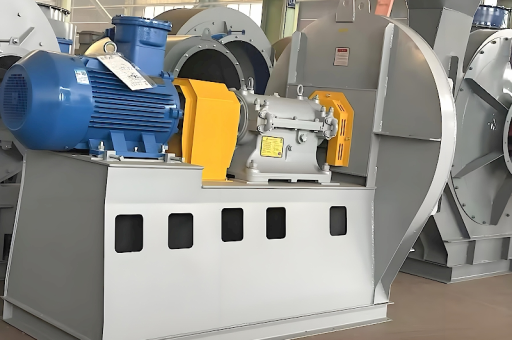
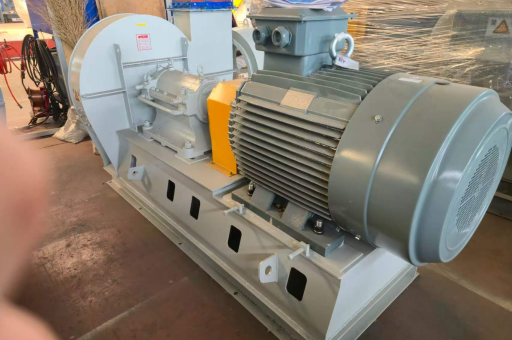
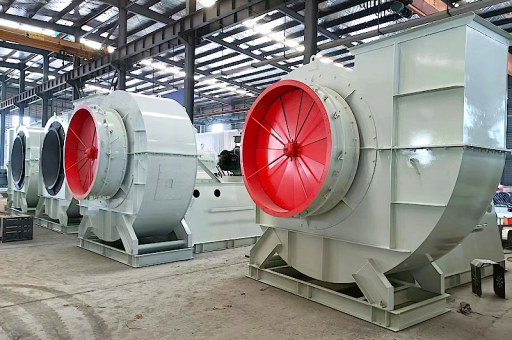
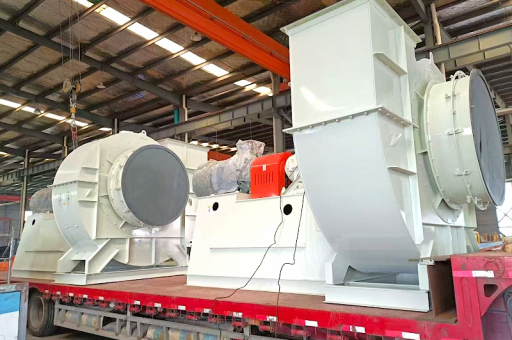
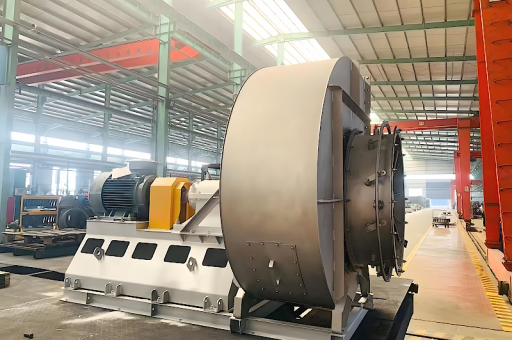
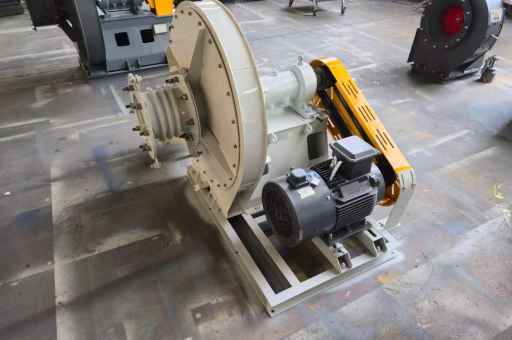
In the world of industrial ventilation and pneumatic conveying, the 11000Pa 1700m³/h high-pressure centrifugal induced draft fan blower stands out as a powerhouse. This equipment is designed to move large volumes of air or gas against high static resistance, making it indispensable for demanding environments such as power plants, cement factories, chemical processing units, and dust collection systems.
The term “induced draft” (ID) refers to the fan’s role in pulling air or flue gas out of a system—often through a boiler, furnace, or duct network—creating negative pressure that ensures efficient exhaust. The combination of 11000 Pascal (Pa) of static pressure and 1700 cubic meters per hour (m³/h) of airflow defines a fan capable of overcoming significant resistance while maintaining a respectable throughput.
Unlike standard axial fans, which are suitable for low-pressure, high-volume tasks, this centrifugal fan uses a rotating impeller to accelerate air radially, converting kinetic energy into pressure. This makes it ideal for applications where ductwork, filters, or long piping create substantial backpressure.
Core Technical Specifications: Decoding 11000Pa and 1700m³/h
To fully appreciate this fan blower, it is essential to understand what the numbers mean in practical terms.
-
Static Pressure: 11000 Pa
Pascal (Pa) is the SI unit of pressure. 11000 Pa is equivalent to approximately 1.6 psi (pounds per square inch) or 44 inches of water gauge. This is a high-pressure rating—typical industrial centrifugal fans range from 2000 to 8000 Pa. A 11000 Pa rating means the fan can overcome extremely dense filter media, long duct runs with multiple bends, or tall vertical exhaust stacks. -
Airflow Capacity: 1700 m³/h
This translates to roughly 1000 CFM (cubic feet per minute). While not extremely high in volume (some fans exceed 100,000 m³/h), 1700 m³/h is a moderate-to-high flow rate for a high-pressure fan. This balance is crucial: the fan moves enough air for localized exhaust or pneumatic conveying while maintaining the pressure needed to push through restrictions. -
Power and Speed
Typical motors for this specification range from 5.5 kW to 7.5 kW, with rotational speeds between 2800 and 3400 RPM (depending on impeller diameter and blade design). Direct-drive configurations are common to minimize maintenance, though belt-driven versions allow speed adjustments. -
Material of Construction
For corrosive or high-temperature environments (e.g., flue gas up to 250°C), the impeller and housing are often made from Q235 carbon steel with anti-corrosion coating or stainless steel 304/316. The choice depends on the gas composition and temperature.
How Does This Fan Blower Work? A Step-by-Step Airflow Mechanism
Understanding the working principle helps operators diagnose issues and optimize performance.
- Gas Entry: The gas or air enters the fan through the axial inlet, often equipped with an inlet box or damper for flow control.
- Impingement: The rotating impeller—with forward-curved, backward-curved, or radial blades—catches the gas. For high-pressure applications, backward-curved blades are preferred because they handle high static pressure without overloading the motor.
- Centrifugal Acceleration: The impeller throws the gas outward at high velocity. The kinetic energy increases significantly.
- Volute Collection: The spiral-shaped volute casing gradually collects the gas and converts velocity energy into static pressure.
- Discharge: The pressurized gas exits through the discharge outlet, often directed toward a chimney, baghouse filter, or pneumatic conveyor.
Key Mechanical Features:
- Heavy-duty bearings designed for continuous operation (often 50,000+ hours).
- Shaft sealing to prevent gas leakage (lantern ring or mechanical seal options available).
- Vibration monitoring ports for predictive maintenance.
Key Applications: Where Is the 11000Pa 1700m³/h Fan Blower Used?
Due to its unique performance profile, this fan is not a general-purpose unit. It specializes in:
- Industrial Boiler Induced Draft: Pulling combustion gases from coal, biomass, or oil boilers through economizers and filters. The 11000 Pa pressure overcomes resistance from heat exchangers and dust collectors.
- Cement Plant Pneumatic Conveying: Transporting bulk powdery materials (cement, fly ash, raw meal) through pipelines. The 1700 m³/h flow at high pressure ensures solid-to-air ratios remain stable.
- Chemical Reactor Venting: Removing hazardous or corrosive vapors from reactors, especially when scrubbers or condensers add system resistance.
- Baghouse Dust Collection: In high-density filter systems where fine particulate loading requires strong suction to maintain pressure drop across filter bags.
- Fume and Exhaust Systems for Welding or Plating: The fan draws contaminated air through long duct systems while maintaining workplace negative pressure.
Real-World Example:
A coal-fired power plant ID fan retrofit: the original fan delivered only 8000 Pa at 2000 m³/h, causing insufficient draft during peak load. Upgrading to a 11000 Pa / 1700 m³/h centrifugal blower reduced boiler backpressure by 15% and improved combustion efficiency.
Comparison with Standard Fans: Why Choose High-Pressure Induced Draft?
It is helpful to compare this fan against typical alternatives:
| Parameter | Standard Centrifugal Fan (e.g., 3000 Pa) | 11000Pa 1700m³/h High-Pressure Fan |
|---|---|---|
| Pressure | Low to medium (2000–6000 Pa) | Very high (11000 Pa) |
| Flow | Often higher (5000–15000 m³/h) | Moderate (1700 m³/h) |
| Blade Design | Forward-curved (high flow, low pressure) | Backward-curved or radial (high pressure) |
| Motor & Construction | Lighter, lower torque | Reinforced shaft, heavier frame |
| Ideal Use | General HVAC, light dust collection | High-resistance ducts, baghouses, boilers |
The trade-off: You sacrifice peak airflow for pressure capability. If your system requires moving large volumes through short, open ducts, a lower-pressure fan is more economical. However, for pushing air through dense filtration stacks or long pneumatic pipes, the 11000 Pa unit is essential.
Installation and Maintenance Best Practices
To ensure longevity and peak efficiency:
- Foundation and Alignment: Mount on a rigid concrete base with vibration isolators. Misalignment between motor and fan shaft is the #1 cause of premature bearing failure.
- Inlet and Outlet Ducting: Keep inlet free of obstructions within 1 meter. Use flexible connectors to dampen vibration transmission.
- Control Strategy: Use a variable frequency drive (VFD) to modulate speed. Running at full speed continuously wears components faster.
- Regular Inspection:
- Check impeller for dust build-up or erosion every 3 months.
- Monitor bearing temperature (max 85°C).
- Lubricate bearings per manufacturer schedule—over-greasing is as harmful as under-greasing.
- Performance Verification: Measure static pressure and airflow annually using a pitot tube and manometer. A 10% drop in pressure indicates blockage or impeller damage.
Common Mistake to Avoid:
Operators sometimes undersize the motor. A fan requiring 7.5 kW should never be paired with a 5.5 kW motor; the motor will overheat and trip, or stall when system resistance increases.
Frequently Asked Questions (FAQ)
Q1: Can the 11000Pa 1700m³/h fan be used for fresh air supply?
A: Technically yes, but it is inefficient. A low-pressure supply fan would be cheaper and quieter. This fan is engineered for induced draft (exhaust), not forced draft (supply).
Q2: What is the maximum temperature this fan can handle?
A: With standard steel construction: up to 250°C (482°F). With stainless steel and high-temperature seals: up to 400°C (752°F). Always confirm with the manufacturer if you exceed 200°C.
Q3: How loud is this fan during operation?
A: Expect around 80–92 dB(A) at 1 meter, depending on RPM and housing design. A silencer on the inlet or outlet is recommended for indoor installations.
Q4: Can I use this fan for suctioning wood chips or light materials?
A: No—this is a high-pressure gas blower, not a materials-handling fan. Wood chips would damage the impeller. Use a dedicated fan with large-inlet material-handling design.
Q5: What is the expected lifespan?
A: With proper maintenance (regular bearing lubrication, impeller balancing, and vibration monitoring), the fan should operate reliably for 10–15 years in moderate industrial environments.
Q6: How do I calculate the required airflow for my system?
A: Use the formula: Airflow (m³/h) = Duct cross-sectional area (m²) × Air velocity (m/s) × 3600. For pneumatic conveying, consult a systems engineer to account for material loading.
Conclusion: Optimizing Industrial Airflow with Precision Engineering
The 11000Pa 1700m³/h high-pressure centrifugal induced draft fan blower is a specialized tool that solves real engineering challenges. Its ability to generate high static pressure while maintaining a useful airflow makes it ideal for boiler flue gas extraction, baghouse dust collection, and abrasive pneumatic conveying. When selecting such a fan, always match the pressure and flow requirements precisely to your system resistance curve—oversizing wastes energy, while undersizing leads to poor performance and overheating.
Whether you are replacing an outdated fan or designing a new system, understanding the physics behind the numbers (Pascals and cubic meters per hour) empowers you to make better decisions. Partner with reputable manufacturers who provide detailed performance curves and support for VFD integration.
Key Takeaway:
The combination of 11000 Pa static pressure and 1700 m³/h airflow represents a niche but critical performance zone. It is not the highest flow fan, nor the highest pressure fan—but it balances both attributes to deliver reliable, high-resistance exhaust in harsh industrial environments. Always verify operating conditions—temperature, gas composition, and duty cycle—before final selection.