This article's table of contents introduction:
- Article Content
- Introduction: The Critical Role of the ID Fan in Industrial Systems
- Technical Specifications: Understanding the 37KW, 304 SS, and Dual-Stress Design
- Engineering Design: How It Handles Extreme Heat and Corrosion
- Application Scenarios: Where This Fan is Indispensable
- Installation & Maintenance: Ensuring Longevity and Efficiency
- Q&A: Common Technical Challenges and Solutions
- Conclusion: Why This Fan is an Industry Standard for Reliability
Optimizing Industrial Combustion: The 37KW 304 Stainless Steel High-Temperature, High-Pressure Induced Draft Fan
Article Content
Table of Contents / Directory Guide
- Introduction: The Critical Role of the ID Fan in Industrial Systems
- Technical Specifications: Understanding the 37KW, 304 SS, and Dual-Stress Design
- Power and Performance (37KW)
- Material Science (304 Stainless Steel)
- Operating Parameters (Temperature & Pressure)
- Engineering Design: How It Handles Extreme Heat and Corrosion
- Application Scenarios: Where This Fan is Indispensable
- Installation & Maintenance: Ensuring Longevity and Efficiency
- Q&A: Common Technical Challenges and Solutions
- Conclusion: Why This Fan is an Industry Standard for Reliability
Introduction: The Critical Role of the ID Fan in Industrial Systems
In modern industrial combustion and exhaust systems, the Induced Draft (ID) Fan is the unsung hero. It is responsible for creating negative pressure inside boilers, furnaces, or kilns, ensuring that flue gases are effectively extracted and exhausted to the atmosphere. When dealing with processes involving extreme heat, corrosive gases, and stringent safety standards, the specification of the fan becomes a matter of operational stability.
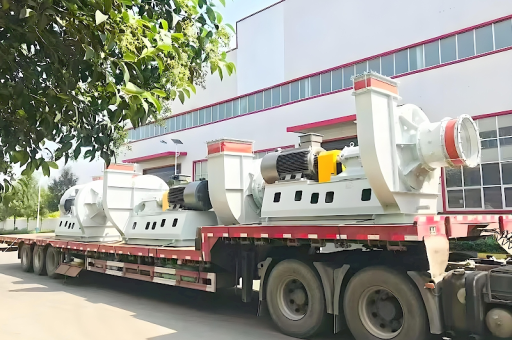
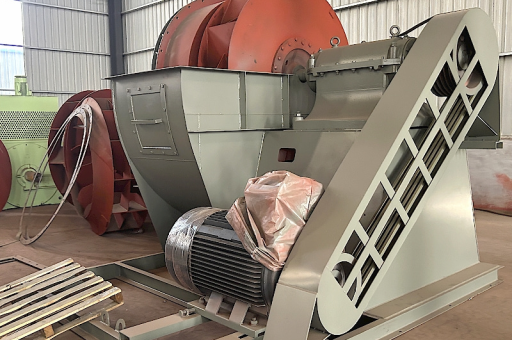
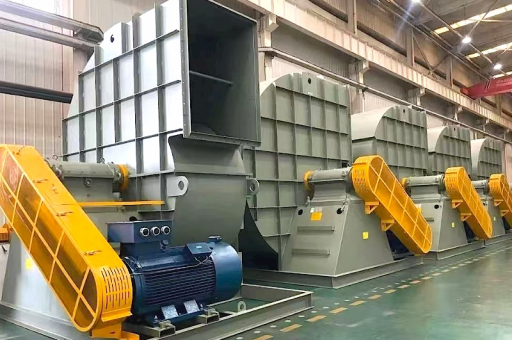
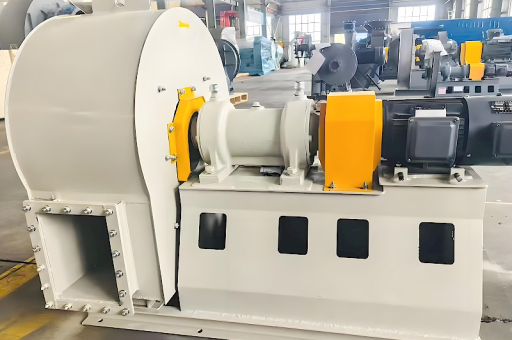
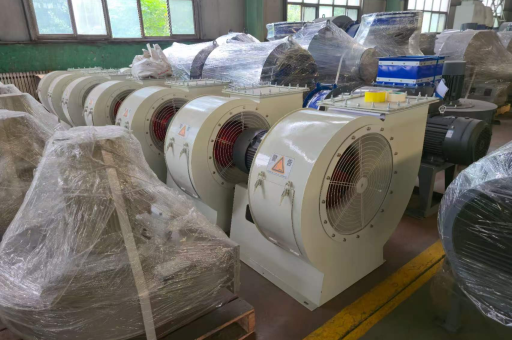
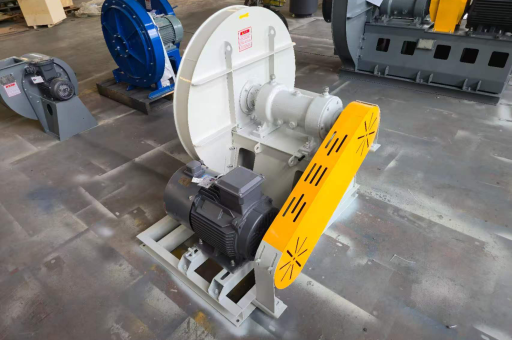
The 37KW 304 Stainless Steel High-Temperature, High-Pressure Induced Draft Fan represents a specialized solution designed for these harsh environments. Unlike standard carbon steel fans that would quickly succumb to thermal fatigue and rust, this series of fans combines robust motor power with corrosion-resistant metallurgy. It is engineered for applications where the air or gas stream is not just hot (exceeding 400°C) but also carries erosive particles or acidic moisture.
From a search engine optimization (SEO) perspective, understanding this product means decoding three key phrases: 37KW (power class), 304 Stainless Steel (material), and High-Temp/High-Pressure (operating envelope). For industrial buyers, this is not a commodity item; it is a critical asset that directly impacts energy efficiency and downtime prevention.
Technical Specifications: Understanding the 37KW, 304 SS, and Dual-Stress Design
Power and Performance (37KW) The 37-kilowatt (approximately 50 HP) motor rating places this fan in the medium-to-heavy-duty range. This power output is necessary to overcome the high static pressure (typically > 6000 Pa) required to pull gas through a complex duct system, scrubbers, and heat exchangers. At this power level, the fan can move a substantial volume of air (often between 30,000 and 60,000 m³/h, depending on the impeller design) while maintaining consistent draft stability.
Material Science: Why 304 Stainless Steel? 304 stainless steel is an austenitic chromium-nickel alloy. Its primary advantage in this application is its resistance to oxidation at high temperatures and its ability to withstand the chemical attack from sulfur compounds (SOx) and moisture found in exhaust gases. While not as heat-resistant as 310S, 304 SS is the cost-effective choice for continuous operation at temperatures up to 650°C (1202°F) for the housing and impeller, provided the design includes adequate cooling fins. For the fan manufacturer, using 304 SS eliminates the need for expensive protective paint or refractory lining, reducing total cost of ownership.
Operating Parameters: High Temperature & High Pressure
- High Temperature: The fan must withstand radiative and convective heat transfer. The key design feature is the shaft cooling system (typically an isolation disc or heat slinger) that prevents heat from migrating to the bearings.
- High Pressure: The housing is reinforced to handle distortion under negative pressure (sucking force) and positive pressure (if installed on the discharge side). The casing wall thickness is typically 6mm - 10mm for a 37KW unit.
Engineering Design: How It Handles Extreme Heat and Corrosion
The structural integrity of this fan relies on several design principles:
- Backward-Curved Impeller: For high-pressure applications, a backward-inclined or backward-curved airfoil blade is standard. These blades are self-limiting in power consumption (non-overloading) and are more efficient at moving gas against high resistance.
- Thermal Expansion Management: The shaft and impeller hub must accommodate thermal growth. A radial clearance between the impeller and the inlet cone is pre-calculated to ensure no metal-to-metal contact when the fan is at operating temperature.
- Shaft Seal and Isolation: A high-temperature ID fan must prevent hot gas from reaching the motor or external bearings. This is achieved through a cooling air injection system or a dynamic shaft seal that purges room-temperature air into the space between the fan casing and the bearing housing.
- Weld Integrity: All welding on the 304 SS impeller is performed using low-carbon filler rods (ER308L) to prevent intergranular corrosion (weld decay). Post-weld passivation is mandatory to restore the chromium oxide layer.
Application Scenarios: Where This Fan is Indispensable
This specific configuration—37KW, 304 SS, high-temperature, high-pressure—is most commonly found in:
- Biomass & Solid Fuel Boilers: Where flue gases contain high moisture and alkaline ash that is chemically aggressive to carbon steel.
- Chemical Incinerators: For burning hazardous waste at temperatures exceeding 900°C, where the fan is located downstream of a quench cooler.
- Glass Furnace Exhaust: Where the residual heat and corrosive alkali fumes require a durable stainless steel wheel.
- Cement Rotary Kilns (Secondary Air): For pulling draft from the preheater tower.
- Waste-to-Energy Plants: Where the gas stream is laden with corrosive chlorides.
In these environments, a standard steel fan would fail within months. The 37KW 304 SS variant offers a lifespan of 5-10 years with proper maintenance.
Installation & Maintenance: Ensuring Longevity and Efficiency
Installation Best Practices:
- Foundation: Must be rigid and level to avoid vibration transmission. Use inertia base plates where necessary.
- Ductwork Connection: Use flexible connectors (expansion joints) to isolate duct weight from the fan housing.
- Inlet Box: Ensure the inlet duct provides a uniform airflow pattern to prevent impeller stall and vortex pockets.
Maintenance Checklist:
- Vibration Monitoring: High temperature accelerates bearing wear. Install accelerometers on bearing housings. Set alarm at 7.0 mm/s RMS.
- Lubrication Schedule: Regreasings of bearings (typically at 2000-hour intervals) with high-temperature grease (e.g., Shell Alvania R2).
- Blade Inspection: Annually inspect the leading edge of the impeller for erosion or stress corrosion cracking (SCC), especially in chemical plants.
- Tightness: Check clearances between the impeller and housing to ensure the pressure holding capacity is not lost.
Q&A: Common Technical Challenges and Solutions
Q: My 37KW 304 SS ID fan is vibrating heavily after 6 months. The motor current is normal. What is wrong? A: This is a classic symptom of solid particle erosion or material buildup (uneven scale) on the impeller blades. Even a small deposit of fly ash on trailing edges can create an imbalance. Solution: Acid wash the impeller or manually clean it if the scale is carbon-based. If the vibration is periodic (1x RPM), it is likely an imbalance; if 2x RPM, it could be misalignment. Check your damper setting; running the fan in the "surge zone" for long periods can also cause instability.
Q: Can I use a standard 304 SS fan for continuous operation at 750°C? A: No. Type 304 SS begins to lose structural strength above 500°C, and prolonged exposure over 650°C can cause sensitization and metallurgical failure. For 750°C continuous, you should specify a 310S or Inconel impeller material. The 304 variant is suitable for peak spikes but not steady operation at that temperature.
Q: The fan casing is leaking hot gas at the shaft seal. What is the fix? A: The labyrinth seal or carbon ring seal is worn, or the purge air pressure is insufficient. First, increase the purge air volume. If that fails, the seal needs replacement. Check for shaft deflection; if the shaft is bent (due to thermal warping), the seal will continue to leak regardless of maintenance.
Q: Is a 37KW motor sufficient if my system resistance fluctuates? A: You should size the motor for the highest expected pressure drop (worst-case scenario). The backward-curved impeller characteristics prevent the motor from overloading if the system resistance drops suddenly (e.g., a bypass damper opens). However, you must verify the "Max SP" (Static Pressure) curve. if the fan is rated for 6500 Pa, but your system hits 7500 Pa due to a fouled heat exchanger, the 37KW motor may stall or overheat. Use a variable frequency drive (VFD) for safety.
Conclusion: Why This Fan is an Industry Standard for Reliability
The 37KW 304 Stainless Steel High-Temperature, High-Pressure Induced Draft Fan is not an off-the-shelf component; it is an engineered solution for the most demanding exhaust applications. Its success lies in the balance between material science (304 SS), mechanical design (heavy-duty housing and cooling), and power management (37KW).
For the industrial operator, this fan provides the necessary assurance that production will not be halted by a catastrophic failure of the draft system. Whether you are managing a biomass plant, a chemical incinerator, or a large boiler, choosing the correct ID fan specification is the difference between a profitable plant and one plagued by unscheduled maintenance.
When sourcing this fan, always request the performance curve for your specific operating density (air density at high temperature) and confirm the impeller moment of inertia to ensure your motor starter or VFD is correctly sized. This product remains the benchmark for durability in the high-stress realm of industrial air movement.