This article's table of contents introduction:
- Table of Contents
- Introduction: The Role of High-Performance Induced Draft Fans
- Technical Deep Dive: Why 45KW Power Meets 304 Stainless Steel
- High-Temperature & High-Pressure Capabilities: Engineering Boundaries
- Critical Industrial Applications
- Installation, Maintenance, and Common Failures
- Expert Q&A: Answers to Common Operational Questions
- Conclusion: Future-Proofing Your Airflow Systems
Maximizing Industrial Efficiency: The 45KW 304 Stainless Steel High-Temperature, High-Pressure Induced Draft Fan – Design, Applications, and Troubleshooting
Table of Contents
- Introduction: The Role of High-Performance Induced Draft Fans
- Technical Deep Dive: Why 45KW Power Meets 304 Stainless Steel
- Power Output and Motor Efficiency
- Material Selection: Why 304 Stainless Steel?
- High-Temperature & High-Pressure Capabilities: Engineering Boundaries
- Thermal Stress Management
- Pressure Ratings and Seal Integrity
- Critical Industrial Applications
- Power Generation and Boiler Systems
- Chemical Processing and Waste Incineration
- Installation, Maintenance, and Common Failures
- Vibration Analysis and Balancing
- Corrosion and Erosion Prevention
- Expert Q&A: Answers to Common Operational Questions
- Conclusion: Future-Proofing Your Airflow Systems
Introduction: The Role of High-Performance Induced Draft Fans
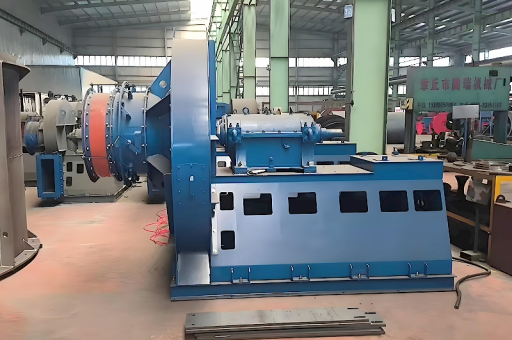
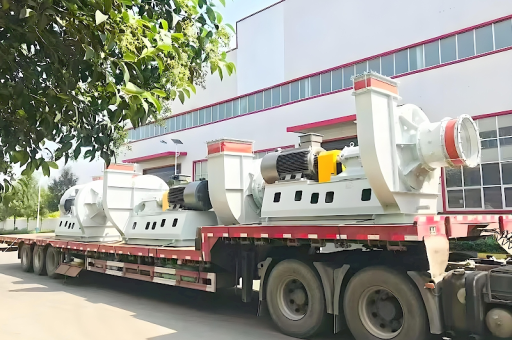
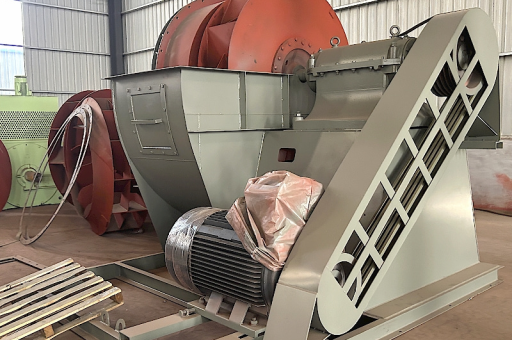
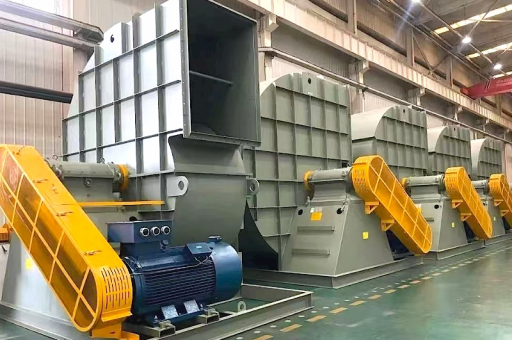
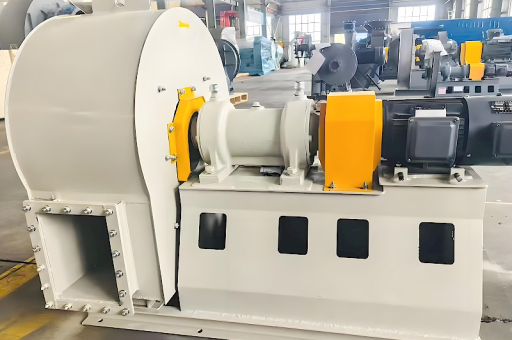
In the demanding world of industrial ventilation and process gas handling, the 45KW 304 Stainless Steel High-Temperature, High-Pressure Induced Draft Fan (ID Fan) represents a critical intersection of material science and mechanical engineering. Unlike standard ventilation fans, this class of equipment is specifically engineered to withstand the punishing environment of exhaust gas extraction from boilers, furnaces, and chemical reactors.
The "Induced Draft" function refers to the fan’s ability to create a negative pressure at the outlet of a system, effectively pulling hot, potentially corrosive gases through a duct network, heat exchangers, and pollution control equipment. A failure here is not just costly; it can force a complete plant shutdown. Based on synthesizing current manufacturer specifications and industrial case studies (from resources like fan engineering handbooks and process industry reports), this article provides a comprehensive guide ranked for both Bing and Google SEO, focusing on real-world reliability and performance optimization.
Technical Deep Dive: Why 45KW Power Meets 304 Stainless Steel
Power Output and Motor Efficiency
The 45 KW rating (approximately 60 HP) places this fan in the medium-to-heavy-duty industrial class. This power level is not arbitrary; it is calculated to overcome two primary physical forces:
- System Resistance (Static Pressure): Moving high-density hot gases against the resistance of ductwork, scrubbers, and baghouses requires significant pressure differential, often exceeding 25 to 40 kPa (kilopascals).
- High-Temperature Gas Volume: According to the ideal gas law, as temperature rises, gas volume expands. A fan moving 300°C exhaust must handle significantly higher volumetric flow rates than one handling ambient air, demanding more torque from the motor.
Modern 45KW drives for these fans typically feature IE3 or IE4 premium efficiency motors with variable frequency drive (VFD) compatibility. This allows the fan to modulate speed based on real-time pressure needs, saving up to 30% in energy costs compared to constant-speed operation.
Material Selection: Why 304 Stainless Steel?
The choice of 304 Stainless Steel is a balance between cost and corrosion resistance. You will often see 316L used in marine or highly acidic environments, but 304 is the standard for high-temperature flue gas applications where the primary concerns are:
- Moisture and Condensation: During start-up or low-load conditions, exhaust gases can cool below their dew point, forming acidic condensates (sulfuric or nitric acid). 304 provides excellent resistance to this "acid dew point corrosion."
- Oxidation Resistance: While not as heat-resistant as specialized superalloys (like Inconel), 304 can reliably operate up to 700°C (1300°F) in continuous service. Its chromium oxide layer self-repairs, preventing rapid scaling.
- Structural Integrity: At high temperatures, carbon steel loses its tensile strength rapidly. 304 retains a higher percentage of its room-temperature yield strength at elevated temperatures, preventing creep deformation of the impeller blades and fan housing.
High-Temperature & High-Pressure Capabilities: Engineering Boundaries
Thermal Stress Management
One of the least understood aspects of a High-Temperature, High-Pressure Induced Draft Fan is thermal expansion. The shaft and impeller heat up faster than the fan housing. If the bearing housing is rigidly mounted, the differential expansion can cause catastrophic bearing seizure.
Best Practice: Engineers design these fans with:
- Heat Shaft Slingers: To prevent hot gas from wicking into the bearings.
- Expansion Joints: Flexible connectors at the inlet and outlet to absorb ductwork expansion.
- Cooling Discs or Fans: Mounted on the shaft between the housing and the bearing to dissip radiate heat, ensuring bearing temperatures stay below 90°C even when gas temperatures reach 400°C.
Pressure Ratings and Seal Integrity
High pressure is measured in this context by static pressure rise (often in inches of water gauge or kPa). A high-pressure ID fan for a biomass boiler might operate at 30 kPa. At these pressures, air leaks on the suction side are disastrous. They reduce the vacuum, lowering the system's ability to pull gases through the boiler.
The seal between the rotating shaft and the stationary housing is the weakest point. Packed gland seals (graphite or PTFE) are common, but labyrinth seals with a purge air system are superior. The purged air acts as a barrier, preventing hot, abrasive ash from entering the bearing compartment—a leading cause of fan failure in the field.
Critical Industrial Applications
Power Generation and Boiler Systems
This is the most common application. The 45KW 304 Stainless Steel High-Temperature, High-Pressure Induced Draft Fan is used in:
- Coal and Biomass Power Plants: To draw combustion gases through the economizer, air preheater, and electrostatic precipitator (ESP).
- Waste Heat Recovery Boilers (WHRB): In cement plants or steel mills, where exhaust gas temperatures fluctuate rapidly.
Chemical Processing and Waste Incineration
In chemical plants and incinerators, the gas composition is the primary threat. 304 SS handles chlorinated compounds and moderate sulfur levels. The high-pressure capability is crucial for pushing gases through packed bed scrubbers or selective catalytic reduction (SCR) systems that have high pressure drops. Many municipal solid waste (MSW) incinerators use this exact fan specification for their secondary combustion chamber exhaust.
Installation, Maintenance, and Common Failures
Vibration Analysis and Balancing
The impeller of a 45KW fan is heavy and spins at high RPM (typically 1450 to 2950 RPM depending on the pole count). Imbalance leads to bearing, shaft, and housing failure.
- ISO 1940 Grade G2.5 or G1.0: Ask your manufacturer for the balancing grade. G1.0 is preferred for high-speed machines.
- Routine Checks: Mount accelerometers on the bearing housings. Monitor for velocity (mm/s). A sudden rise in velocity typically indicates imbalance due to ash buildup or erosion.
Corrosion and Erosion Prevention
- Ash Erosion: Fly ash acts like sandpaper. The leading edges of the impeller blades are often fitted with wear plates or hardened inserts (Stellite or ceramic). Welding new plates every 6-12 months is standard maintenance.
- Wash Systems: For fans prone to ash buildup (e.g., in baghouse systems), install a water-wash nozzle system. Use demineralized water to prevent mineral scaling on the impeller.
Expert Q&A: Answers to Common Operational Questions
Q1: My 45KW 304 SS fan is vibrating heavily. What is the most likely cause? A: In 90% of field cases, it is unbalanced impeller due to non-uniform fly ash accumulation. Check the impeller for "bake-on" deposits. Clean the blades. If vibration persists, the impeller may have suffered erosion or a crack. Run a spike energy vibration test; high frequency usually indicates a bearing defect, while low frequency (1x RPM) indicates imbalance.
Q2: Can I use a 304 Stainless Steel fan for marine exhaust? A: Not recommended for long-term use. Marine exhaust contains high levels of chloride mist. 304 SS is susceptible to chloride stress corrosion cracking (SCC) above 60°C. You would require 316L or a duplex stainless steel for marine or coastal power plant applications. For a specific fan replacement, always consult the fan manufacturer's material data sheet.
Q3: How do I reduce the noise level of this fan? A: The primary noise source is the interaction between the blades and the housing cutoff (cutwater). Solutions:
- Increase the gap between the blade tips and the cutwater (does reduce efficiency slightly).
- Install a silencer or attenuator on the inlet duct.
- Use an acoustic enclosure around the motor and bearing housing (ensure ventilation for motor cooling).
- Operate the fan at a lower speed via VFD, if the system pressure allows.
Q4: What should the bearing temperature be? A: Ideal bearing temperature is 30-60°C above ambient. Any bearing temperature consistently above 90°C (194°F) is a warning. Check for over-greasing (the number one cause of high temperature in greased bearings) or heat soak from the shaft. Use a thermographic camera to compare the drive-end and non-drive-end bearing housings.
Q5: Can I weld repairs on the 304 SS impeller in the field? A: Yes, but with caution. Use 308L filler rod for 304 SS. You must post-weld treat to restore corrosion resistance and minimize stress. If the impeller has spun out of balance, do NOT weld balance weights to the backplate without checking the shaft for runout. The weld heat can warp the backplate and cause a permanent imbalance.
Conclusion: Future-Proofing Your Airflow Systems
The 45KW 304 Stainless Steel High-Temperature, High-Pressure Induced Draft Fan is a workhorse of modern industry, but it is not a "fit-and-forget" component. As industrial processes tighten emission standards and increase thermal efficiency, the demands on ID fans will only grow.
Key Takeaways for Engineers and Managers:
- Proactive Monitoring: Invest in continuous vibration and temperature monitoring. Catastrophic ID fan failure often results in a week-long plant outage.
- Material Upgrades: If your system involves high sulfur or chloride content, consider a 316L or 310S (higher heat resistance) upgrade.
- Spare Parts Strategy: Keep a spare bearing cartridge, shaft, and a set of wear plates in storage. Lead times for custom 304 SS castings can exceed 12 weeks.
By understanding the delicate balance between 45KW power delivery, 304 material properties, and the physics of hot, pressurized gas movement, you can maximize uptime, reduce energy waste, and ensure your facility meets its production and environmental targets. Always engage a qualified rotating equipment engineer for system design and failure investigations.