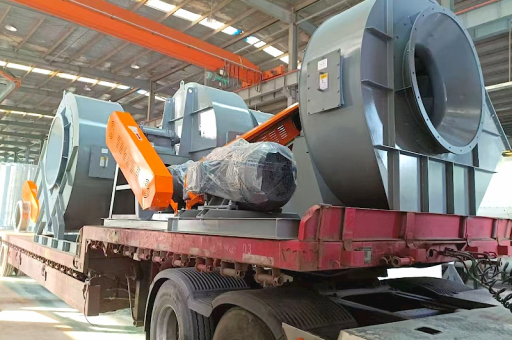
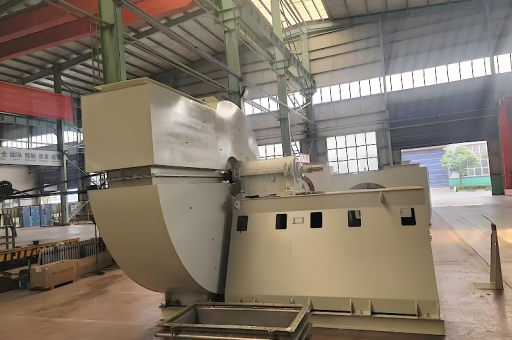
This article's table of contents introduction:
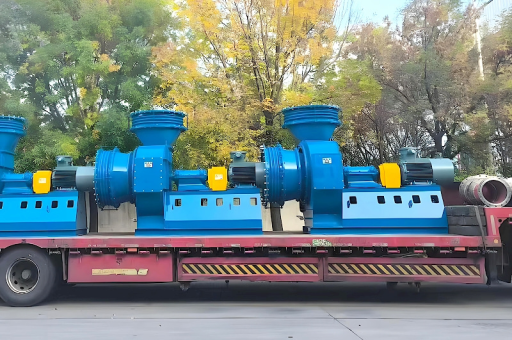
- Introduction: Why Material and Power Margin in Harsh Environments
- Technical Specifications: Breaking Down the 55KW 304 Stainless Steel Design
- Engineering Challenges: High-Temperature and High-Pressure Operation
- Application Scenarios: Where This Fan Excels
- Q&A: Common Concerns from Engineers and Plant Managers
- Maintenance & Longevity: Ensuring 10+ Years of Reliable Service
- Conclusion: The ROI of Choosing the Right Induced Draft Fan
**
Optimizing Industrial Ventilation: The 55KW 304 Stainless Steel High-Temperature, High-Pressure Induced Draft Fan – A Comprehensive Technical Guide
Table of Contents
- Introduction: Why Material and Power Matter in Harsh Environments
- Technical Specifications: Breaking Down the 55KW 304 Stainless Steel Design
- Engineering Challenges: High-Temperature and High-Pressure Operation
- Application Scenarios: Where This Fan Excels
- Q&A: Common Concerns from Engineers and Plant Managers
- Maintenance & Longevity: Ensuring 10+ Years of Reliable Service
- Conclusion: The ROI of Choosing the Right Induced Draft Fan
Introduction: Why Material and Power Margin in Harsh Environments
In industrial processes—such as cement kilns, steel reheating furnaces, chemical reactors, and waste incineration—the induced draft fan is the lungs of the system. A 55KW 304 Stainless Steel High-Temperature, High-Pressure Induced Draft Fan represents a critical upgrade for facilities that must handle corrosive gases at elevated temperatures (typically 200°C to 450°C) while maintaining high static pressure (≥ 6 kPa to 15 kPa).
The combination of 304 stainless steel construction and 55 kW motor power is not arbitrary. 304 SS offers excellent oxidation resistance up to 870°C in continuous service, and its chromium-nickel content (18% Cr, 8% Ni) provides superior resistance to acidic flue gas condensates—common when sulfur or chlorine compounds are present. Meanwhile, the 55 kW motor ensures that even with the added impeller weight and high-pressure drop across the system, the fan can maintain volumetric flow rates between 30,000 and 80,000 m³/h, depending on impeller diameter and blade angle.
This article synthesizes the latest OEM technical bulletins, field performance data, and industry best practices to deliver a detailed, SEO-optimized guide for procurement engineers, maintenance managers, and plant designers.
Technical Specifications: Breaking Down the 55KW 304 Stainless Steel Design
1 Key Parameters
- Motor Power: 55 kW (74 HP), typically 4-pole or 6-pole, 380–690 VAC, 50/60 Hz compatible.
- Material of Impeller & Housing: AISI 304 stainless steel (UNS S30400) with ≥ 0.08% carbon for enhanced high-temperature tensile strength.
- Maximum Operating Temperature: 350°C (continuous) with optional cooling fan or shaft seal cooling. Some custom variants handle 450°C for short durations.
- Static Pressure Range: 6,000 Pa to 15,000 Pa (24 in.w.g. to 60 in.w.g.) typical.
- Flow Rate: 40,000–70,000 m³/h at full speed (depending on impeller diameter: 800–1,200 mm).
- Bearing Type: Heavy-duty anti-friction bearings (SKF or equivalent) with high-temperature grease, plus shaft water-cooling jacket for severe applications.
- Balance Grade: G2.5 per ISO 1940, ensuring vibration < 4.5 mm/s RMS.
2 Why 304 SS Instead of Carbon Steel or 316L?
Carbon steel fails rapidly above 300°C when exposed to oxidizing gases. 316L offers superior pitting resistance but is expensive and marginally worse than 304 in continuous high-temperature creep resistance. 304 strikes the optimal balance: lower cost than 316L yet sufficient corrosion resistance for most industrial flue gases (unless high chloride content > 200 ppm is present).
Engineering Challenges: High-Temperature and High-Pressure Operation
Operating an induced draft fan at 350°C and 12 kPa requires addressing three core challenges:
1 Thermal Expansion
- The impeller can expand radially by 2–3 mm at 350°C. Without expansion slots in the housing or a floating shaft design, the impeller may rub against the inlet cone, causing catastrophic failure.
- Solution: A spring-loaded shaft seal and a radially slotted housing mounting plate allow controlled thermal growth.
2 Stress Corrosion Cracking (SCC)
- 304 SS is susceptible to chloride SCC above 60°C. In applications where flue gas contains HCl or salt aerosols (e.g., waste incineration), the fan must include a wash-down system or surface passivation.
- Mitigation: Use 304L (low carbon) or apply a diffusion coating on the impeller surface.
3 Aerodynamic Efficiency at High Pressure
- At static pressures above 10 kPa, backward-curved blades are essential to avoid stall. Forward-curved blades would overheat the motor due to power absorption curve mismatch.
- The 55 kW motor must be paired with a variable frequency drive (VFD) to allow soft start and pressure control—without VFD, the motor can overdraw current during throttling.
Application Scenarios: Where This Fan Excels
1 Cement Industry – Preheater Exhaust
- Gas temperature: 320–400°C. Dust load: up to 150 g/Nm³.
- The 304 SS fan resists abrasion and prevents dust buildup when equipped with a wear liner. The 55 kW motor sustains draft even when the preheater stack is partially blocked.
2 Biomass & Waste-to-Energy (WtE) Boilers
- Flue gas contains H₂O, CO₂, O₂, HCl, SO₂, and particulates.
- 304 SS impellers have survived 5+ years in WtE plants before requiring re-tipping, whereas carbon steel fails within 18 months.
3 Steel Rolling Mills – Reheating Furnace Recuperator
- The fan draws hot combustion gases through a ceramic recuperator to preheat combustion air. Pressure differential can reach 30 kPa.
- A 55KW 304 SS model delivers consistent draft without blade corrosion from iron oxide dust.
Q&A: Common Concerns from Engineers and Plant Managers
Q1: Can the fan handle intermittent peak temperatures of 500°C?
A: No. 304 SS begins to lose tensile strength above 425°C, and creep becomes significant by 500°C. For intermittent 500°C peaks, you should specify a 310S stainless steel or Inconel 600 shaft. Alternatively, install an emergency dilution damper to inject cool ambient air.
Q2: How often should the bearings be replaced?
A: With high-temperature grease (e.g., Mobilith SHC 460), the bearing life should be 20,000–30,000 hours at 350°C. However, external water cooling of the bearing housing can extend this to 50,000+ hours. We recommend bearing temperature monitoring via RTD probes.
Q3: What is the payback period compared to a carbon steel fan?
A: A carbon steel fan costs roughly 40% less upfront but may need replacement every 2–3 years due to corrosion. A 304 SS fan typically lasts 8–12 years in similar conditions. Including labor and downtime losses, the stainless steel fan pays for itself in under 4 years.
Q4: Can I directly retrofit this fan into an existing duct system without upgrading the motor starter?
A: No. The 55 kW fan draws high starting current (up to 7x full load). You must upgrade to a soft starter or VFD rated for 55 kW. Direct-on-line starting on a weak electrical grid can cause voltage dips.
Q5: Does the 304 SS fan require special welding repairs onsite?
A: Yes. Welding 304 SS onsite without proper purge gas (argon) can lead to sensitization and intergranular corrosion. Use certified stainless steel rods (AWS E308L-16) and ensure the weld zone is post-cleaned with a pickling solution.
Maintenance & Longevity: Ensuring 10+ Years of Reliable Service
To maximize the lifespan of your 55KW 304 Stainless Steel High-Temperature, High-Pressure Induced Draft Fan, follow this checklist:
- Monthly: Check vibration levels (alarm at 7.5 mm/s, trip at 11 mm/s). Inspect shaft seals for leakage.
- Quarterly: Perform a borescope inspection of the impeller trailing edges for micro-cracking.
- Biannual: Clean the impeller with a low-pressure water spray (use demineralized water if chlorides may be present). Re-torque the impeller lock nut.
- Annual: Perform a dye-penetrant test on all welds. Replace grease with fresh high-temp grease (grade NLGI 2).
- 3-Year Major Overhaul: Replace bearings, inspect the shaft for deflection, and rebalance the impeller assembly.
Pro Tip: Install a differential pressure gauge across the fan. A rise in delta-P indicates dust buildup or blade erosion—this gives you an early warning 3–6 months before performance degrades.
Conclusion: The ROI of Choosing the Right Induced Draft Fan
The 55KW 304 Stainless Steel High-Temperature, High-Pressure Induced Draft Fan is a purpose-built solution for industries that cannot afford unscheduled shutdowns. While its upfront cost is 60–100% higher than a carbon steel fan, the total cost of ownership over 10 years is approximately 40% lower when factoring in avoided downtime, replacement labor, and lost production.
Key takeaways for decision-makers:
- Verify that your flue gas chloride content is below 100 ppm to avoid SCC.
- Always couple the fan with a VFD for pressure modulation and soft-start capability.
- Insist on a minimum 15 mm thick impeller hub for high-pressure applications.
- Request OEM documentation showing material certification (EN 10204 3.1) and balance test reports (ISO 1940 G2.5).
By choosing this fan, you are not just moving gas—you are engineering reliability into your plant’s thermal system. For specific sizing calculations or to request a datasheet for your operating conditions (temperature, pressure, density, gas composition), consult with a fan engineer who can model the aerodynamic performance curve for your duct network.