This article's table of contents introduction:
- The Short Answer
- Specification Breakdown
- Primary Applications
- Critical Engineering & Purchasing Considerations
- Summary Buyer's Checklist
This is a specification for a very specific piece of industrial equipment. Here is the breakdown of what this means, what it is used for, and the key engineering considerations.
The Short Answer
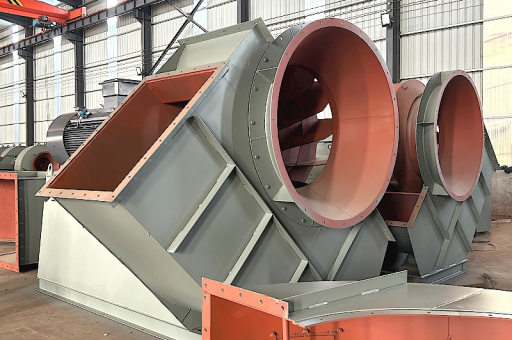
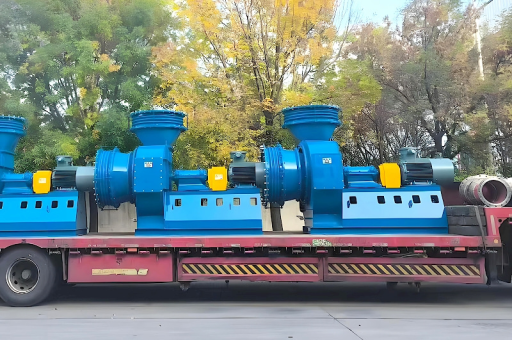
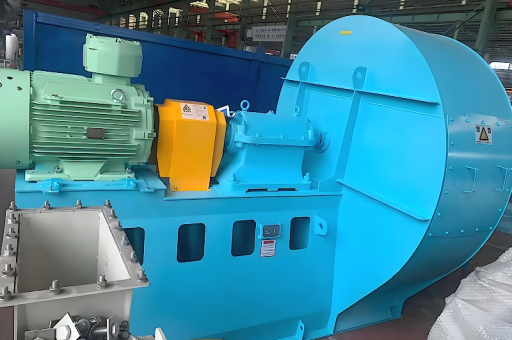
You are looking for a 316 Stainless Steel, High-Pressure, Induced Draft Fan designed to move 1,500 Cubic Feet per Minute (CFM) of air or gas against a static pressure of 11,000 Pascals (Pa) (approximately 44 inches of water gauge). This is a heavy-duty fan suitable for corrosive or high-temperature exhaust.
Specification Breakdown
Let's decode each part of your request:
- 11,000 Pa (Pressure): This is a high static pressure. 11,000 Pa is roughly 44 inches of water gauge (in. w.g.) or 6 PSI.
- Context: Standard HVAC fans operate around 250-500 Pa. Industrial fans rarely go above 7,000 Pa. At 11,000 Pa, you are in the territory of high-pressure blowers or specialized industrial process fans. The fan wheel and housing must be structurally reinforced.
- 1,500 CFM (Flow Rate): This is a moderate-to-high volume flow rate. For context, this is roughly the flow needed to ventilate a large 5,000 sq ft warehouse or a small industrial booth. Combined with the high pressure, this requires significant horsepower (estimated 10-15 HP / 7.5-11 kW).
- 316 Stainless Steel: This material choice dictates the application.
- Corrosion Resistance: 316 SS contains Molybdenum, making it superior to 304 SS for resisting chlorides (e.g., salt, bleach, seawater) and sulfuric acid.
- High Temperature: 316 SS maintains good strength at higher temperatures (up to ~1600°F / 870°C, though typically structural limits are lower for rotating parts).
- High-Pressure Induced Draft Fan:
- Induced Draft: The fan is located after the process (e.g., at the end of a duct system, after a scrubber or boiler). It pulls (sucks) air through the system, creating negative pressure inside the ductwork. This is critical for containing dangerous fumes or heat.
- Fan Type: This pressure level (44" w.g.) almost certainly requires a Backward-Inclined (BI) or Airfoil (AF) centrifugal fan wheel, not a simple forward-curved or paddle wheel.
Primary Applications
Given the material (316SS) and pressure (high), this fan is designed for one of the following harsh environments:
- Corrosive Fume Extraction (Chemical / Plating / Semiconductor): Exhausting fumes from acids (HCl, H2SO4) or bases (NaOH) through scrubbers or directly to atmosphere. The 316SS resists the corrosive condensate.
- High-Temperature Process Exhaust (Ovens / Kilns / Boilers): Pulling hot, corrosive flue gases from a combustion process.
- Marine / Offshore Ventilation: Handling salt-laden air (chloride attack) in engine rooms or cargo holds.
- Wastewater Treatment: Corrosive, humid air from digester tanks or headworks.
- Pharmaceutical / Food Processing: Where cleanliness, resistance to cleaning chemicals (CIP), and durability are required.
Critical Engineering & Purchasing Considerations
Before buying or designing around this fan, you must verify these parameters:
Actual vs. System Pressure (Fan Curve)
- Fan Static Pressure (FSP) vs. System Pressure: A fan that is "11,000 Pa" at its best efficiency point (BEP) is different from one that must overcome 11,000 Pa. You need to know the total system resistance (duct friction, scrubber pressure drop, stack resistance). If the actual system resistance is 8,000 Pa but you buy a fan designed for 11,000 Pa, you will have over-flown or stalled the fan. Request a fan curve from the manufacturer.
Temperature is Everything
- Density Correction: 11,000 Pa at 70°F (21°C) is much easier than at 400°F (200°C) . Hot air is less dense, so the fan's ability to generate pressure drops significantly. You must specify the operating temperature (inlet temp) to the manufacturer.
- Thermal Expansion: 316SS expands more than carbon steel. Shaft seals, bearing housings, and wheel-to-inlet cone clearances must be designed for the operating temperature.
Drive & Motor
- Horsepower: At 11,000 Pa and 1,500 CFM, with a safety factor for specific weight, expect a motor between 10 HP (7.5 kW) and 15 HP (11 kW) .
- Variable Frequency Drive (VFD): Highly recommended. Allows you to balance the system in the field and protect the motor from overload at cold start.
- Belt Drive vs. Direct Drive: Belt drive is common for Induced Draft fans to allow speed changes. Direct drive is more efficient for critical speed ranges.
Bearing & Lubrication
- Standard vs. High-Temp Grease: If the gas is hot (>200°F), the heat radiates down the shaft. You need splash-lubricated pillow blocks or high-temperature grease fittings with a heat slinger on the shaft.
- Shaft Seal: Must be rated for 316SS, likely a labyrinth seal or gas-tight packing gland if the gas is toxic.
Spark Resistance & Safety
- If handling combustible dust or flammable gases, the 316SS construction must include spark-resistant tips (aluminum or monel) or AMCA Type C spark-resistant construction. The housing must be designed for the pressure and non-sparking.
Summary Buyer's Checklist
When contacting a supplier (e.g., New York Blower, Cincinnati Fan, Chicago Blower, Greenheck Industrial), provide these items:
- Gas Type: (e.g., "Chlorine gas, 50 PPM / Moist air / Exhaust from natural gas boiler")
- Operating Temperature: (e.g., "150°F (65°C) continuous")
- Density / Altitude: (Standard sea level or site altitude)
- Mounting Location: (Indoor / Outdoor / Marine)
- Motor: (Duty, Voltage, Phase, Enclosure TEFC / Washdown)
- Accessories: Inlet box, drain, access door, vibration isolators, flex connections.
Strong Recommendation: Do not buy a "standard" 1,500 CFM fan and expect it to handle 11,000 Pa. This is a specialized high-pressure unit. The fan wheel will likely be a reinforced Backward-Inclined (BI) blade design for pressure, or a Radial Blade (RB) for high abrasion. Get a formal submittal and fan curve from the manufacturer.