This article's table of contents introduction:
- What is this Fan?
- Key Application Areas
- Critical Design Features & Specifications to Verify
- Critical Questions to Answer Before Ordering
- Summary for Procurement
Based on the parameters you provided (132KW, 304 Stainless Steel, High-Temperature, High-Pressure), you are describing a very specific and heavy-duty piece of industrial equipment.
Here is a breakdown of what this fan is, its typical applications, design considerations, and key specifications you should look for when sourcing or specifying this unit.
What is this Fan?
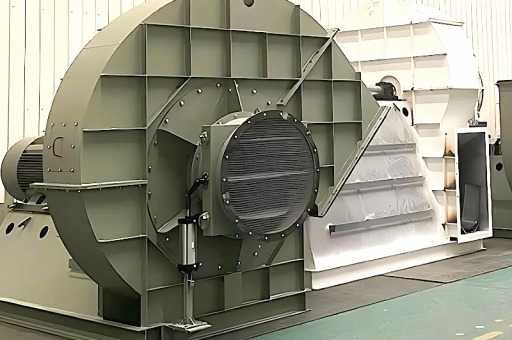
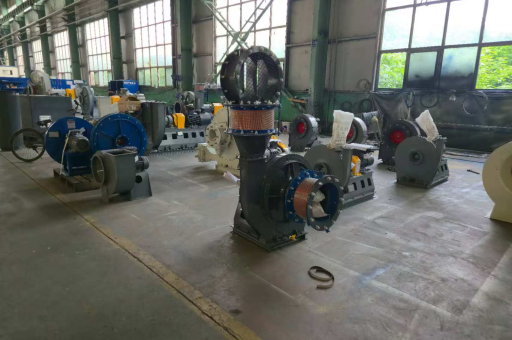
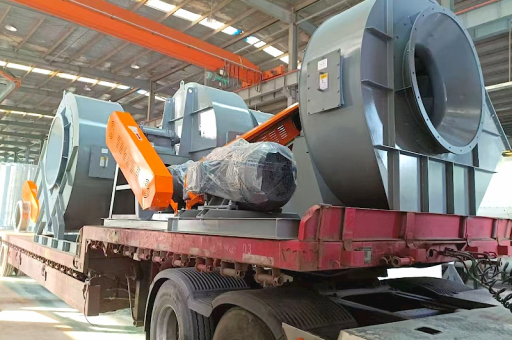
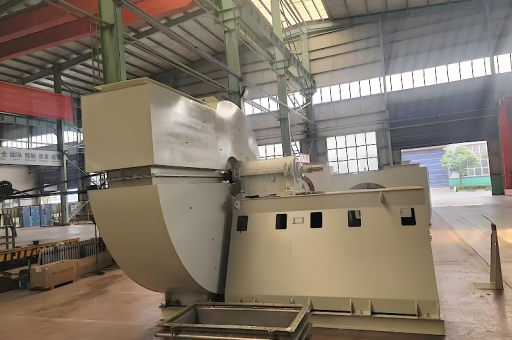
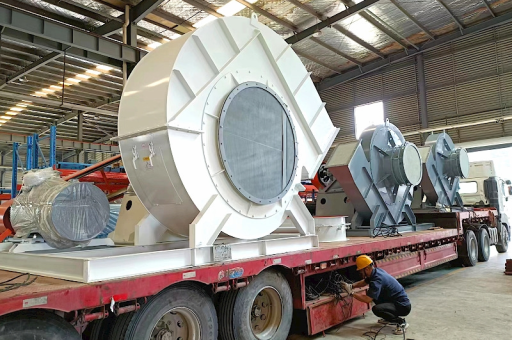
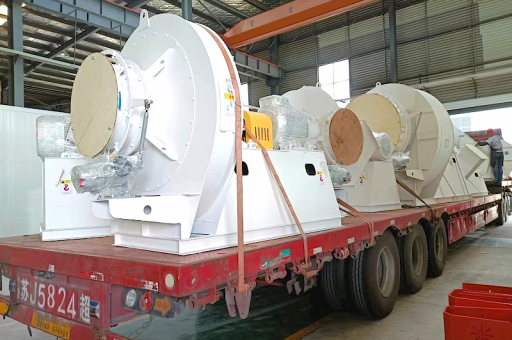
This is a Centrifugal Induced Draft (ID) Fan designed for severe service. It uses a 132 kW (approx. 177 HP) motor to create the negative pressure (draft) required to pull hot, corrosive, or particulate-laden gases through a system (e.g., boiler, furnace, kiln, or reactor) and exhaust them to a stack or pollution control system.
Key Application Areas
- Boilers & Power Plants: Pulverized coal, biomass, or waste-to-energy boilers.
- Cement Industry: Kiln exhaust, clinker cooling.
- Chemical & Petrochemical: Process heaters, reformers, and reactors where gases contain corrosive elements or are at high temperature.
- Metallurgy: Smelter exhaust (fume extraction), furnace draft.
- Waste Incineration: Inducing draft through the combustion chamber and scrubber system.
Critical Design Features & Specifications to Verify
Because you specified High-Temperature and High-Pressure, standard fans will not work. You need a fan with specific heavy-duty construction.
Material (304 SS)
- Why 304 SS? It provides excellent corrosion resistance against mildly acidic condensates (common in flue gas) and good oxidation resistance up to its temperature limit.
- Limitation: 304 SS loses structural strength significantly above ~800°F (425°C). For higher temperatures, you would need 310S or Inconel. The exact gas chemistry is critical (e.g., chlorides will stress-crack 304).
Wheel (Impeller) Design (Crucial for High Pressure)
- Type: For high pressure, you will almost certainly need a Backward Inclined (BC) or Airfoil (AF) wheel. These are non-overloading (motor won't burn up if duct pressure drops) and efficient.
- Construction: The wheel must be fully welded, stress-relieved, and dynamically balanced to 2.5 mm/s (or G2.5 grade) to handle high rotational speeds.
- Wear Protection: For gas with dust/particulates, the wheel may need hard-facing (Stellite) or wear plates on the leading edges.
Shaft
- Must be oversized to handle the load and potential thermal expansion. Often made of 4340 or 17-4 PH stainless steel, not 304 (which is too soft for a shaft).
- A water-cooled shaft seal or heat slinger is mandatory where the shaft passes through the housing to prevent heat migration to the bearings.
Bearings
- Heavy-Duty Pillow Block: Typically spherical roller bearings.
- Cooling: For high-temperature fans, the bearings must be mounted on a pedestal (out of the hot gas stream) and often have extended grease lines or water jackets to keep the bearing temperature below 180°F (80°C).
Motor (132 kW)
- Voltage: Typically 380V, 400V, 415V, 690V, or 3.3kV/6.6kV depending on your region and motor size.
- Speed: Likely a 2-pole (2950 RPM) or 4-pole (1475 RPM) motor. A 132kW motor at 2950 RPM is very high speed and requires a very robust fan.
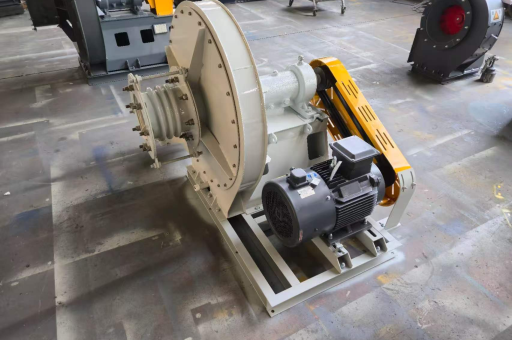
- Drive Type: Direct Drive (shaft-mounted) is standard for reliability. V-belt drive is possible but less common at this power level due to losses and belt maintenance.
Inlet & Outlet Box
- Cooling: The inlet box often has cooling air ports or is externally insulated.
- Expansion Joints: Flue connections must use high-temperature expansion joints (fabric or metallic) to isolate the fan from ductwork stress.
Important: Standard Industrial Fans vs. Your Specification
| Feature | Standard Fan | Your 132kW 304 SS High-Temp/High-Pressure Fan |
|---|---|---|
| Material | Carbon Steel (MS) | 304 Stainless Steel (entire wetted path) |
| Housing | Light gauge, welded | Heavy plate (8mm-12mm+), reinforced |
| Shaft Seal | Simple packing | Labyrinth + purge air or water-cooled |
| Bearings | Standard duty | Oversized, water-cooled pedestal |
| Temperature | < 200°C | 300°C - 600°C (needs specification) |
| Pressure | Low (< 500 mmWG) | Medium to High (1000 - 3000+ mmWG) |
Critical Questions to Answer Before Ordering
- What is the exact max temperature? (e.g., 350°C continuous, 400°C peak). This determines if 304 SS is safe or if you need a higher grade.
- What is the required static pressure? (e.g., 2500 Pa, 5000 Pa, or mmWG?). This determines the wheel type and speed.
- What is the gas being moved? (e.g., flue gas, corrosive chemical vapor, dusty air). Chlorides or sulfur in the gas will attack 304 SS at high temperatures.
- Is this a new installation or a replacement? (Need to match existing footprint and duct connections).
- What is the ambient temperature? (Needed for motor sizing and bearing cooling system design).
Summary for Procurement
If you are purchasing this fan, you should issue a datasheet asking for the following performance points:
- Volume: __ m³/hr or CFM
- Static Pressure: __ Pa or mmWG (at operating temperature)
- Temperature: __ °C (normal & max)
- Gas Density: __ kg/m³ (at fan inlet)
- Gas Composition: __
- Altitude: __ m (affects air density)
- Motor Speed: __ RPM
- Cooling Method: Water-cooled bearings or ambient air-cooled pedestal
Warning: A 132kW, high-pressure fan is extremely dangerous if misapplied. A wheel failure at high RPM can cause catastrophic damage. Always buy from a reputable manufacturer (e.g., Howden, TLT-Babcock, Greenheck heavy industrial, New York Blower, ZE, etc.) with a proven history in ADI (Airfoil/Backward Inclined) fans for heavy industry. Do not buy a "standard" ventilation fan and try to modify it.