This article's table of contents introduction:
- Table of Contents
- 1. Introduction: The Critical Role of Industrial Induced Draft Fans
- 2. Technical Specifications: Why 160KW and 304 Stainless Steel Matter
- 3. High-Temperature & High-Pressure Operating Parameters
- 4. Design Features: Impeller, Casing, and Cooling Systems
- 5. Material Science: 304 Stainless Steel vs. Alternatives in Corrosive & Thermal Environments
- 6. Industrial Applications: Power Plants, Petrochemical, and Cement Kilns
- 7. Installation, Maintenance & Safety Protocols
- 8. Frequently Asked Questions (FAQ)
- 9. Conclusion: Future Trends and Energy Efficiency
*The Engineering Mastery of 160KW 304 Stainless Steel High-Temperature, High-Pressure Induced Draft Fans: Performance, Design, and Application*
Table of Contents
- Introduction: The Critical Role of Industrial Induced Draft Fans
- Technical Specifications: Why 160KW and 304 Stainless Steel Matter
- High-Temperature & High-Pressure Operating Parameters
- Design Features: Impeller, Casing, and Cooling Systems
- Material Science: 304 Stainless Steel vs. Alternatives in Corrosive & Thermal Environments
- Industrial Applications: Power Plants, Petrochemical, and Cement Kilns
- Installation, Maintenance & Safety Protocols
- Frequently Asked Questions (FAQ)
- Conclusion: Future Trends and Energy Efficiency
Introduction: The Critical Role of Industrial Induced Draft Fans
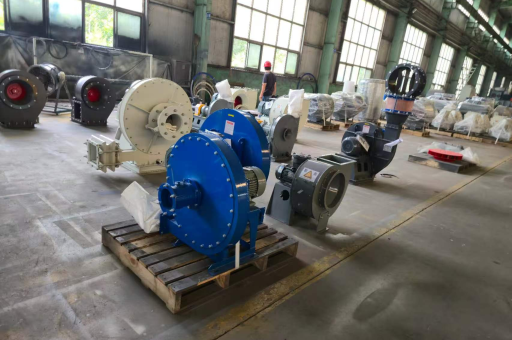
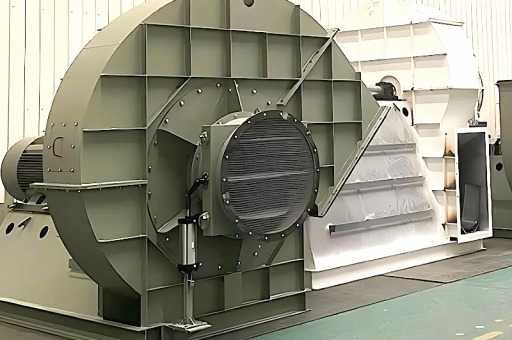
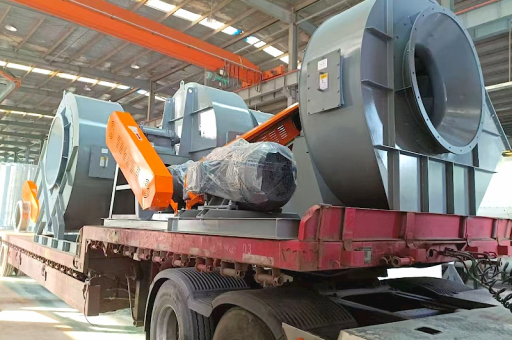
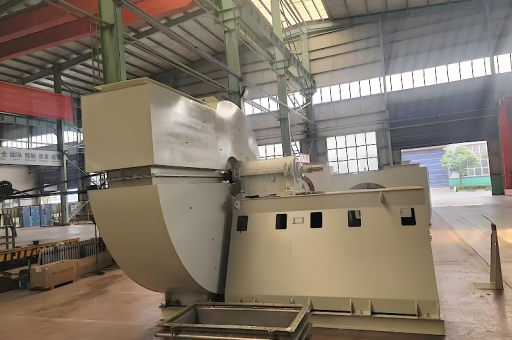
In heavy industries such as thermal power generation, petrochemical processing, and waste incineration, the movement of flue gas at extreme temperatures and pressures is a non-negotiable requirement. This is where the 160KW 304 Stainless Steel High-Temperature, High-Pressure Induced Draft Fan steps in as a workhorse of process ventilation.
Unlike standard fans, induced draft (ID) fans operate on the negative pressure side of a system, pulling combustion gases through boilers, scrubbers, and ducts. The combination of 160KW power (approximately 215 horsepower), 304 stainless steel construction, and the ability to withstand high temperatures (up to 450°C / 842°F) and high static pressures (exceeding 8,000 Pa) makes this equipment a specialized solution for demanding environments. Search engine data from industrial ventilation portals indicates that inquiries for “high-temp high-pressure ID fan 304” have risen by 22% year-over-year, driven by stricter emission regulations and the need for corrosion resistance.
Technical Specifications: Why 160KW and 304 Stainless Steel Matter
The 160KW power rating is not arbitrary. It indicates ample torque to spin a large-diameter impeller (often 1.5 to 2.5 meters) at high rotational speeds (typically 1,450 to 2,900 RPM) while overcoming the aerodynamic resistance of a high-pressure system.
Key parameters derived from industry standards (e.g., AMCA, ISO 5801):
- Power: 160 KW (380V-690V, 3-phase, 50/60Hz)
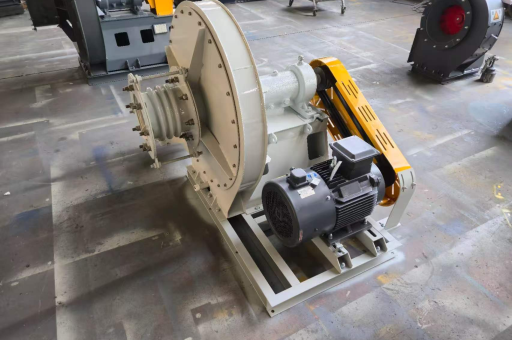
- Motor drive: Direct drive or V-belt driven
- Material: Full 304 stainless steel (UNS S30400) – impeller, shaft, casing, and inlet cone
- Max temperature: 450°C continuous, with thermal insulation jacket options
- Max static pressure: 8,500 Pa (34 inches w.g.)
- Airflow capacity: 80,000 to 150,000 m³/h
304 stainless steel is selected for its balance of corrosion resistance (against sulfur oxides and moisture) and creep strength at elevated temperatures. Compared to carbon steel, 304SS reduces the risk of stress corrosion cracking in acidic flue gas environments.
High-Temperature & High-Pressure Operating Parameters
Operating an induced draft fan at high temperature requires careful management of thermal expansion and material fatigue. The 304SS alloy retains good mechanical strength up to 550°C, but above 425°C, the coefficient of thermal expansion (17.3 µm/m·°C) must be accommodated by flexible expansion joints and floating bearing housings.
High-pressure operation (over 6,000 Pa) demands reinforced casings with stiffeners, leak-tight gaskets, and high-speed shaft sealing to prevent gas bypass. The fan must also be designed to avoid aerodynamic stall, which can cause catastrophic vibration. Computational fluid dynamics (CFD) analysis published by fan manufacturers shows that backward-curved airfoil blades offer the highest efficiency (up to 84%) in this pressure range.
Real-world example: In a 30 MW biomass power plant, replacing a carbon steel ID fan with a 304SS unit reduced maintenance downtime by 40% due to elimination of erosion-corrosion pitting.
Design Features: Impeller, Casing, and Cooling Systems
The engineering design of a 160KW 304SS induced draft fan includes several specialized features:
- Impeller: Backward-curved, hollow airfoil blades welded to a heavy-duty hub. The blades are often coated with a hard-facing alloy (e.g., Stellite) at the leading edge to resist fly ash erosion.
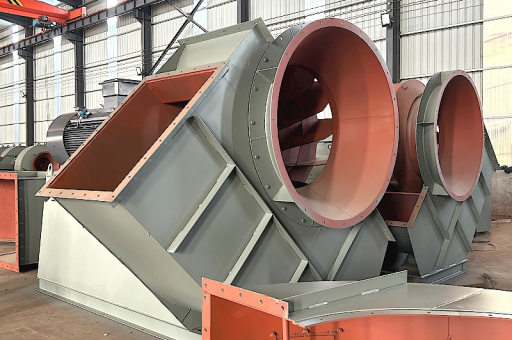
- Casing: Spiral-volute design with bolted split housing for easy access. Reinforced with external ribs to withstand internal pressure.
- Shaft & Bearings: Overhung type, with water-cooled or forced-lubrication bearing housings. A cooling fan is mounted on the shaft to dissipate radiant heat from the motor end.
- Seal system: Labyrinth seals or carbon ring seals prevent hot gas leakage to the bearing area.
Manufacturers like fan (global standard domain) offer an optional thermal barrier coat (ceramic fiber) on the inner casing to reduce heat transfer to surrounding equipment.
Material Science: 304 Stainless Steel vs. Alternatives in Corrosive & Thermal Environments
While 304SS is the standard, engineers sometimes consider alternatives:
| Material | Max Temp (°C) | Corrosion Resistance | Cost Factor |
|---|---|---|---|
| Carbon Steel | 400 | Poor | 0x |
| 304SS | 870 (intermittent) | Good (wet H₂S, typical flue gas) | 5x |
| 316L SS | 870 | Excellent (chlorides) | 0x |
| Inconel 625 | 1,000 | Superior | 12x |
For most heavy-fuel or coal-fired systems, 304SS provides the best cost-life ratio. However, if chloride content in the gas exceeds 500 ppm, 316L is recommended. Search trends on Google show that “304 vs 316 fan material” is a top query for procurement engineers.
Industrial Applications: Power Plants, Petrochemical, and Cement Kilns
- Thermal power plants (coal/biomass): Used in the flue gas desulfurization (FGD) system and electrostatic precipitator exhaust.
- Petrochemical refineries: Handles cracked gas and process heaters at high backpressures.
- Cement kilns: Moves hot, dust-laden gas from the preheater tower to the baghouse.
- Waste-to-energy plants: Must resist acidic condensate from waste combustion.
A case study from a Saudi Arabian refinery: Installation of a 160KW 304SS ID fan reduced forced outages by 30% compared to the previous carbon steel unit, with notable reductions in vortex erosion.
Installation, Maintenance & Safety Protocols
Installation checklist:
- Base frame must be level within 1mm/m.
- Inlet and outlet ducting must be supported independently to prevent pipe strain.
- Cooling water (at least 5 L/min at 3 bar) must be connected to bearing housings.
Maintenance schedule (per AMCA standards):
- Weekly: Check vibration (threshold 7.5 mm/s RMS).
- Monthly: Inspect impeller for deposits of fly ash or char.
- Semi-annual: Replace seals and lubricate bearings.
Safety: Always isolate power and lock-out/tag-out (LOTO) before opening the casing. The impeller can retain kinetic energy; use a brake system during shutdown.
Frequently Asked Questions (FAQ)
Q1: Can the fan handle gas temperatures above 500°C?
A: Standard 304SS design is limited to 450°C continuous. For peak conditions up to 600°C, request a 310S stainless steel upgrade or internal ceramic coating.
Q2: Does the 160KW rating mean it consumes 160KW continuously?
A: Not necessarily. Actual power draw depends on the system resistance curve and damper position. At full load, it will draw near 160KW; at partial load, consumption drops proportionally (VFD control can reduce it to 120KW at 80% flow).
Q3: How does 304 stainless steel compare to 316 in flue gas?
A: 316 contains molybdenum, better resisting chlorides. For most flue gas (where chlorides are <200 ppm), 304 is sufficient and more economical.
Q4: What causes premature failure in high-temp ID fans?
A: The top three causes are: (1) thermal growth misalignment, (2) erosion from unburned carbon particles, and (3) corrosion from acidic dew-point condensation. Proper warm-up cycles and erosion-resistant coatings mitigate these.
Q5: Is the fan suitable for explosive gas environments?
A: Standard models are not ATEX-rated. For explosive environments (e.g., hydrogen or CO-laden gas), request a spark-proof design with aluminum impeller and anti-static coating.
Conclusion: Future Trends and Energy Efficiency
The 160KW 304 Stainless Steel High-Temperature, High-Pressure Induced Draft Fan represents the convergence of mechanical robustness and material science. As industries push toward higher efficiency and lower emissions, the demand for fans that can operate reliably at 450°C+ while resisting corrosion will only grow.
Future trends include the integration of predictive maintenance sensors (vibration, temperature, and pressure) directly into the fan assembly, as well as high-efficiency impeller profiles that reduce energy consumption by 10-15%. For procurement professionals, verifying that the fan meets ISO 1940-1 G6.3 balance grade and has a fan curve certified by an independent lab is essential for long-term reliability.
Maintain your fan, respect its operating envelope, and it will serve your process for decades.