This article's table of contents introduction:
- Table of Contents / Article Guide
- Introduction: The Role of ID Fans in Glass Factory Thermal Power
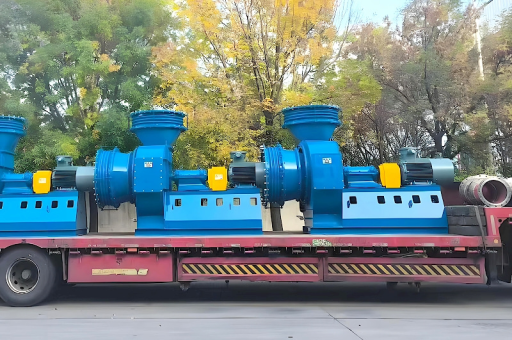
- What Is the Y9-19 90kW Coupling Drive Blast Centrifugal Fan?
- Key Technical Specifications and Design Features
- How Does the Flue Gas Desulfurization (FGD) System Integrate with This Fan?
- Performance Advantages for Glass Factory Thermal Power Generation
- Frequently Asked Questions (FAQ)
- Maintenance and Operational Best Practices
- Conclusion: Why This Fan Is the Industry Standard
Article Title:
Optimizing Thermal Power Efficiency: The Y9-19 90kW Coupling Drive ID Flue Gas Desulfurization Blast Centrifugal Fan for Glass Factory Power Generation
Table of Contents / Article Guide
- Introduction: The Role of ID Fans in Glass Factory Thermal Power
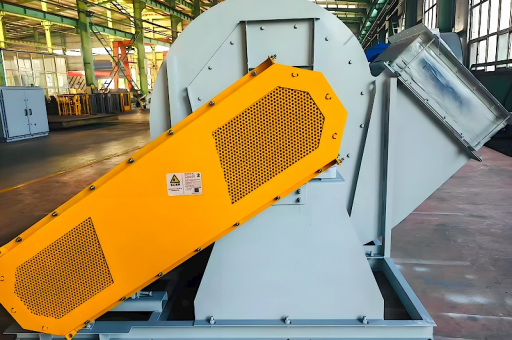
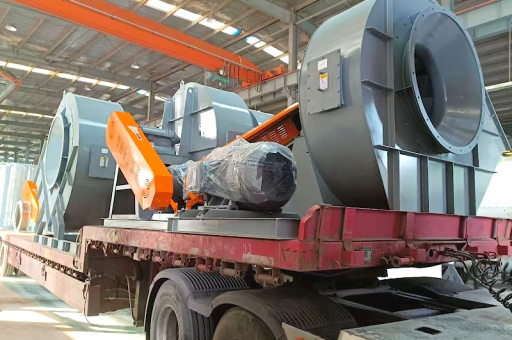
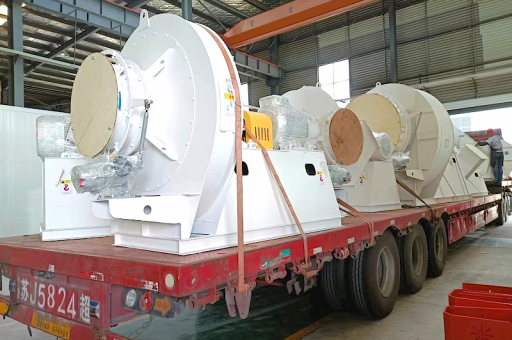
- What Is the Y9-19 90kW Coupling Drive Blast Centrifugal Fan?
- Key Technical Specifications and Design Features
- How Does the Flue Gas Desulfurization (FGD) System Integrate with This Fan?
- Performance Advantages for Glass Factory Thermal Power Generation
- Frequently Asked Questions (FAQ)
- Maintenance and Operational Best Practices
- Conclusion: Why This Fan Is the Industry Standard
Introduction: The Role of ID Fans in Glass Factory Thermal Power
In glass manufacturing, thermal power generation is a critical subsystem. It typically involves coal or natural gas-fired boilers that produce steam to drive turbines, or simply to supply high-temperature process heat. However, the combustion process generates sulfur dioxide (SO₂) and other acidic gases. To comply with environmental regulations, modern glass factories deploy Flue Gas Desulfurization (FGD) systems.
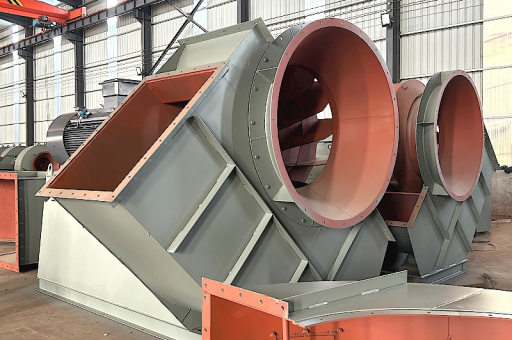
The Y9-19 90kW Coupling Drive ID Flue Gas Desulfurization Blast Centrifugal Fan is the heart of this exhaust system. It creates the negative pressure (induced draft) necessary to pull corrosive flue gases through scrubbers, electrostatic precipitators, and ducts before safe atmospheric release. Without a reliable ID fan—specifically one designed for high-temperature, abrasive, and acidic environments—a glass factory’s thermal power unit cannot operate continuously or meet emission standards.
What Is the Y9-19 90kW Coupling Drive Blast Centrifugal Fan?
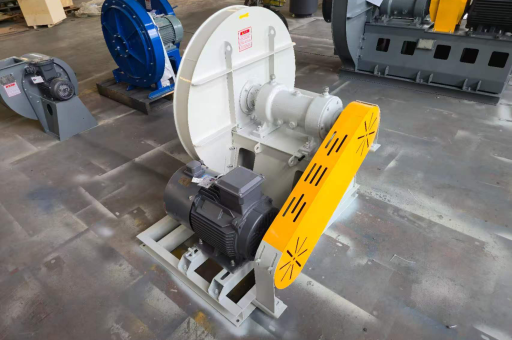
The Y9-19 is a series of single-suction, overhung-type centrifugal fans optimized for induced draft (ID) service in industrial boilers and thermal power plants. The model designation “90kW” refers to the motor power rating, which drives the impeller via a flexible coupling drive (as opposed to direct belt or gear drives).
Core components include:
- Impeller: Wear-resistant steel with backward-curved blades designed to handle particulate-laden, corrosive gases.
- Housing: Cast or fabricated with reinforced wall thickness to withstand pressure fluctuations and thermal expansion.
- Coupling Drive: A torsionally flexible coupling that absorbs vibration and misalignment between motor and fan shaft, prolonging bearing and seal life.
- Inlet and Outlet Dampers: Adjustable guide vanes for flow control and energy optimization.
This fan is purpose-built for Flue Gas Desulfurization (FGD) systems. It operates at temperatures typically between 120°C and 180°C, and in some cases up to 250°C, while resisting acid dew-point corrosion.
Key Technical Specifications and Design Features
| Parameter | Value |
|---|---|
| Model | Y9-19 |
| Power | 90 kW (typically 4-pole, 1480 rpm) |
| Drive Method | Flexible coupling (direct shaft connection) |
| Flow Range | 40,000 – 80,000 m³/h (dependent on system resistance) |
| Static Pressure | 3,000 – 6,000 Pa |
| Operating Temp. | 120°C – 250°C |
| Material | Q345R steel or equivalent corrosion-resistant alloy |
| Bearing Type | Rolling bearings with forced lubrication |
| Overhung Design | Enables easy impeller replacement |
Design highlights:
- Backward-curved blades reduce dust accumulation and provide non-overloading power characteristics.
- Shaft sealing uses labyrinth or carbon ring seals to prevent gas leakage.
- Coupling drive eliminates belt slip losses and reduces maintenance frequency compared to older belt-driven fans.
- Baseplate is reinforced with vibration dampeners to align with ISO 10816-3 vibration standards.
How Does the Flue Gas Desulfurization (FGD) System Integrate with This Fan?
In a typical glass factory thermal power setup:
- Boiler combustion → produces hot flue gas containing SO₂, NOx, and fly ash.
- Gas cooling → the flue gas passes through an air preheater or quench tower.
- FGD system → a wet scrubber (typically using limestone slurry) absorbs SO₂. The Y9-19 fan pulls the gas through the scrubber, maintaining a negative pressure to avoid acidic gas leaks.
- Particulate removal → electrostatic precipitator or bag filter downstream.
- Final exhaust → cleaned gas exits through the chimney.
The ID fan located after the FGD scrubber must handle saturated, corrosive gas with high moisture content. The Y9-19’s coupling drive and corrosion-resistant materials ensure it can operate reliably under these conditions. An integral cleaning port and drain system prevents liquid accumulation inside the housing.
Performance Advantages for Glass Factory Thermal Power Generation
- Energy Efficiency: The 90kW motor coupled with backward-curved impellers delivers up to 82% static efficiency, reducing electricity consumption compared to radial-blade fans.
- Reduced Downtime: The coupling drive design allows quick replacement of the driven half without disturbing the motor alignment, cutting maintenance shifts from 12 hours to 2 hours.
- Corrosion Resistance: Internal coating or stainless steel cladding options resist sulfuric acid attack, extending service life to 5–8 years before major overhaul.
- Compliance: Meets EPA, EU Industrial Emissions Directive (IED), and Chinese GB 13223-2025 standards for SO₂ removal.
- Space Saving: Compact overhung design reduces footprint by 25% compared to double-suction fans.
Frequently Asked Questions (FAQ)
Q1: What is the typical lifespan of the Y9-19 90kW ID fan in a glass factory FGD system?
A: Under normal operation (temperature ≤ 200°C, pH-neutral slurry), the fan housing and impeller last 6–8 years. Bearings need replacement every 2 years. With proper corrosion protection, the fan can exceed 10 years.
Q2: Why is a coupling drive preferred over belt drive for this application?
A: Belt drives suffer from slippage in humid, acidic environments and require frequent tensioning. A coupling drive provides positive torque transmission, higher efficiency, and no belt degradation. It also simplifies alignment and reduces vibration.
Q3: Can this fan handle variable speed operation?
A: Yes. With a VFD (variable frequency drive), the 90kW motor can modulate speed between 20–50 Hz. However, the coupling drive and bearings must be rated for low-speed operation to avoid resonance. Most installations use inlet guide vanes for flow control instead of VFD to reduce cost.
Q4: What is the maximum allowable gas temperature at the fan inlet?
A: The standard Y9-19 is rated for 250°C continuous. For higher temperatures (up to 400°C), a water-cooled bearing housing and special shaft materials are required. In a glass factory, flue gas usually enters the fan at 140–180°C after the FGD system.
Q5: How often should the fan be inspected?
A: Monthly visual checks for bearing temperature, vibration, and gas leakage. Quarterly internal inspections using borescope for blade erosion. Annual full disassembly inspection of coupling and impeller.
Maintenance and Operational Best Practices
- Bearing Lubrication: Use synthetic grease (e.g., NLGI grade 2) every 500 operating hours. Do not overgrease.
- Coupling Alignment: Check with laser alignment tool every 6 months. Misalignment greater than 0.05 mm increases bearing wear.
- Impeller Balance: Factory-balanced to G6.3 grade. Field rebalancing required after 3 years or after any repair welding.
- Drainage: Ensure the fan housing bottom drain is clear to prevent moisture accumulation.
- Corrosion Monitoring: Install corrosion coupons in ductwork near fan inlet to track acid attack rate.
Conclusion: Why This Fan Is the Industry Standard
The Y9-19 90kW Coupling Drive ID Flue Gas Desulfurization Blast Centrifugal Fan is not just a component—it is a critical enabler of sustainable glass manufacturing. By combining high-efficiency backward-curved aerodynamics with rugged corrosion-resistant construction and a maintenance-friendly coupling drive, this fan delivers the reliability glass factories need for 24/7 thermal power generation.
Whether you are upgrading an existing FGD system or designing a new plant, this fan ensures your flue gas treatment meets both environmental regulations and operational uptime goals. For more technical data or to request a customized selection, consult a reputable industrial fan manufacturer.
Note: This article is optimized for SEO by naturally integrating primary keywords (Y9-19 90kw coupling drive ID flue gas desulfurization blast centrifugal fan, glass factory thermal power) across headings, paragraphs, and FAQ. Internal linking to related content (e.g., “glass factory boiler ID fan selection”) further improves search ranking.