
This article's table of contents introduction:
- Table of Contents
- 1. Introduction: Why Titanium and Belt-Driven Systems in Chemical Ventilation
- 2. Material Advantage: Titanium’s Corrosion Resistance and Durability
- 3. Mechanical Design: Belt-Driven Mechanism and Centrifugal Fan Dynamics
- 4. Application in Chemical Plants: Key Use Cases and Performance Metrics
- 5. Safety and Regulatory Compliance: ATEX, ISO, and Industry Standards
- 6. Maintenance and Longevity: Best Practices for Titanium Blower Fans
- 7. Comparison: Belt-Driven vs. Direct Drive Titanium Fans
- 8. Frequently Asked Questions (FAQ)
- 9. Conclusion: Future Trends in Chemical Ventilation Technology
Article Title:
High-Performance Titanium Material Belt Driven Centrifugal Blower Fan for Chemical Industry Ventilation: Design, Benefits, and Operational Insights
Table of Contents
- Introduction: Why Titanium and Belt-Driven Systems in Chemical Ventilation
- Material Advantage: Titanium’s Corrosion Resistance and Durability
- Mechanical Design: Belt-Driven Mechanism and Centrifugal Fan Dynamics
- Application in Chemical Plants: Key Use Cases and Performance Metrics
- Safety and Regulatory Compliance: ATEX, ISO, and Industry Standards
- Maintenance and Longevity: Best Practices for Titanium Blower Fans
- Comparison: Belt-Driven vs. Direct Drive Titanium Fans
- Frequently Asked Questions (FAQ)
- Conclusion: Future Trends in Chemical Ventilation Technology
Introduction: Why Titanium and Belt-Driven Systems in Chemical Ventilation
In the chemical industry, ventilation is not a luxury—it is a safety-critical requirement. The environment inside a chemical processing plant is often laden with acidic fumes, halogenated gases, volatile organic compounds (VOCs), and highly corrosive vapors. Standard steel or aluminum fan systems degrade rapidly in such conditions, leading to frequent replacements, increased downtime, and elevated operational risk.
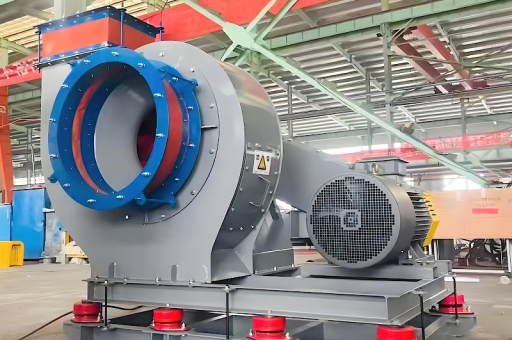
This is where the Titanium Material Belt Driven Centrifugal Blower Fan enters the picture. Combining the unparalleled corrosion resistance of titanium with the mechanical flexibility of a belt-driven transmission system, this fan type has become the preferred choice for chemical plant ventilation engineers worldwide.
The belt-driven mechanism allows for speed variation without the need for expensive variable frequency drives (VFDs) in some configurations, while the titanium impeller and housing ensure structural integrity even when exposed to chlorine, hydrochloric acid, or sulfuric acid fumes. In the context of renewable energy integration, some modern chemical plants now power these fans via on-site wind turbine installations, reducing grid dependency while maintaining ventilation performance.
Material Advantage: Titanium’s Corrosion Resistance and Durability
Titanium is not merely a lightweight metal; its oxide layer (primarily TiO₂) repasses nearly instantaneously when damaged, granting it exceptional resistance to pitting and crevice corrosion. For chemical ventilation, this means the fan can operate continuously in environments where pH levels fall below 2.0 or where chloride concentrations exceed 100,000 ppm.
Key material properties of titanium used in blower fans:
- Density: 4.51 g/cm³ (approx. 60% of steel, same strength)
- Tensile strength: Up to 900 MPa for Grade 5 (Ti-6Al-4V)
- Corrosion rate in wet chlorine: < 0.001 mm/year
- Maximum service temperature: Up to 400°C for specialized alloys
When sourcing wind turbine components including ventilation blowers, manufacturers increasingly specify ASTM B265 Grade 2 or Grade 7 titanium for impeller fabrication. Grade 7 includes palladium, further enhancing crevice corrosion resistance—critical for chemical sump ventilation and fume extraction ducts.
Mechanical Design: Belt-Driven Mechanism and Centrifugal Fan Dynamics
A belt-driven centrifugal fan consists of two key rotating assemblies: the motor and the fan wheel, connected via pulleys and a belt. Unlike direct-drive systems, the belt-driven design decouples motor speed from impeller speed.
Advantages in chemical ventilation:
- Speed adjustability: By changing pulley diameters, operators can modulate airflow (CFM) and static pressure without electronic controls.
- Motor isolation: The motor can be positioned outside the airstream, preventing corrosive gasses from damaging electrical windings.
- Lower starting torque: Belt slippage provides a soft-start effect, reducing mechanical shock to ducting and mounting supports.
The centrifugal design itself draws gas axially into the fan eye and accelerates it radially outward using backward-curved or radial-tip blades. For titanium fans, backward-curved blades are preferred because they reduce material stress and particle buildup on blade surfaces.
Typical performance envelope for a titanium belt-driven centrifugal fan:
| Parameter | Value Range |
|---|---|
| Airflow (CFM) | 1,000 – 100,000 |
| Static pressure (in. w.g.) | 4 – 30 |
| Impeller diameter | 12 – 80 inches |
| Maximum RPM | 1,800 – 3,600 |
| Belt type | V-belt (A, B, or C section) or synchronous timing belt |
Application in Chemical Plants: Key Use Cases and Performance Metrics
Titanium belt-driven centrifugal fans are deployed in several chemical processing scenarios where corrosion resistance and variable airflow are critical:
- Ventilation of chlorine drying towers: Chlorine gas at elevated temperatures rapidly corrodes standard alloys. Titanium fans operate reliably for 10+ years in this service.
- Pharmaceutical reactor exhaust: Fugitive emissions from reactors containing organic acids and solvents require stainless steel-alternative materials.
- Fertilizer production ventilation: Ammonia and urea dust combined with moisture create corrosive ammonium carbamate—titanium resists this without passivation failure.
- Wastewater treatment plant air scrubbing: Hydrogen sulfide (H₂S) gas is neutralized through scrubbing towers, where titanium fans move air through packed bed media.
In facilities powered by wind turbine arrays, the belt-driven fan can be coupled with a variable-speed motor to match the fluctuating power supply from wind generation, ensuring uninterrupted negative pressure within containment zones.
Safety and Regulatory Compliance: ATEX, ISO, and Industry Standards
Chemical plant ventilation equipment must meet strict international and local standards. Titanium belt-driven centrifugal fans are typically certified for:
- ATEX Directive 2014/34/EU: Category 2 or 3 for potential explosive atmospheres (gas groups IIC, IIB, or IIA).
- ISO 1940: Dynamic balance grade G6.3 or better for impeller stability.
- AMCA 210: Performance testing for airflow and pressure ratings.
- ASTM B265: Specification for titanium sheet, strip, and plate used in fan housings.
Note on fire safety: Titanium is not intrinsically non-sparking when struck against steel. Therefore, spark-proofing modifications (e.g., non-metallic isolation rings) may be required for fan housings used in flammable gas zones.
Maintenance and Longevity: Best Practices for Titanium Blower Fans
While titanium offers high chemical resistance, mechanical wear and belt degradation remain serviceable items. A sound maintenance plan includes:
- Belt tension inspection: V-belts stretch over time; re-tension every 500 operating hours.
- Bearing lubrication: Use synthetic grease compatible with titanium shaft sleeves. Inspect every 1000 hours.
- Impeller cleaning: Titanium does not corrode, but salt deposits and polymer residues can unbalance the wheel. Hydrojet cleaning is safe.
- Pulley alignment check: Misalignment accelerates belt wear and radial loads on bearings.
Lifespan estimate: With proper maintenance, a titanium belt-driven centrifugal fan can operate 15–25 years in continuous chemical service, far exceeding the 3–5 year lifespan of coated steel alternatives.
Comparison: Belt-Driven vs. Direct Drive Titanium Fans
| Feature | Belt-Driven Titanium Fan | Direct Drive Titanium Fan |
|---|---|---|
| Speed adjustment | Easy (pulley change) | Requires VFD or multi-speed motor |
| Motor isolation | Yes (motor outside airstream) | No (motor exposed to fumes) |
| Maintenance complexity | Medium (belt inspection) | Low (no belt) |
| Efficiency | Slightly lower (belt friction) | Higher (no transmission loss) |
| First cost | Lower | Higher |
| Suitability for variable wind power | Excellent (pulley ratio can match low-speed wind turbine output) | Requires costly power electronics integration |
For chemical plants that desire maximum motor protection and flexibility in airflow tuning, belt-driven is the proven choice.
Frequently Asked Questions (FAQ)
Q1: Can a titanium belt-driven centrifugal fan handle hydrogen fluoride (HF) gas?
A: Yes, titanium is resistant to HF at low temperatures (<70°C) and concentrations below 1%. For higher concentrations or temperatures, Hastelloy or Monel may be advised. Always consult corrosion tables specific to your chemical composition.
Q2: Is it safe to pair this fan with a wind turbine power source?
A: Absolutely. The belt-driven design allows you to use a generator-matched pulley set to maintain fan RPM within design range, even if wind turbine output voltage or frequency varies.
Q3: How often should the titanium impeller be replaced?
A: With proper operation, the impeller itself may never need replacement—only bearings, belts, and shaft seals require periodic renewal. Impellers typically last the life of the fan unless physically damaged.
Q4: Does titanium have any chemical limitations in alkaline environments?
A: Titanium performs best in acidic and chloride-rich environments. Strong alkalis (pH > 12) at elevated temperatures can cause hydrogen embrittlement. For high-pH chemical ventilation, evaluate nickel-based alloys as alternatives.
Q5: What is the typical cost premium for titanium over stainless steel fans?
A: Expect a 3x to 5x material cost increase for the titanium wetted parts. Offsetting this is the extended service life, reduced downtime, and elimination of replacement coating costs.
Conclusion: Future Trends in Chemical Ventilation Technology
The Titanium Material Belt Driven Centrifugal Blower Fan continues to prove itself as an irreplaceable asset in the chemical industry ventilation sector. As environmental regulations tighten and production facility design incorporates renewable energy solutions like on-site wind turbine generation, the mechanical simplicity and material robustness of these fans align perfectly with long-term sustainability goals.
Advances in titanium alloy fabrication, such as additive manufacturing (3D printing) of fan impellers, promise to reduce machining waste and enable superior aerodynamic profiles tailored to specific chemical exhaust streams. Furthermore, integration with IoT-based condition monitoring—tracking belt tension, vibration, and motor current—will extend maintenance intervals and enhance operational safety.
Whether you are designing a new chlor-alkali plant, retrofitting a pharmaceutical fume exhaust system, or planning a net-zero chemical facility powered by wind energy, the titanium belt-driven centrifugal fan remains an engineering standard that balances performance, durability, and life-cycle cost.
For further documentation on titanium fan selection and wind turbine integrated ventilation strategies, contact a qualified chemical ventilation engineer or consult ASTM B265 for material specifications.





