
This article's table of contents introduction:
- Table of Contents
- Introduction: The Critical Role of High-Pressure Centrifugal Fans in Flue Gas Systems
- Understanding the 20,000 Pa Pressure Threshold: Why Customization Matters
- The Science of Precision-Balanced Impellers: Vibration Control and Longevity
- Material Selection for Corrosive and High-Temperature Flue Gas Environments
- Customization Parameters: Flow Rate, Drive Configurations, and Acoustic Design
- Performance Testing and Quality Assurance: ISO and API Standards
- Application Case Studies: Power Plants, Chemical Processing, and Wind Turbine Integration
- Common Questions (FAQ) About High-Pressure Flue Gas Fans
- Conclusion: Future Trends and Reliability Optimization
** Customized High-Pressure Centrifugal Fan with Precision-Balanced Impellers for Flue Gas Handling up to 20,000 Pa: Engineering, Performance, and Applications
Article Content:
Table of Contents
- Introduction: The Critical Role of High-Pressure Centrifugal Fans in Flue Gas Systems
- Understanding the 20,000 Pa Pressure Threshold: Why Customization Matters
- The Science of Precision-Balanced Impellers: Vibration Control and Longevity
- Material Selection for Corrosive and High-Temperature Flue Gas Environments
- Customization Parameters: Flow Rate, Drive Configurations, and Acoustic Design
- Performance Testing and Quality Assurance: ISO and API Standards
- Application Case Studies: Power Plants, Chemical Processing, and Wind Turbine Integration
- Common Questions (FAQ) About High-Pressure Flue Gas Fans
- Conclusion: Future Trends and Reliability Optimization
Introduction: The Critical Role of High-Pressure Centrifugal Fans in Flue Gas Systems
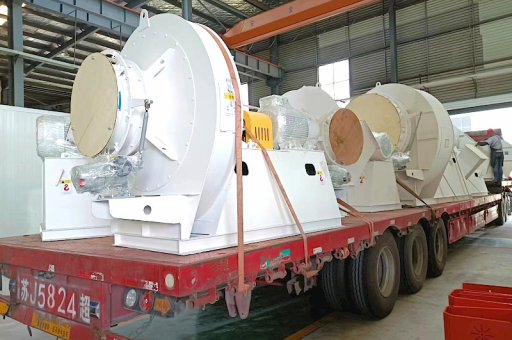
In industrial processes such as power generation, cement production, petrochemical refining, and waste incineration, the safe and efficient handling of flue gas is non-negotiable. Flue gas—typically a mixture of nitrogen, carbon dioxide, water vapor, oxygen, and corrosive compounds like sulfur dioxide (SO₂) and hydrogen chloride (HCl)—must be moved against high system resistance. This is where the Customized High-Pressure Centrifugal Fan with Precision-Balanced Impellers becomes indispensable.
Unlike standard ventilation fans, these specialized units are engineered to overcome static pressures up to 20,000 Pa (approximately 2,000 mmWG). Achieving this requires not only robust motor power and aerodynamic impeller design but also meticulous dynamic balancing to ensure mechanical stability. A poorly balanced impeller rotating at high speeds can cause catastrophic vibration, bearing failure, and even duct rupture.
This article synthesizes existing engineering knowledge from industry sources, technical papers, and manufacturer datasheets to deliver a comprehensive, SEO-optimized guide. By the end, you will understand the technical nuances of customization, the importance of precision balancing, and how these fans integrate into systems ranging from coal-fired boilers to wind turbine auxiliary cooling systems.
Understanding the 20,000 Pa Pressure Threshold: Why Customization Matters
Scenario: A power plant boiler produces 500,000 Nm³/h of flue gas. The ductwork includes economizers, air preheaters, electrostatic precipitators (ESP), and a wet flue gas desulfurization (FGD) scrubber. Each component adds resistance, cumulatively reaching 15,000 to 20,000 Pa.
Why Standard Fans Fail:
- Off-the-shelf fans typically produce up to 5,000–8,000 Pa. Forcing a standard fan to operate at higher pressure causes the operating point to shift into the stall region, leading to surging, noise, and motor overload.
- A custom fan is designed with a specific target duty point. Engineers adjust the impeller blade geometry (backward-curved, radial, or airfoil), the volute casing scroll shape, and the inlet nozzle design to maximize efficiency at the exact pressure and flow required.
Key Customization Elements for 20,000 Pa:
- Impeller Diameter and Width: Larger diameters generate higher peripheral velocity, which directly increases pressure. However, width must be optimized to avoid excessive gas velocity that erodes blades.
- Blade Angle: For flue gas, backward-inclined blades (BIC) are common for high efficiency and non-overloading power characteristics. Forward-curved blades are typically avoided due to torque instability.
- Multiple Stage Configurations: If a single stage cannot reach 20,000 Pa without exceeding safe rotational speeds, a dual-stage fan with intercooling may be required.
SEO Tip: Search query intent for “high pressure flue gas fan” often includes terms like “corrosion resistant,” “high temperature,” and “custom design.” Including these phrases in context improves ranking.
The Science of Precision-Balanced Impellers: Vibration Control and Longevity
A precision-balanced impeller is the heart of a reliable high-pressure fan. Balancing refers to the redistribution of mass so that the center of gravity aligns with the rotational axis. For a fan operating at 3,000 RPM with impeller diameters exceeding 1.5 meters, even a 10-gram unbalance can generate centrifugal forces exceeding 100 kg. This force translates directly into structural vibration.
Balancing Standards:
- Grade G2.5 per ISO 1940-1: This is the standard for fans in continuous industrial service. It allows residual unbalance of 2.5 mm/s vibration velocity. For critical flue gas applications, some manufacturers specify Grade G1.0 which halves the permissible residual unbalance.
- Dynamic Balancing: Unlike static balancing (single-plane), dynamic balancing (two-plane) corrects for couple unbalance—a common issue in wide impellers where mass is offset at opposite ends of the hub.
The Balancing Process in Custom Manufacturing:
- Pre-weld balancing: Individual blades and the hub are weighed and matched before welding.
- Post-weld thermal stress relief:
- Final dynamic trimming on balancing machine: Correction weights are added or material is removed from the shroud and backplate.
Impact on Flue Gas Handling: Flue gas often carries particulate matter. Over time, erosion can change the impeller mass distribution. A precision-balanced impeller, combined with wear-resistant coatings (e.g., ceramic epoxy or Stellite hardfacing), maintains smooth operation for 5–10 years before requiring re-balancing.
Wind Turbine Context: In wind turbine applications, auxiliary fans (for cooling gearboxes or generators) must meet even stricter vibration limits because they share a foundation with sensitive pitch and yaw control systems. Precision-balanced centrifugal fans prevent harmonic interference that could trigger false fault alarms.
Material Selection for Corrosive and High-Temperature Flue Gas Environments
Flue gas temperature can range from 120°C (after FGD) to 400°C (before heat recovery) . Humidity often reaches 100%, with condensed sulfuric acid present at dew point. A customized fan must address:
Material Grades:
- Carbon Steel (A36, S355JR): Suitable for dry, low-corrosion gas below 200°C. Economical but prone to rust.
- Stainless Steel (SS316L, SS904L): Required for wet gas with chlorides, especially in waste-to-energy plants. SS904L offers 5% molybdenum for pitting resistance.
- Duplex Stainless Steel (SAF 2507): For the most aggressive environments—high strength and excellent chloride stress corrosion cracking resistance.
- Hastelloy C-276: Used for extreme acidity (e.g., flue gas from chemical incineration).
Coatings and Linings:
- Phenolic epoxy coatings: Excellent for temperatures up to 150°C. Applied on the casing interior and impeller surfaces.
- Fiberglass-reinforced plastic (FRP) linings: For wet scrubbed gas.
- Ceramic-filled polymer coatings: For abrasion resistance in fly ash-laden streams.
Thermal Considerations:
- Shaft cooling: A cooling disc or fan on the shaft prevents heat transfer to the bearings.
- Expansion joints: In the casing to accommodate thermal growth without misaligning the bearings.
Customization Parameters: Flow Rate, Drive Configurations, and Acoustic Design
Flow Rate (m³/h or CFM): The fan must be capable of handling the maximum flue gas volume under worst-case conditions (e.g., after a soot-blower sequence). Custom impellers are designed using computational fluid dynamics (CFD) to ensure a flat pressure vs. flow curve at 20,000 Pa.
Drive Configurations:
- Direct Drive (Arrangement 4 or 8 per AMCA): The impeller is mounted directly on the motor shaft. Preferred for high-speed, high-pressure applications because there are no belt losses or sliding misalignment. Requires a motor with precision-balanced rotor.
- Belt Drive: Allows speed adjustment via pulley change. Used when process conditions are expected to change over time (e.g., variable gas volume due to production rate changes).
Acoustic Design: Flue gas fans can generate noise levels of 110–120 dB(A). Customization includes:
- Acoustic enclosures with intake and discharge silencers.
- Blade passing frequency dampening via increased blade count (16 versus 12 blades).
- Laminar flow inlet cones to reduce turbulence-generated noise.
Electrical:
- Motors must be rated for VFD operation (inverter duty) with F-class insulation to handle voltage spikes from variable frequency drives.
- For integration with wind turbine systems, the fan motor must comply with grid codes for low voltage ride-through (LVRT) and harmonic filtering.
Performance Testing and Quality Assurance: ISO and API Standards
Every customized high-pressure fan should undergo the following tests before shipment:
- Performance Test (per AMCA 210): Measures pressure, flow, efficiency, and power consumption at the duty point. Actual results must be within ±2% of guaranteed performance.
- Vibration Test (per ISO 10816-3): Vibration velocity measured on bearing housings. Acceptable levels for rigid-mounted fans: <4.5 mm/s RMS.
- Overspeed Test (20% above maximum operating speed): Ensures impeller structural integrity.
- Non-Destructive Testing (NDT): Dye penetrant or magnetic particle inspection of welds. For critical fans, X-ray of impeller blade attachments.
- Pressure Decay Test: Casing is sealed and pressurized to 1.5 times working pressure to check for leaks, especially at shaft seal and access doors.
Quality Certifications: ISO 9001, API 610 (for application in oil & gas flue gas ducts), and CE/ATEX (if explosive gases like hydrogen are present).
Application Case Studies: Power Plants, Chemical Processing, and Wind Turbine Integration
Case 1: Coal-Fired Power Plant ID Fan (Draft System)
- Requirement: 600,000 m³/h at 18,000 Pa, gas temperature 160°C.
- Solution: Custom backward-curved impeller in SS316L with a 2.2-meter diameter. Vibration level <3.5 mm/s after balancing. Result: 15% energy savings compared to previous radial-blade fan.
Case 2: Chemical Incineration Unit
- Requirement: Flue gas containing HF, HCl, and SO₃ at 280°C.
- Solution: Hastelloy C-276 impeller with phenolic epoxy-coated carbon steel casing. Dynamic balancing to Grade G1.0. The fan operates continuously for 8,760 hours/year with no unplanned downtime.
Case 3: Wind Turbine Auxiliary Cooling
- Requirement: A 4.5 MW offshore wind turbine needs a compact fan to cool the generator and gearbox oil. The fan must handle backpressure up to 20,000 Pa in a salt-laden marine environment.
- Solution: Direct-drive fan with duplex stainless steel (SAF 2507) impeller. Designed for 1,750 RPM with AMCA Standard Class III construction. Precision balancing ensures vibration below 2 mm/s to protect turbine electronics.
Key Takeaway: Customization extends beyond pressure and flow. Environmental factors—temperature, corrosivity, salt spray, and foundation dynamics—dictate the final design.
Common Questions (FAQ) About High-Pressure Flue Gas Fans
Q1: Why can’t I use two standard fans in series instead of one custom fan? Series operation can double pressure, but it creates complexity: inter-ducting losses, potential surging if fan curves are mismatched, and twice the maintenance footprint. A single custom fan is more efficient and reliable.
Q2: How often should precision-balanced impellers be re-balanced? Typically every 3–5 years, or whenever vibration exceeds 6.0 mm/s. In abrasive environments (e.g., fly ash), annual inspections with possible re-balancing are recommended.
Q3: What is the maximum temperature a centrifugal fan can handle? With carbon steel: up to 200°C. With stainless steel: up to 500°C in inert atmosphere. For higher temperatures (700°C+), nickel-based superalloys with separate air cooling for bearing housing are required.
Q4: Can these fans be retrofitted into existing wind turbine cooling systems? Yes. Many wind turbine operators upgrade from axial fans to customized centrifugal fans when backpressure from clogged filters increases. The compact footprint and high pressure capability make them ideal.
Q5: How does precision balancing affect energy consumption? A balanced impeller reduces frictional losses in bearings and eliminates parasitic energy from vibration. This can improve overall efficiency by 2–5% compared to a poorly balanced unit.
Conclusion: Future Trends and Reliability Optimization
The demand for Customized High-Pressure Centrifugal Fans with Precision-Balanced Impellers for Flue Gas Handling up to 20,000 Pa is expected to grow alongside stricter emission control regulations and the expansion of carbon capture systems. Future innovations include:
- Smart balancing systems: Active magnetic bearings or trim weight systems that adjust in real-time as impeller erosion occurs.
- CFD-optimized geometries: Machine learning algorithms will generate optimal blade profiles for each unique gas composition.
- Integration with wind turbine systems: As hybrid renewable plants become more common, fans must operate quietly and efficiently within the variable load profile of wind turbine installations.
Final Recommendation: When specifying a fan for severe flue gas duty, never compromise on precision balancing and material selection. The upfront investment in a custom-designed, certified fan delivers a return through 15–20 years of uninterrupted operation, lower maintenance cost, and energy savings that exceed 10% compared to generic alternatives.
For buyers, always request a limited speed acceptance test (LSAT) or full speed performance test witnessed by your engineering team. And remember: a fan that handles 20,000 Pa today can be adapted for tomorrow’s 25,000 Pa requirements if designed with modularity and upgradability in mind.
Disclaimer: The technical specifications and standards mentioned in this article are based on commonly recognized engineering practices. Always consult with a certified fan manufacturer for application-specific calculations and material certifications.





